
How to Do Google SEO for a Foreign Trade Independent Site: Do These 6 Things in Order, Don't Start by Publishing Articles
Many factories and foreign trade SOHOs launch an independent site and then search for their own domain on Google every day, panicking when they can't find it. The problem is usually not the website itself, but the order: the foundation (domain, server, indexing) isn't finished, yet they rush to write articles and buy backlinks—no matter how much they do, it can't be verified. This article breaks it down into 6 stages, with a keyword layering table, a monthly execution rhythm, and time expectatio
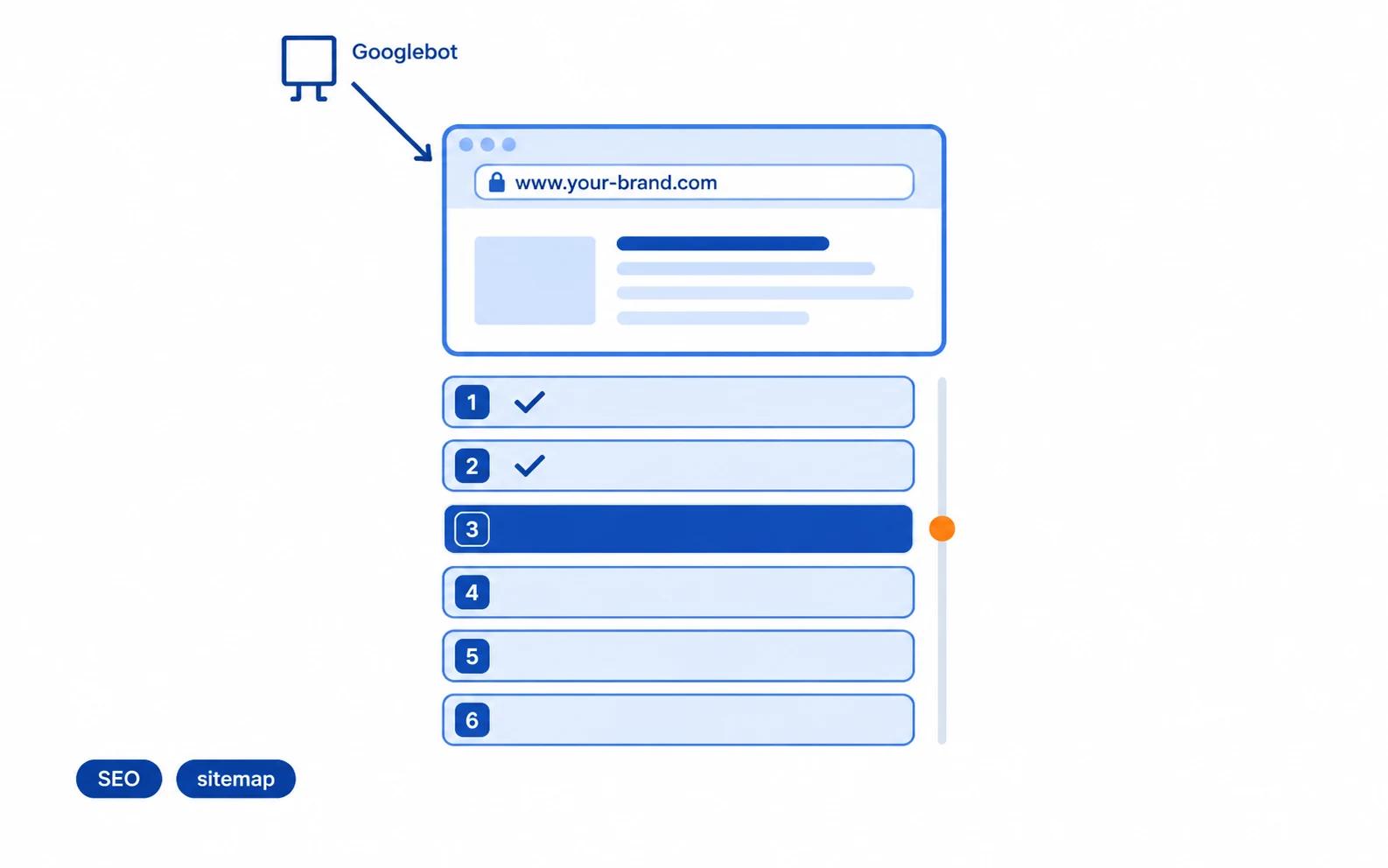
Today we're breaking down "how to do Google SEO for a foreign trade independent site." First, the conclusion: most new sites can't find themselves in search for six months—not because the site is poorly made, but because the order is reversed. They start by writing articles and buying backlinks, skipping indexing.
Get the order wrong, and every step after that burns time and budget.
Below is an ordered walkthrough of "what to do first, what to do later"—you can check off each item against your own site.
The 6 Stages of Google SEO: Skip the First Two and the Rest Is Basically Wasted
Step 1: Foundation—domain and server.
Domains typically cost 60–120 yuan/year on the market; pick a .com or a suffix for your target market, and don't use a string of numbers. Servers typically cost 500–3,000 yuan/year; if your customers are in Europe or the US, choose a European or US node, and keep mobile load time under 3 seconds.
Step 2: Indexing—let Google know your site exists first.
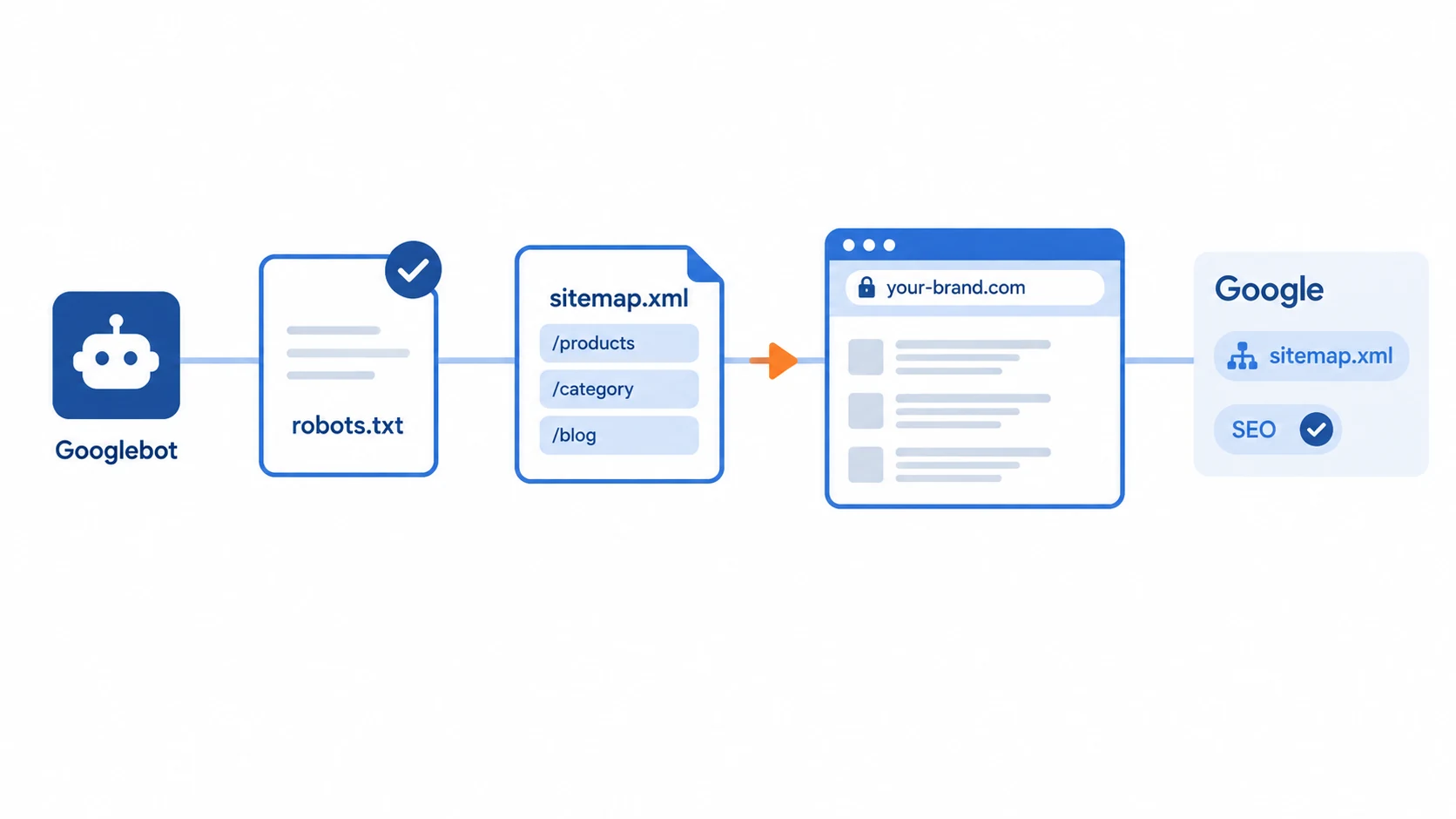
Verify your domain in Google Search Console, submit sitemap.xml, then check whether robots.txt is accidentally blocking crawling. Normally indexing starts within 3–7 days; slower cases take two to three weeks. You can do a rough check with site:yourdomain.
Step 3: Keyword layering. Covered separately in a table below.
Step 4: Content—one page targets only one term. On product pages, clearly state specifications, materials, application scenarios, MOQ, lead time, and certifications. Don't cram ten terms onto one page.
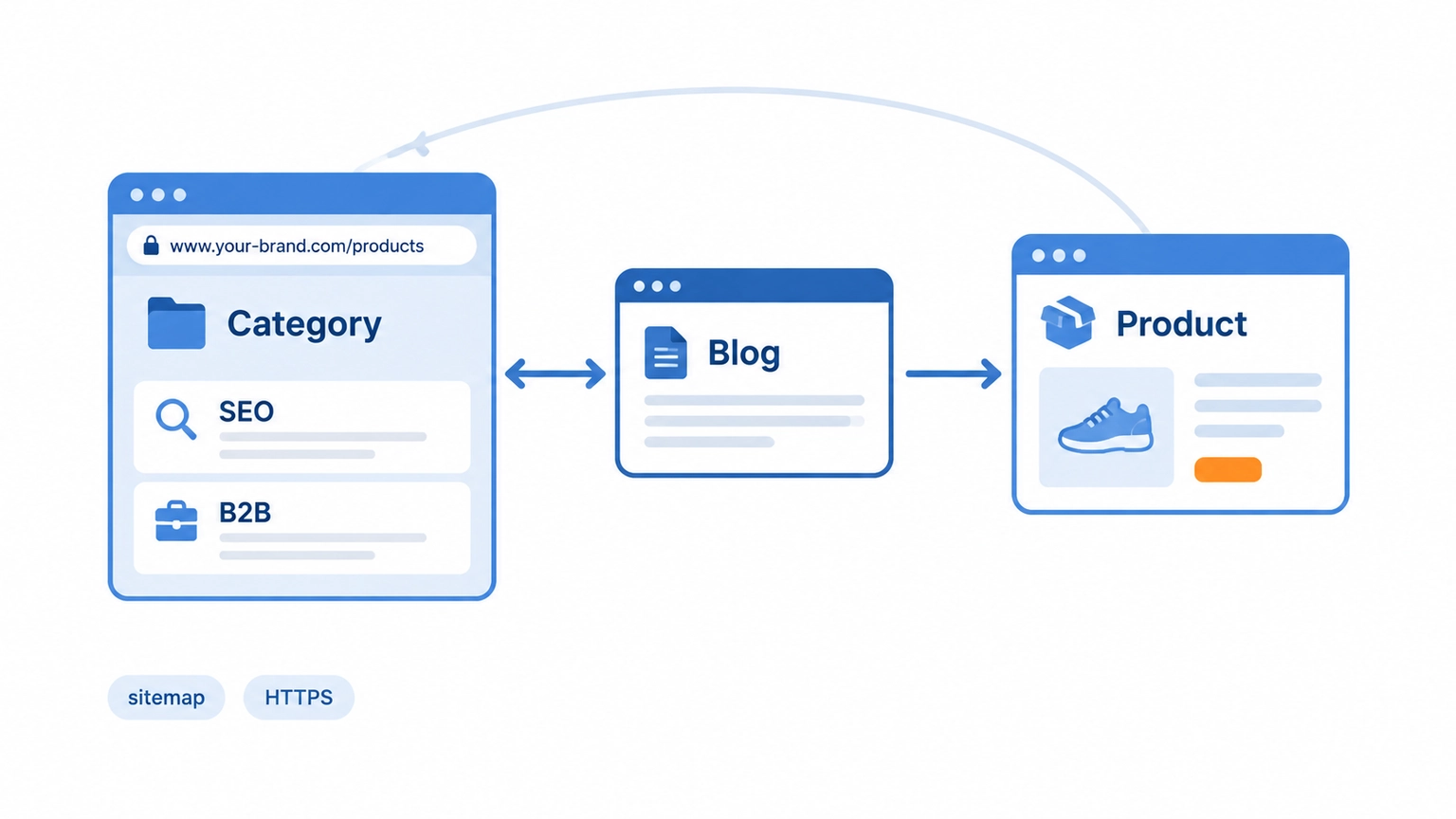
Step 5: Internal link structure. Product pages link back to category pages, and articles link to the corresponding product pages. Both users and Google find their way through links.
Step 6: Backlinks and updates. Don't buy packages offering "X number of backlinks"—they look busy in the short term but mean nothing long term.
If steps 1 and 2 aren't done, nothing after step 3 can be verified. This is also the part most often skipped in Getting Started with Site Building and Preparation.
How to Layer Keywords: Which Terms to Target First, Clear in One Table
Take industrial valves as an example—the approach for each of the four layers is completely different.
| Layer | Example | Typical monthly search volume range | Competition | When to do it |
|---|---|---|---|---|
| Broad category term | industrial valve supplier | thousands–tens of thousands | High | Focus on it after 6 months |
| Product term | stainless steel ball valve manufacturer | hundreds–thousands | Medium | Months 1–3 |
| Spec long-tail term | 2 inch stainless steel ball valve price | tens–hundreds | Low | Start in month 1 |
| Question term | how to choose a ball valve | tens–hundreds | Low | Do it alongside content |
Search volume is only a reference; what really matters is purchasing intent. Terms containing price, manufacturer, supplier, or spec parameters show clearer intent.
For the layering methods and tools, there's a complete workflow to follow in Foreign Trade SEO and Promotion.
What to Do Each Month After Launch: A Rhythm Checklist to Follow
Every week: write 1 piece of content that answers a purchasing question, 300–800 words—don't pad the word count.
Every week: spot-check the titles and descriptions of 3 product pages to see if any two pages use the same one.
Every month: check the "Coverage" and "Queries" reports in Search Console; note down terms that get impressions but no clicks, and go back and revise the titles.
Every quarter: pull up old pages from 3 months ago and add missing specs, images, and internal links.
On time expectations, the typical rhythm is: indexing completed in 0–1 months; long-tail terms start getting impressions in 1–3 months; long-tail terms reach the top 3 pages in 3–6 months; product terms have a chance to reach the top two pages in 6–12 months.
This is a common industry rhythm, not a promise; how fast or slow depends on your industry's competitiveness and how often you update.
4 Pitfalls—Step in One and You Could Waste Half a Year
Pitfall 1: Buying "guaranteed first-page ranking" services. No one can guarantee that. The ones that hold up in Foreign Trade Independent Site Case Studies are those with solid indexing and content.
Pitfall 2: Identical titles across the whole site. Common with template sites, and Google easily flags it as duplicate content.
Pitfall 3: Translating Chinese keywords literally. Choose terms based on your target market's search habits—not by translating Chinese into English.
Pitfall 4: Launching and then ignoring it. Indexing and rankings are dynamic; stop updating for 3 months and impressions generally decline.
On budget, the typical market range for site building plus basic Google SEO setup is 8,000 to 30,000 yuan; the price difference mainly comes from the number of pages, multilingual support, content volume, and whether ongoing optimization is included. Specific quotes need to be assessed based on your needs—you can start with a free site-building needs assessment.
Don't rush to bookmark this—do one thing today: submit a sitemap in Search Console once, then look back at the indexing numbers a week later. You'll remember it better than reading ten articles.