
Foreign Trade Independent Website Case Breakdown: Three Site Types—Where the Money Goes and How Long to Launch
After reading a dozen foreign trade independent website cases, still not sure whether to believe them? This article breaks down three common site types: page count, launch timeline, and cost structure item by item, then provides a must-ask checklist of 8 questions when reviewing cases. After reading, you'll be able to judge whether a quote is high or low, what materials you should prepare first, roughly how long it will take to launch, how long until you see the first batch of organic search cli
The matter of foreign trade independent website cases is actually not as mysterious as you think: put the front-end pages, back-end screenshots, launch date, and inquiry sources together, and whether a site is worth the money basically becomes clear.
What really confuses people is that for the same type of site, the quote can range from several thousand to tens of thousands; for the same process, the launch time can drag from 20 days to 3 months.
Below is a breakdown of the three most common site types for overseas-going enterprises: where the money goes, how long it takes to launch, and where inquiries come from. After reading this, when you go back and compare the cases others present, you'll have a yardstick in your mind.
Three common types, first identify which one fits you
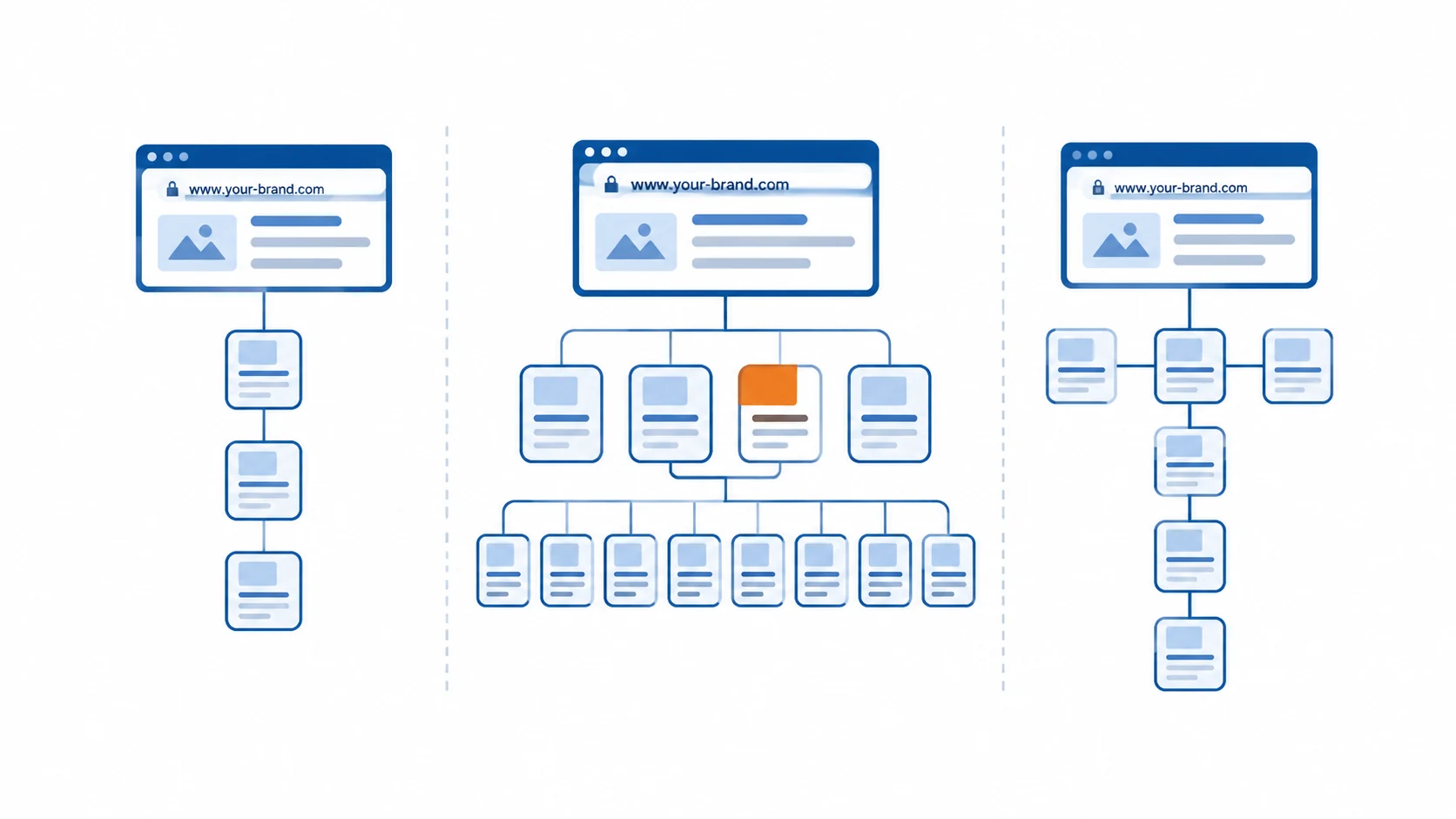
One thing to note first: the following are structures that repeatedly appear in the industry, not the track record of any one company. What you need to do is find the type most similar to yours, and then negotiate according to that type's rhythm.
| Site Type | What Companies It Suits | Page Volume | Common Launch Timeline | Main Inquiry Sources | Ongoing Common Costs |
|---|---|---|---|---|---|
| Single-category factory site | Narrow product line, factory endorsement | 15~40 pages | 20~35 days | Google organic search, returning old customers and trade shows | Domain and hosting annual fees, product photo shoots |
| Multi-SKU trader site | Mixed categories, need to build volume by category | 60~300 pages | 35~60 days | Long-tail keywords, Google Ads | SEO content, ad budget |
| Inquiry-focused custom site | Selling solutions, selling equipment, high average order value | 8~20 pages | 25~45 days | Landing pages, email and social media traffic | Form and live chat tools, content updates |
Don't worry if you can't find an exact match. Most companies are a hybrid of the first and third types: not many products, but they require pages to follow their own sales logic, rather than taking a template and changing the text.
Where Quotes Differ: Break Costs into 7 Items
If you only look at a total price to haggle, you're most likely to cut in the wrong place. Break the costs apart, and you'll find that expensive and cheap are not even in the same place.
| Cost Item | Common Market Range | Key Factors Determining High or Low |
|---|---|---|
| Domain | Approx. 60~150 元/year | Suffix and registrar; little difference among providers |
| Server / Hosting | Approx. 300~3000 元/year | Whether targeting Europe/US or Southeast Asia, whether dedicated IP, monthly traffic |
| Template / Theme | 0~1500 元 one-time | Use an existing theme, or build separately from a design mockup |
| Design and Build Service | From several thousand to tens of thousands | Number of pages, whether custom features are needed, whether basic SEO is included at delivery |
| Multilingual | Increases with number of languages | Who does the translation, whether human proofreading is needed |
| Content and Product Images | The item with the largest variation | Produce images and copy in-house, or outsource photography and translation |
| Ongoing Maintenance | Commonly billed annually | Whether it includes redesigns, troubleshooting, SEO data tracking |
Once you understand this table, you'll get it: when quotes differ by 30,000 and 8,000, the difference is mostly not the few dozen or few hundred for domain and server, but the depth of design, number of pages, number of languages, and whether there are custom features.
So don't take someone else's total price and directly apply it to your own needs. Specific quotes need to be evaluated based on requirements; you can consult us. More detailed cost structures and pitfalls are also organized in the Website Building Costs and Quotes section.
The 3 Most Easily Fudged Time Points in Case Studies
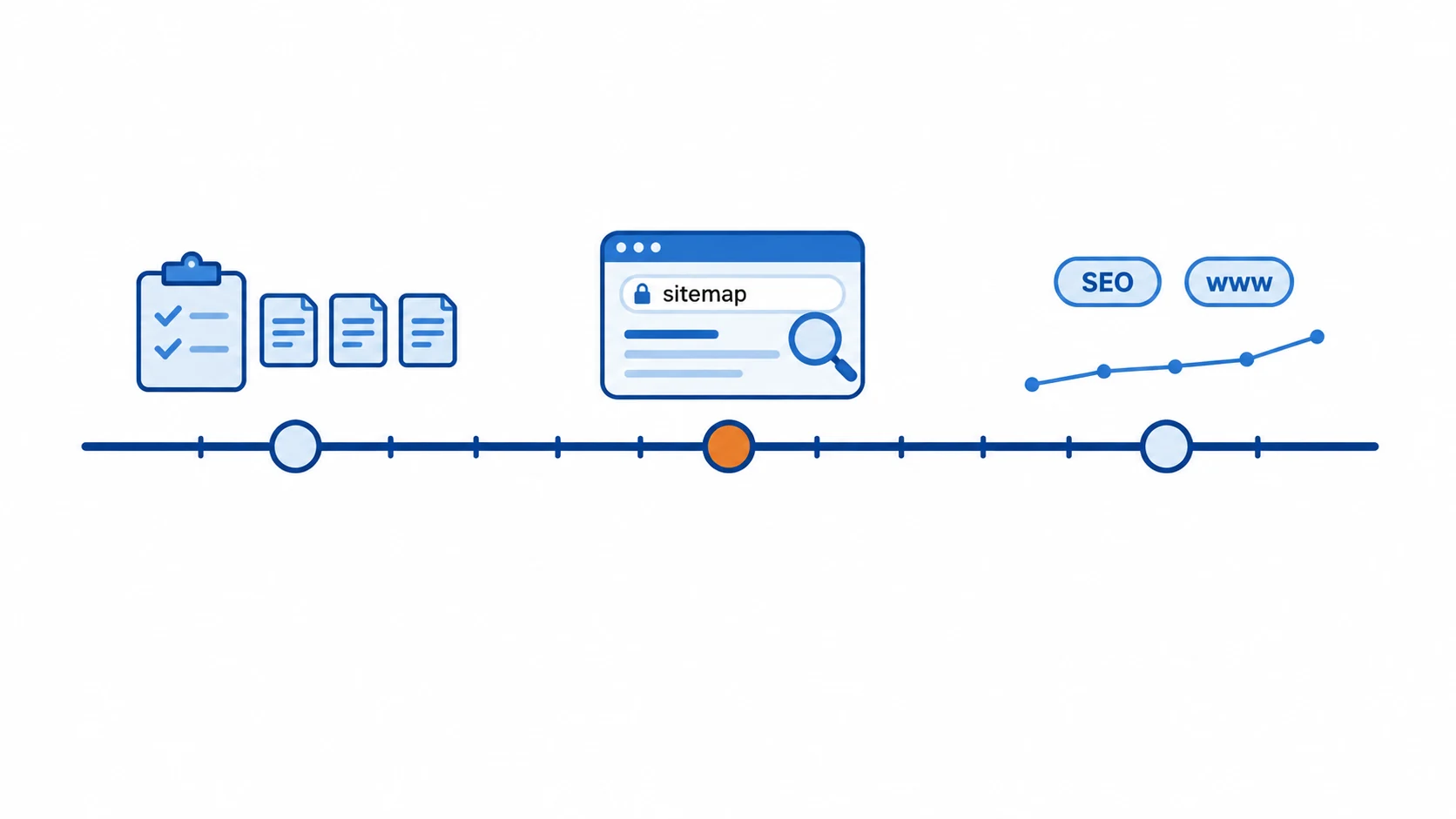
Many case studies just write 'launched successfully' without describing the process. But what really determines your experience is precisely these three time points.
The first: before materials are complete. Product images, spec sheets, company introduction, certification documents, target market—if these are not in place, design and development can only wait. A common industry rhythm is: requirement discussion 3~7 days, your side preparing materials 1~3 weeks.
The second: 3~7 days after launch. Submitting the sitemap and letting Google crawl the homepage and product pages—this period is the starting line for indexing. Whether you do this step or not, the gap will widen after two or three months.
The third: 30~90 days after launch. Organic search clicks usually only start to show movement in this range, and the more competitive the keyword, the slower it is. Anyone who tells you it can rank in the second week after launch—you can just skip them.
Note that this is 'starting to show movement,' not 'ranking on the first page.' Rankings are affected by competition, content quality, backlinks, and site technical status; no one can guarantee it.
Ask About Someone Else's Case: These 8 Questions Will Make It Clear
Ask about the launch date, ask for back-end screenshots, ask how many pages are indexed, ask where inquiries come from. With these four questions, you can basically tell whether a case was genuinely built or just used for show.
- What is the launch date? Can you open a homepage snapshot to see it?
- Are there back-end screenshots? Those who only provide front-end screenshots and not back-end ones are mostly template sites with a changed logo.
- How many pages does Google index? You can search site:domain on Google to see an approximate number.
- Where do all the inquiries come from? What proportion comes from organic search, ads, social media, and direct visits?
- After a form is submitted, who receives it, and how long until they reply? If replies take more than 24 hours, the customer is basically lost.
- From complete materials to launch, how many days did it actually take?
- Who maintains it now, and how much does it cost per year?
- How fast does it load on mobile, and is an SSL certificate installed?
Among these 8 questions, the 4th and 5th are the most valuable. The former determines whether your site's traffic is solid, and the latter determines whether you can catch the traffic when it comes. The site's Foreign Trade Independent Website Cases section is continuously updated with reviews; you can compare against these questions. If you want to be able to catch inquiries, you can also take a look at Inquiries and Conversion.
That's all for today; another day we'll break down the next case.
If you currently have two or three quotes on hand to compare, don't rush to pick the cheapest one; first go through the checklist above and ask all the questions. If you want to be faster, you can first do a free website building requirements assessment: clearly explain your products, target market, and approximate budget, and we'll then tell you which type of site is suitable, roughly how long it will take, and which costs can be saved.