
Cross-Border E-commerce Status: 3 Scenarios When You Should Build an Independent Site, and 2 When You Should Wait
The cross-border e-commerce landscape is shifting as platform costs rise and competition intensifies. Many businesses are questioning if an independent site is necessary. This guide helps you assess your readiness, avoid keyword translation mistakes, and ensure your traffic isn't entirely dependent on platform rules.
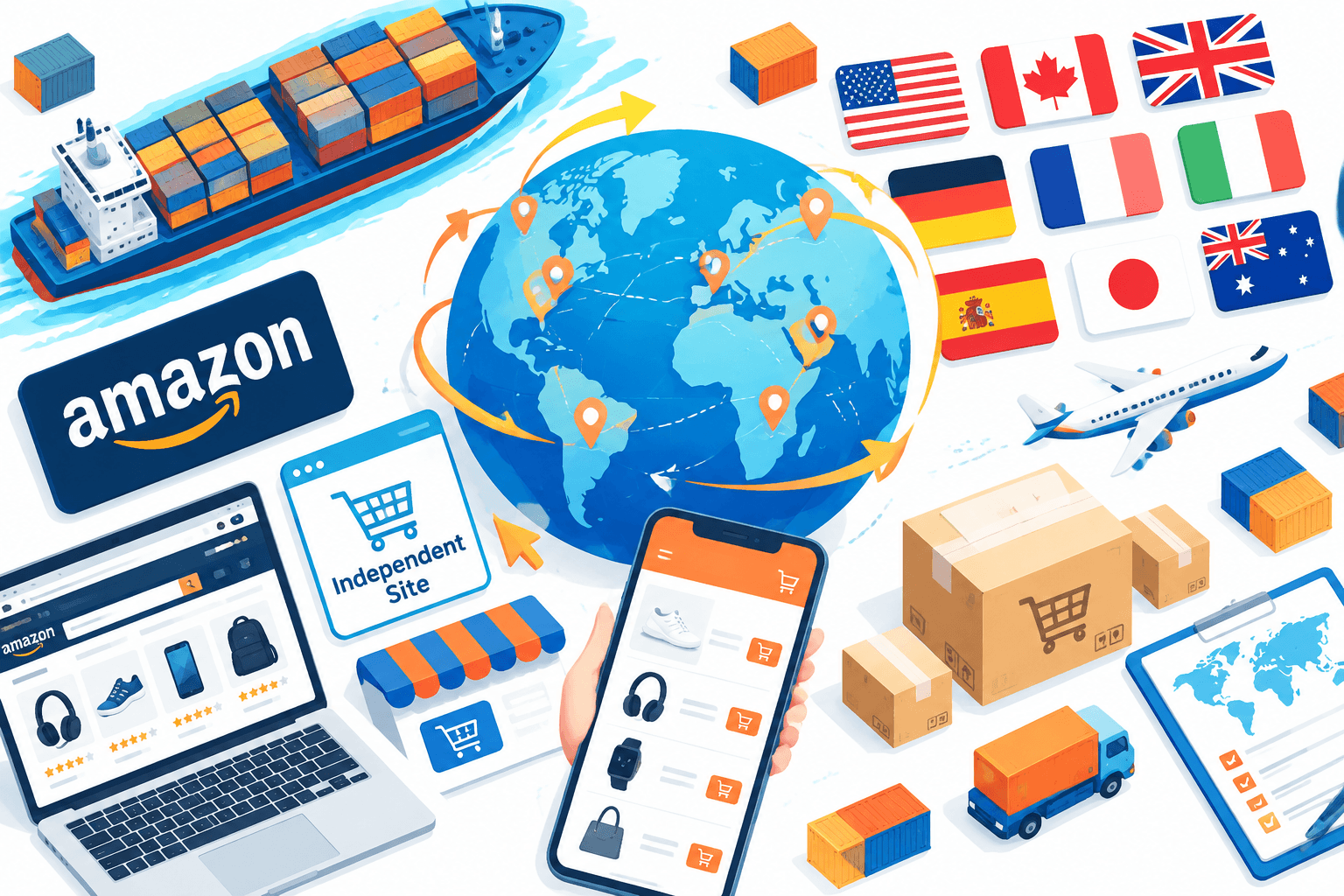
Five years ago, doing cross-border e-commerce was simple: you listed your products on a platform, slapped a few English keywords in the title, and the orders would gradually start rolling in.
That is absolutely not the case anymore.
Back in 2020, a single 1688 supplier and one Amazon store were enough to support the revenue of a small team. Now? Platform commissions have risen, advertising bids have skyrocketed, and buyers have more price-comparison tools than ever. The window of opportunity to make money purely through information asymmetry has essentially closed.
More and more factories and foreign trade SOHOs are starting to ask the same question: Is building an independent website even worth it anymore?
There is no one-size-fits-all answer. The market conditions are what they are, but whether it is right for you depends on your current stage and the resources you have at your disposal.
Below, I have broken down three common pitfalls—categorized by "phenomenon, cause, and how to avoid"—to help you evaluate your own situation.
Pitfall 1: Rushing in because competitors are getting orders, without verifying if you have the right conditions
Phenomenon: You see a competitor posting screenshots of independent site inquiries, or hear that a certain factory landed a big deal through their own site, so you start looking for a web development company the very next day.
Cause: While the cross-border e-commerce market is indeed trending toward "omni-channel" operations, others may be successful because they have over three years of accumulated customer relationships or patent barriers on their products. You are seeing the result, not the prerequisites.
How to avoid: Ask yourself these three questions first.
First, does your product have at least one differentiated selling point that isn't just about competing on price?
Second, do you have the energy or personnel to consistently produce content, even if it's just one update a week?
Third, can you accept a "cold start" period of 3 to 6 months without any inquiries?
The "conditions" mentioned here aren't just about startup capital. They are about whether you have ongoing content assets, a clear target market, and a responsive workflow to handle inquiries.
If the answer to two of these questions is "no," I suggest focusing on solidifying your platform operations before considering an independent site.
Pitfall 2: Translating product names literally, resulting in irrelevant traffic
Phenomenon: A raincoat factory uses "raincoat" as its website title, but after being live for half a year, it has almost zero organic search traffic.
Cause: This is a very common issue I encounter in consultations. Chinese sellers are used to literally translating Chinese product names into English, but overseas buyers have completely different search habits. For the same waterproof jacket, North American buyers search for "rain jacket," some parts of Europe search for "poncho," and outdoor enthusiasts search for "waterproof shell." Trying to win with a single keyword is effectively abandoning the majority of your traffic.
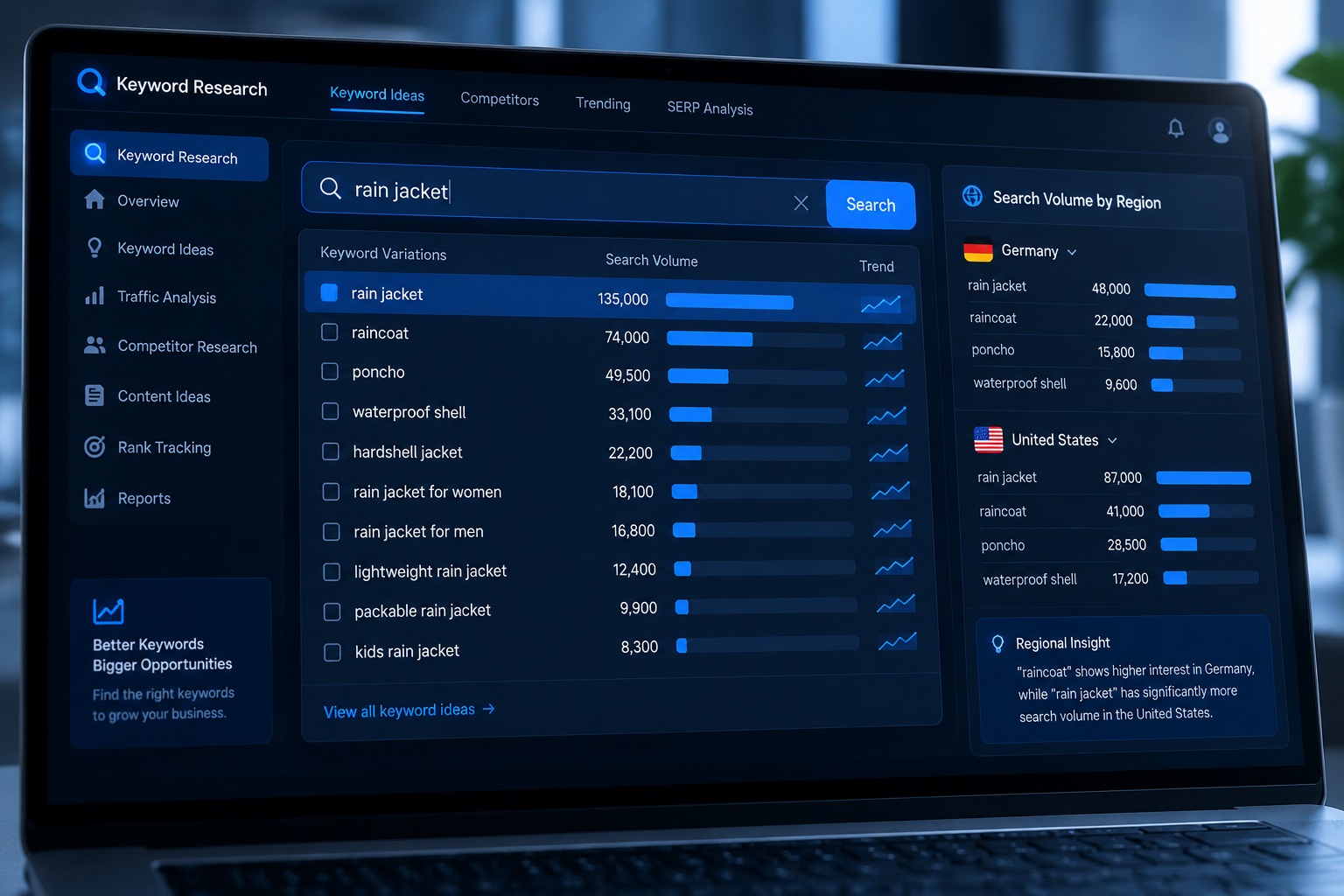
How to avoid: Conduct keyword research from multiple angles and regions. Two common tools are Ahrefs and SEMrush; you can check the search volume and difficulty of a specific term in different countries.
The specific process involves three steps.
Step 1: Put your core product keywords into the tool to see which variants and synonyms appear in search suggestions.
Step 2: Filter regions based on your target market. For example, if you are focusing on Germany, look at search habits in German-speaking regions specifically; don't just force-fit English data.
Step 3: Categorize long-tail keywords by search intent. Keywords containing "buy," "supplier," or "wholesale" indicate clear purchasing intent and should be prioritized on your product pages and landing pages.
Pitfall 3: Relying solely on platforms, leaving your traffic and data in someone else's hands
Phenomenon: You put all your eggs in one basket, and one day the platform changes its rules or bans your account, forcing you back to square one overnight.
Cause: The biggest change in the cross-border market in recent years is that platform traffic is getting more expensive and rules are becoming more unpredictable. The customer data, reviews, and search rankings you accumulate on a platform belong to the platform, not you.
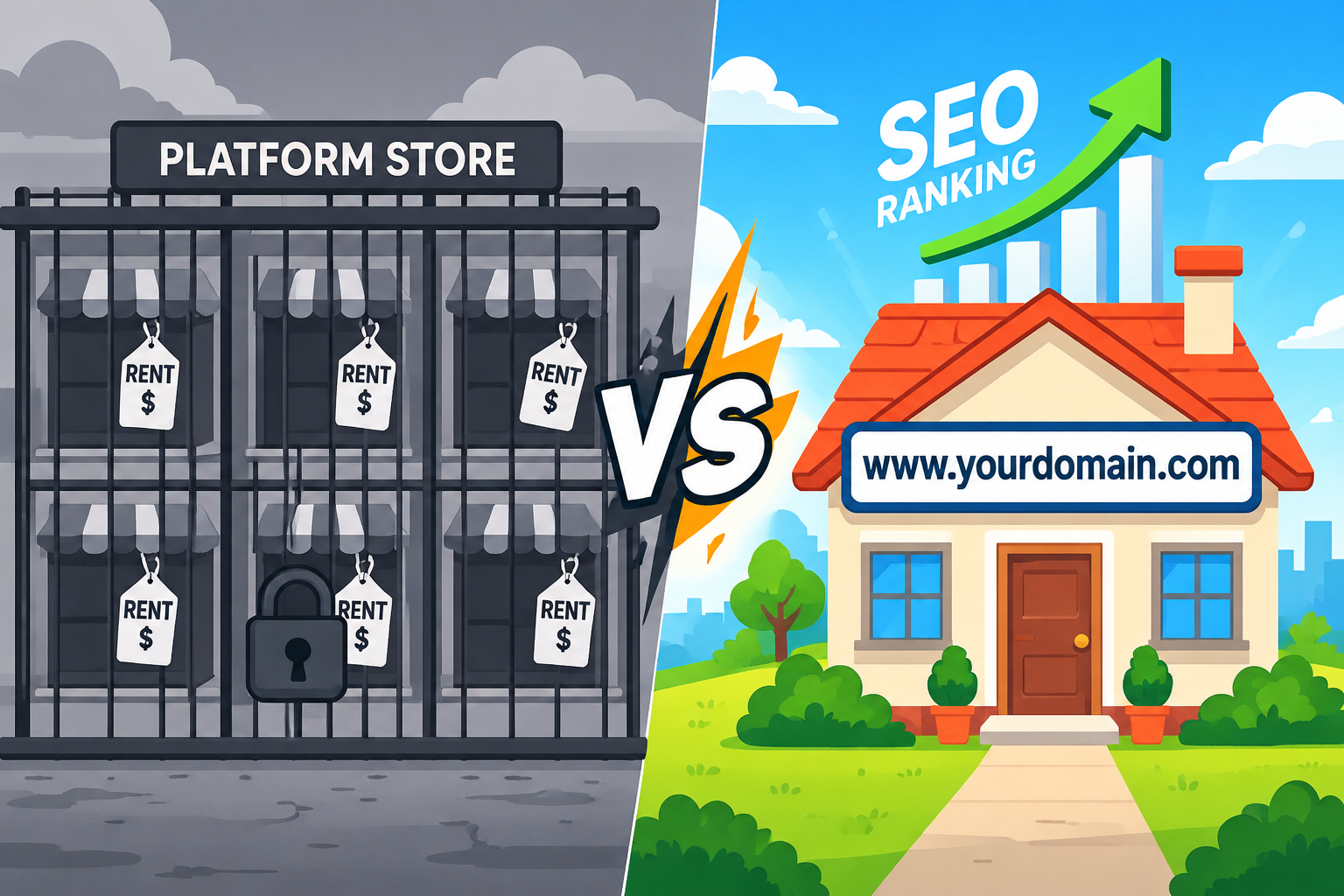
How to avoid: This doesn't mean you should abandon platforms, but you need a territory that you completely control. The value of an independent site lies here: the domain is yours, the customer data is yours, and the rankings accumulated via SEO are yours.
In other words, a platform is a rented shop front, while an independent site is your own property. A shop front can face rent hikes or eviction at any time; while your own property requires you to handle maintenance and decoration, the equity remains in your hands.
Regarding the differences between independent sites and platforms in terms of traffic ownership, I have previously written an article on a 5-dimensional comparison; check it out to see which side you are more dependent on.
If you decide to build an independent site, you don't need to invest a fortune right away. A standard official website can be launched in 5 to 15 business days. This article on how to calculate the costs of an overseas independent site breaks down the four main modules clearly; read that before setting your budget.
In a nutshell
The state of the cross-border e-commerce market cannot be summarized by whether it is "easy" or "hard." Understanding which stage you are at and what conditions you lack before taking action will save you both time and money compared to following the crowd blindly.