
Building a Cross-border Independent Site: Why Multi-language Architecture is More Than Just Translation
SMBs considering an independent cross-border e-commerce site often simplify multi-language to "translating Chinese to English." This article deconstructs the three layers of multi-language architecture—translation, localization, and hreflang/canonical configuration—explaining why basic translation fails in Google search and providing 4 critical technical points for your development phase.
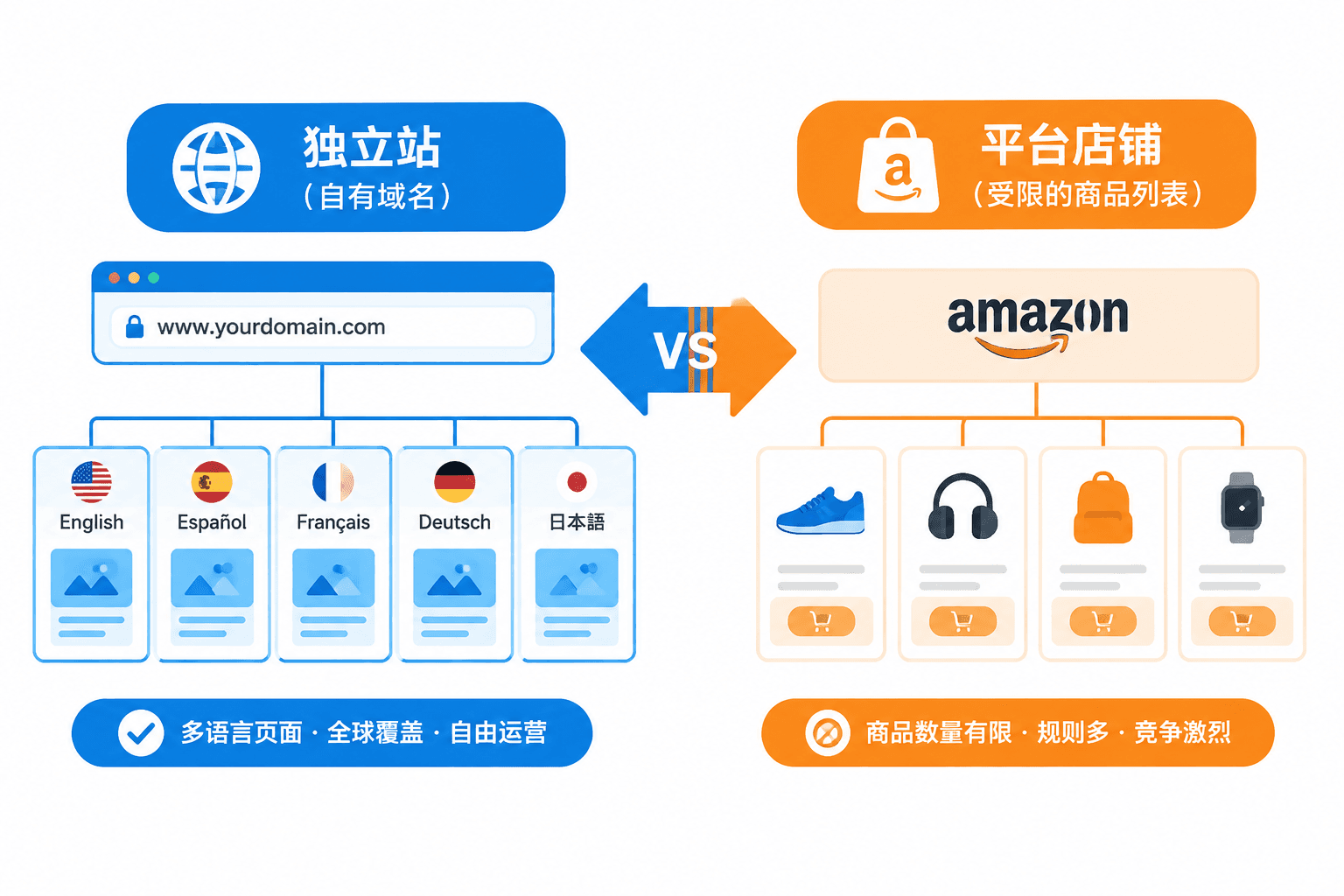
Let's define our terms clearly. "Building an independent site for cross-border e-commerce" refers to businesses using their own domain and server to construct a dedicated overseas sales or lead-generation website that they fully own. It is not an Amazon store or an AliExpress page; it is a site where you hold complete data sovereignty and have full control over the content and structure.
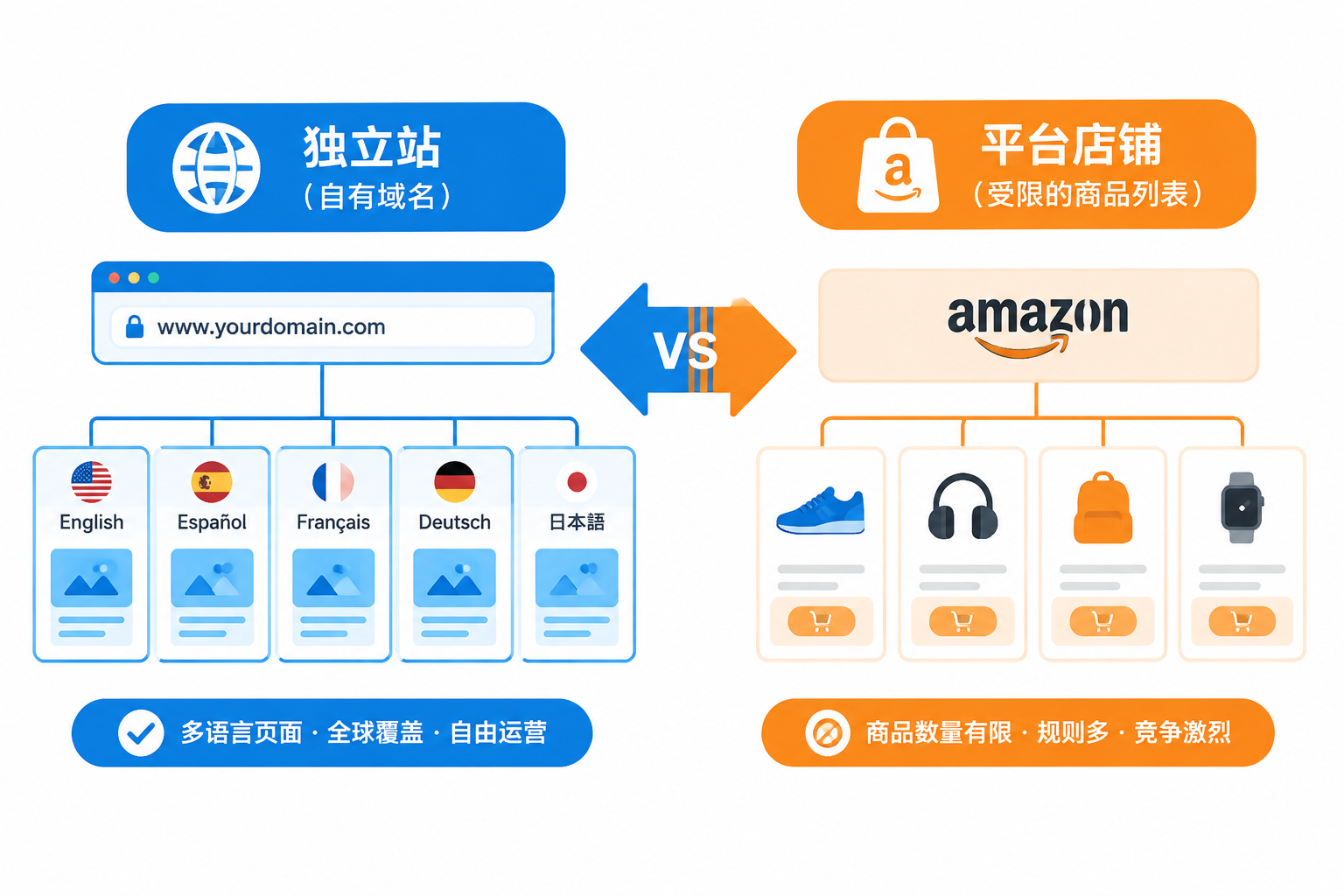
So, why are more and more cross-border business owners starting to prioritize independent sites?
Platform traffic is getting more expensive, rules change overnight, and you can't get hold of your customer data. Are these three issues something you are currently experiencing?
Digging deeper: even if you decide to build an independent site, why is it that for many, once the site goes live, overseas customers simply cannot find it through search?
Going one level further: why does Google only index the English pages, while other languages seem non-existent, even though you have versions in English and Spanish?
The root of the problem often lies in the multi-language architecture.
Multi-language is not just a "translation," it is a three-tier engineering project
Many business owners perceive a multi-language site as simply "translating Chinese into English, then into Spanish."
That is only the first layer: text translation.
The second layer is localization. British English uses "colour," while American English uses "color"; the US uses inches and pounds, while Europe uses centimeters and kilograms; clothing sizes like S, M, and L have completely different values in Japan and Germany. Currency symbols, decimal placement, and date formats vary by market. If you only translate text without localization, the customer's first impression upon opening the page will be, "This wasn't made for me."
The third layer is multi-language SEO architecture. This layer determines whether search engines can correctly understand your pages in each language, and it is the step most web development teams tend to overlook.
hreflang and canonical: The "ID System" for multi-language sites
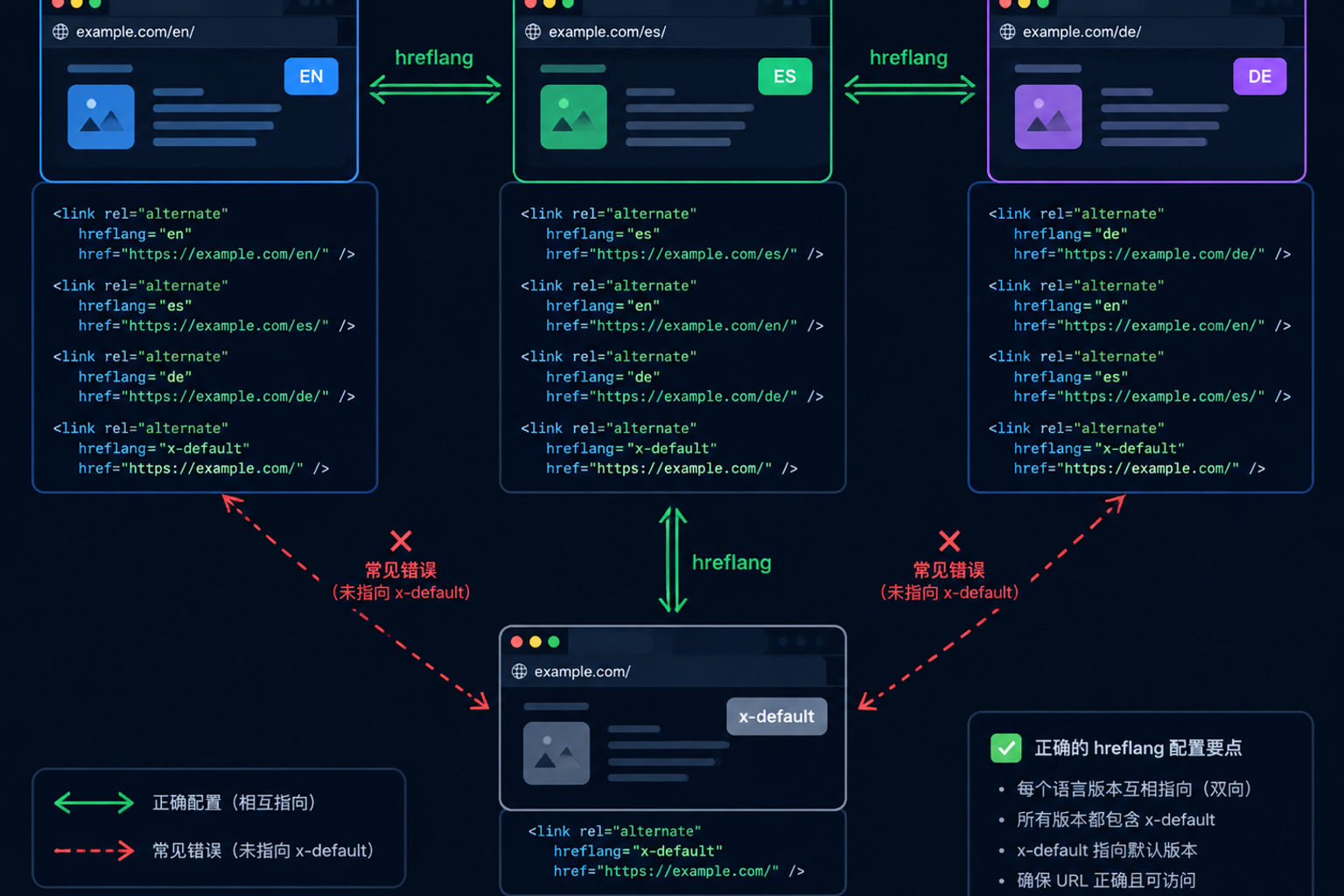
Google's Hummingbird and RankBrain algorithms read the hreflang tags in the page header to determine which region's users should see a specific page.
Its role is simple: to tell search engines that this URL is the English version and that URL is the Spanish version, confirming they cover the same topic and should be displayed to users in the corresponding languages.
There are a few key rules that must be checked line-by-line during construction:
First, hreflang tags must appear in pairs. If you have an English and a Spanish version, both pages must point to each other, and you must add an x-default tag to specify the default version. If you miss either side, Google might ignore one of the languages.
Second, do not replace hreflang with JavaScript-based auto-redirects. Many sites use a "detect browser language and redirect" method; Google crawlers only ever see one version, and other language pages are essentially not built.
Third, for the same content in multiple languages, the canonical tag must point to the canonical URL of that specific language, rather than pointing all of them to the English version. Otherwise, Google will consider other languages to be duplicate content and will not index them.
These settings are not complicated, but if you miss even one, the result is: the multi-language site you paid for only has an English presence in Google's eyes. For specific line-by-line configuration methods, you can refer to the hreflang Practical Guide: Line-by-Line Checklist for Multi-language Sites.
From "Translatable" to "Searchable": 4 Things to Confirm During the Build
Back to the initial question: what exactly are you building when you build an independent cross-border e-commerce site?
You aren't building a "page that looks like it has English on it"; you are building a structure that can be correctly identified, indexed, and displayed by search engines in your target markets.
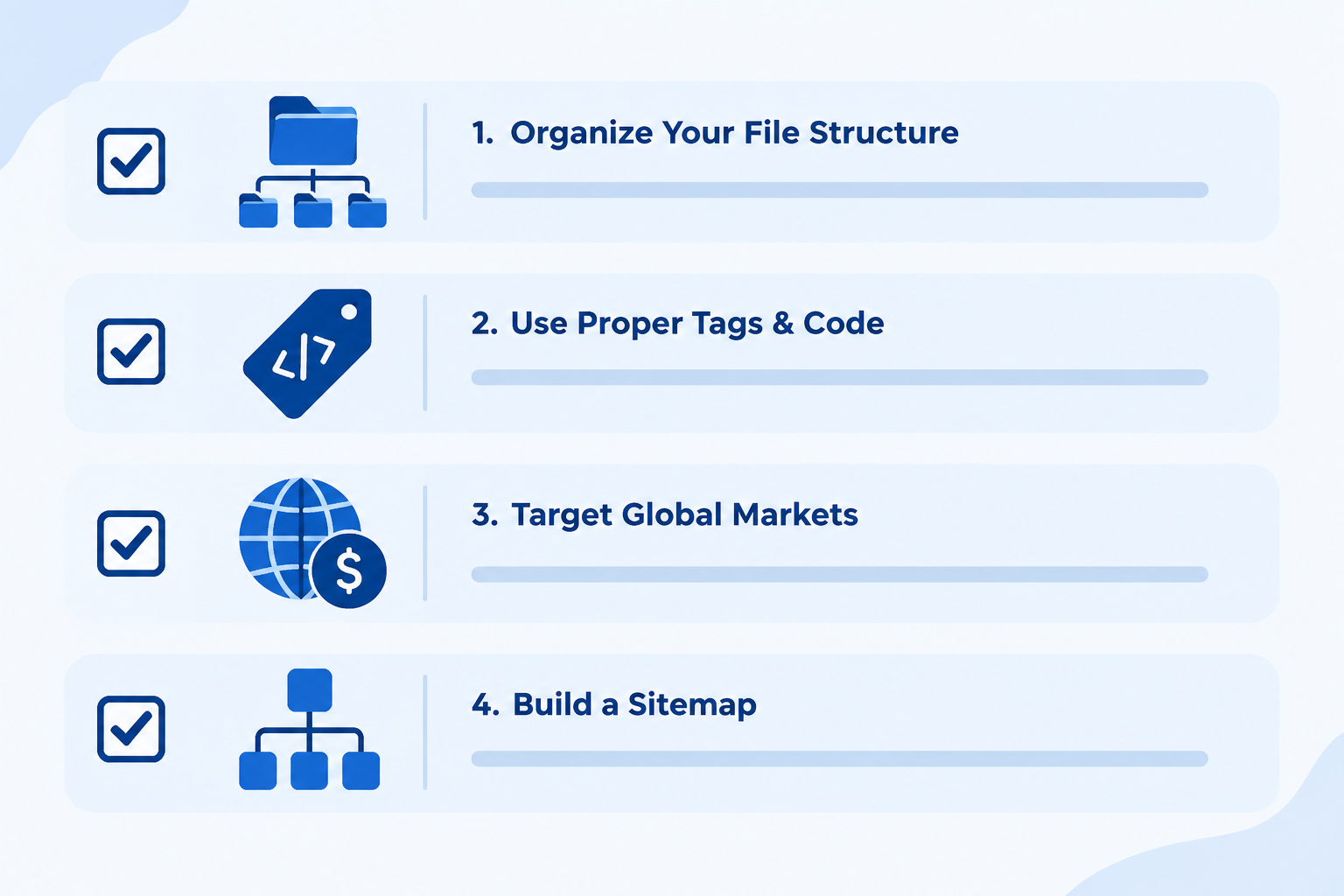
Specifically, you need to confirm four things during the build phase:
1. How many languages are in your target market? Whether you use separate directories (/en/, /es/) or subdomains (es.domain.com), once the structure is live, changing it is very costly.
2. Have the hreflang and canonical tags for every language page been configured in pairs, and is an x-default specified?
3. To what extent has localization been implemented—not just text, but also units of measure, currency, sizing, and contact format?
4. Has the sitemap been grouped by language and submitted to Google Search Console?
If any of these four things are not done properly, the traffic performance of your multi-language site will suffer. If you are currently evaluating foreign trade independent site development services, you can write these four points into your requirement list and confirm them item by item with the developer.
Further Reading: What to look at next
If you are still hesitant about whether to start now, it is recommended to first determine if your product and market are a good fit. You can refer to Cross-border E-commerce Market Status: 3 Situations Where Building an Independent Site Makes Sense, and 2 Where You Should Hold Off.
If you have already decided to proceed, check out this guide to prepare materials and avoid launch delays: Don't Start Building Your Foreign Trade Site Yet: If 4 Types of Assets Aren't Ready, Your Launch Will Be Delayed by at Least Two Weeks.
Terminology Recap:
Independent Site: A website with your own domain and data, distinct from platform stores.
hreflang: A tag used between multi-language pages to notify the search engine of language attribution; it must be configured in pairs and include an x-default.
Canonical: A tag that tells search engines which URL is the canonical version for the current language; they should not all point to the English version.
Localization: Adapting more than just text, including units, currency, sizing, and usage habits.
Sitemap: A list of URLs submitted to search engines; multi-language sites must be grouped by language for submission.