
Standalone Site vs. Marketplace for Foreign Trade: 5 Dimensions to Work Out Who Owns the Traffic and the Money
You send out marketplace inquiries one after another, and eight of the ten replies you get back are price-shopping. You want to build your own site, but you're afraid of spending money and getting no visitors. This article breaks the difference between a foreign-trade standalone site and a marketplace into three sets of accounts: who owns the traffic, how the money gets spent, and where inquiry quality differs. It includes a comparison table, a checklist of the 5 things you must ask before build
目录
- Who owns the traffic decides whether you can still keep going in year two
- Marketplace costs come every year; standalone-site costs are concentrated up front
- Where inquiry quality differs: one is comparing prices, the other is looking for you
- Before you commit, get clear answers on these 5 things
- Three statements to match yourself against, so you're not torn about which to do first
If you've also been frustrated by "the money's spent, but no customers are coming in," this one is worth reading to the end:
The inquiries in your marketplace dashboard look lively enough, but eight out of ten are mass-sent price-shopping notes; and when you want to build your own site, you get stuck on three questions — do I need ICP filing, will anyone actually come, and how much does it really cost per year.
Put plainly, the difference between a foreign-trade standalone site and a marketplace isn't about which is more advanced — it's two sets of accounts: who owns the traffic and how the money gets spent. Once you're clear on those two things, choosing a path stops being agonizing.
Who owns the traffic decides whether you can still keep going in year two
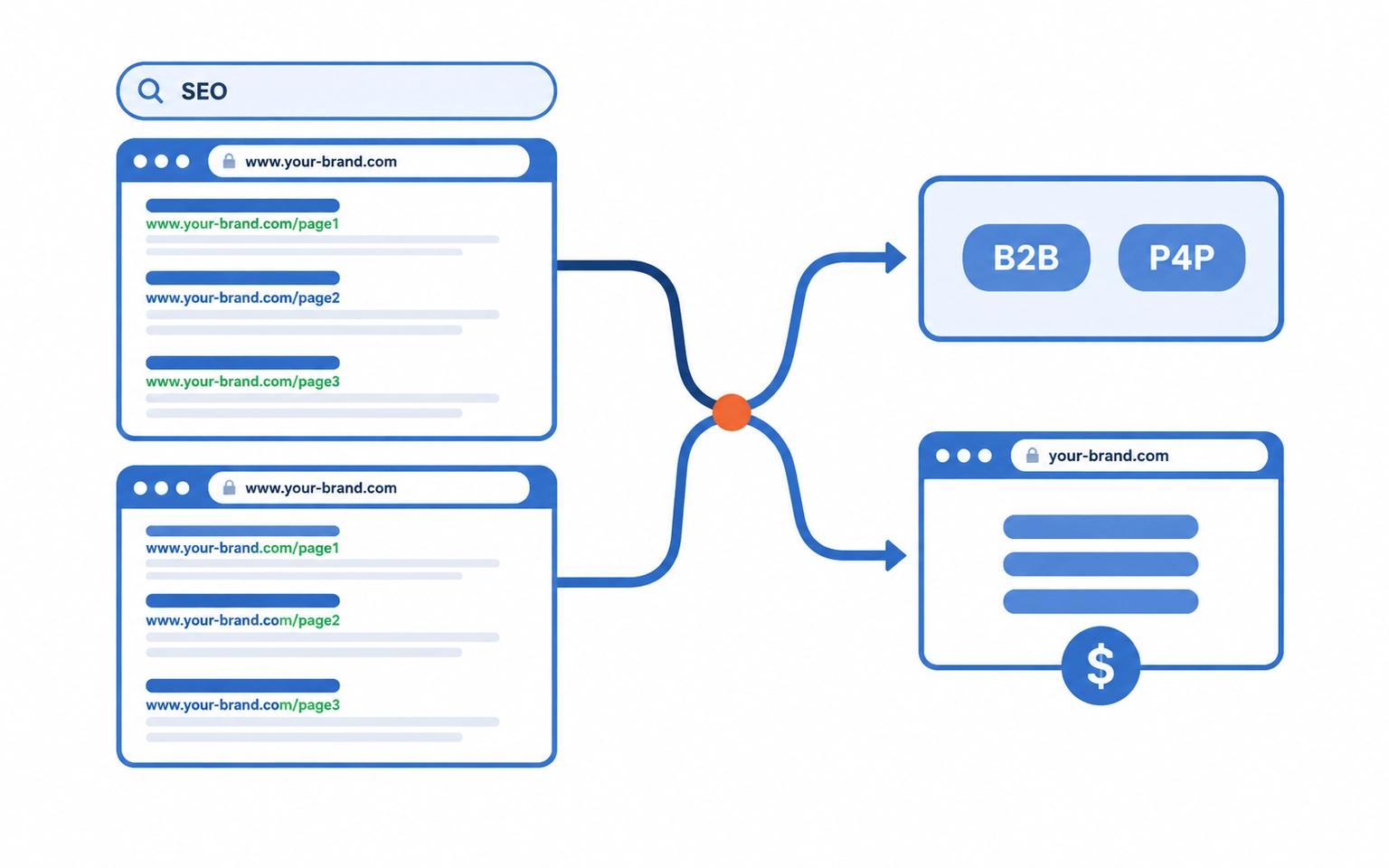
A marketplace is essentially renting a booth. The foot traffic belongs to the mall, "similar products" and competitors' ads sit permanently next to your product page, and the first thing a customer does after clicking in is compare prices; only the second thing is deciding who to talk to.
A standalone site is a shop you open yourself. You have to bring the passersby to your own door: Google organic search, Google Ads, social media, trade-show business cards, emails to past customers. It's slow, but the people who come in are the ones you brought, and there are no competitor ad slots on the page.
The most practical difference is in what accumulates. On a marketplace, what you build up is store ratings and platform authority — neither of which you can take with you; on a standalone site, you build domain authority, indexed pages, customer email addresses and inquiry records, all of which you can carry with you even if you switch providers.
Marketplace costs come every year; standalone-site costs are concentrated up front
First, let's lay out where the money goes on both sides:
| Comparison item | Marketplace (membership-based B2B/B2C) | Foreign-trade standalone site |
|---|---|---|
| Main expenses | Annual membership fee + on-site pay-per-click ads (P4P) | Domain, server, site build, content, ongoing maintenance |
| Payment rhythm | Annual fee paid yearly, clicks burn daily, more expensive in peak season | Site build is usually one-time, server and maintenance are yearly |
| After you stop paying | The store basically halts; rankings and traffic go to zero | The site is still there; indexed pages and customer emails remain |
| Traffic sources | Buyer traffic distributed by the platform | Google search, Google Ads, social media, email, past customers |
| Time to results | Open a membership and you can post products; inquiries depend on budget | Live in about 3–6 weeks; organic traffic usually starts ramping up in 3–6 months |
| Data ownership | Visitor details and search terms are mostly not available in full | Visitor sources, landing pages and inquiry details are all in your own hands |
Now for the common cost ranges in the industry — this is a general picture, not any one provider's quote:
- Domain: about RMB 60–120/year
- Server or hosting: about RMB 500–3,000/year, depending on traffic volume and whether CDN is included
- Template-based or SaaS site building: commonly RMB 6,000–20,000
- Including multilingual support, an inquiry system and basic Google SEO setup: commonly RMB 20,000–50,000
- Custom development (ERP integration, online quoting, etc.): from RMB 40,000, adding up by feature
- Content and image production: priced per page or per article, commonly RMB 100–800/page
- Ongoing maintenance and SEO: a few hundred to a few thousand RMB per month
Specific quotes need to be assessed based on requirements — feel free to ask us. Don't compare the lowest and highest quotes directly; the gap basically comes down to four things: number of pages, number of language versions, whether custom features are needed, and who writes the content. If you want to work out the full annual bill in detail, read this: How Much Does a Standalone Site Really Cost Per Year?.
Where inquiry quality differs: one is comparing prices, the other is looking for you
The typical marketplace inquiry is "one message sent to ten suppliers." Only if you reply fast and quote low do you have a slight chance. This isn't anyone's fault; it's determined by the price-comparison environment of the marketplace.
A standalone-site inquiry usually looks like this: the customer searched a specific term on Google, went through two or three pages, looked at your product page and factory photos, filled out the form, and clearly wrote the specs and quantity they need. Fewer in number, but one conversation can move things much further forward.
So the two sides shouldn't have the same focus. On a marketplace you watch inquiry volume and response speed; on a standalone site you watch keyword coverage and inquiry conversion rate — for the specifics on this, see Inquiries and Conversion. If the first question you ask is "how many inquiries does a standalone site get per month," you're applying marketplace thinking to a different channel.
Before you commit, get clear answers on these 5 things
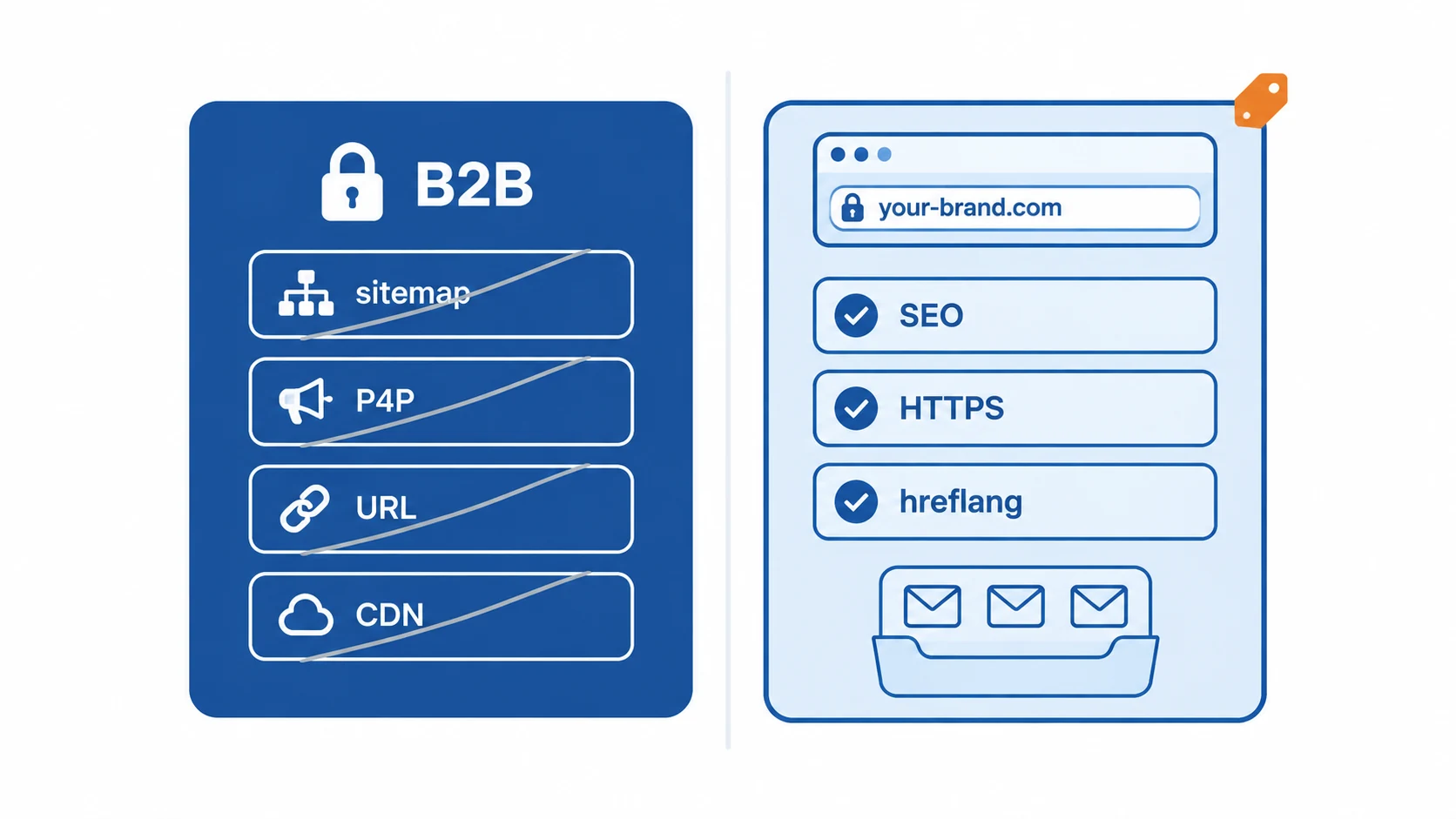
- Whose domain is it? Is the registrant listed as the company or the service provider, and can you log into the backend yourself?
- Can the data be exported? Visitor sources, landing pages, search terms, inquiry details — ask about each one.
- Can you edit pages yourself? Titles, descriptions, H1s, adding and removing product pages — you shouldn't have to wait in a queue every time.
- How many seconds does it take to load on mobile? Open the homepage on mobile data; if it takes more than 3 seconds, ask why.
- Where do inquiries land? Do they go to the company email, or only to the service provider's backend, and are there auto-replies and follow-up records?
On a marketplace, you mostly can't get all five of these in full; on a standalone site, as long as you make them clear before work starts, they can all go into the contract — that's the practical meaning of the word "independent." As for whether to use SaaS, open source or custom development, take a look at Standalone Site Platform Comparison first.
Three statements to match yourself against, so you're not torn about which to do first
Standardized products, low order value, volume-driven, and you want orders this month: get cash flow going on a marketplace first, and set aside a small budget to test a standalone site at the same time.
Customizable products, high order value, customers who want to see the factory and case studies, and several rounds of back-and-forth communication: a standalone site is more worthwhile, with the marketplace as a supplement.
You've been on a marketplace for two or three years, inquiries are getting more expensive and competitors more cutthroat: treat a standalone site as a second plot of land, launch in small steps first, and don't sink a big budget in all at once.
Don't rush to bookmark this — do the math on your own numbers once, and it'll stick much better. Write down what you spend on the marketplace in a year — membership fees, ad spend, operations labor — then ask yourself one question: if I stopped paying for a year, what would I still have left? Whatever is left is what the standalone site needs to make up for. You can start with a free site-building needs assessment, get clear on language versions, page count and budget range first, and then decide whether to go ahead.