
The Product Listing Page Trap in Gu Xiaobei Cross-Border E-Commerce: Not an Image Wall, TDK Must Target Audiences and Scenarios
Bosses who read Gu Xiaobei's cross-border e-commerce content are most enthusiastic about product selection when building independent sites, but the part where they get stuck is the product listing page. With 8 years of experience in foreign trade independent sites, we categorize this issue as a lack of directional focus in listing page TDKs. Bing and Google rank pages based on whether titles, descriptions, and listed products match search intent, and product image wall listings only drain ad bud
I've reviewed the team's consulting records over the past two years: bosses who read Gu Xiaobei Cross-Border E-commerce content are usually most enthusiastic about product selection when discussing independent sites, but the part where they ultimately get stuck is often the product listing page. This is not a coincidence, but rather two different weighted links within the same mindset.
Having built foreign trade independent sites for 8 years, we are accustomed to understanding the "Gu Xiaobei Cross-Border E-commerce" content framework as an operational approach that uses content to filter demand and then uses independent sites to handle conversion. It's not about some specific platform trick, but rather grounding every step of traffic landing firmly in the website structure.
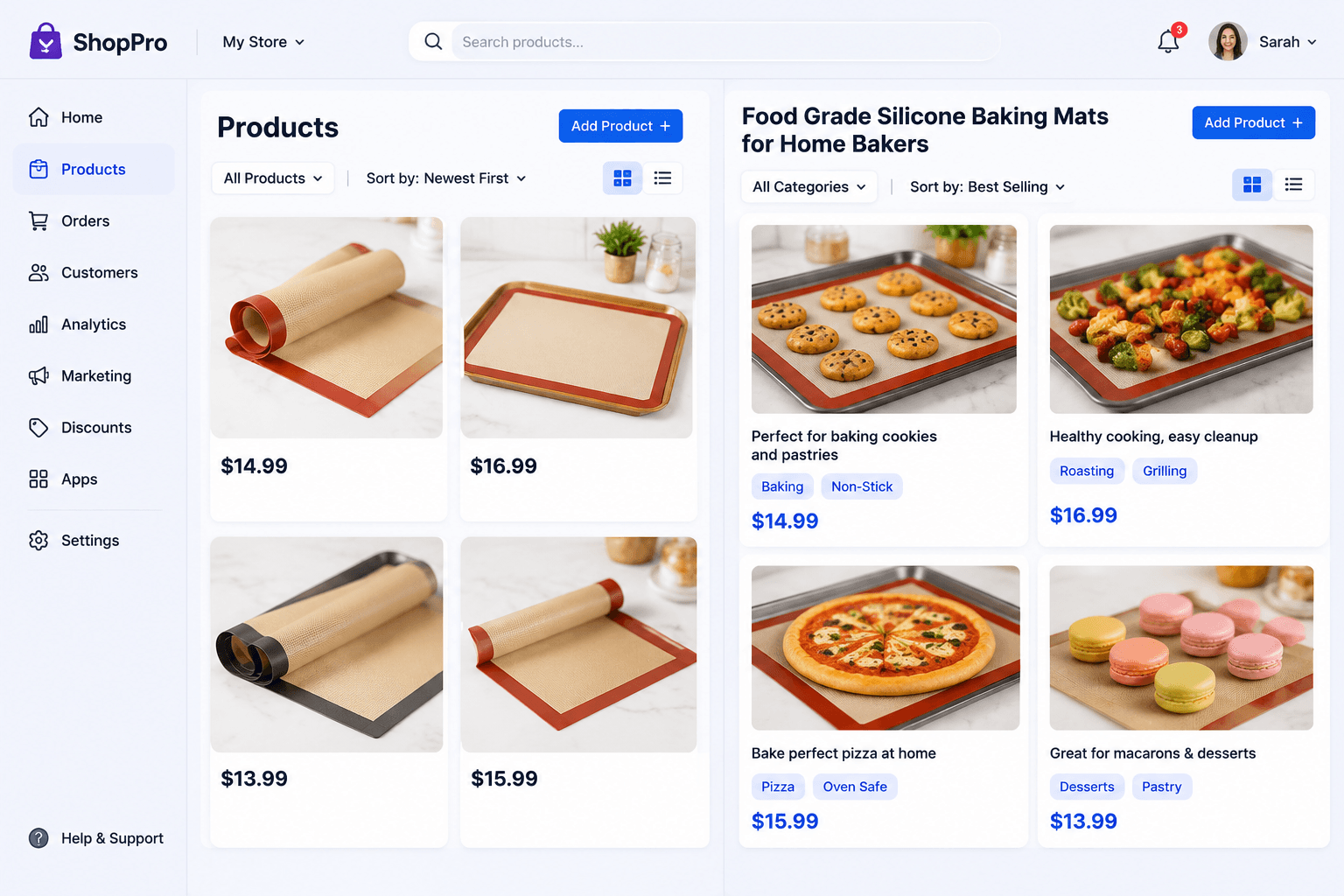
However, the cognitive trap that many people fall into is this: treating the product listing page as a wall of product images. Writing "Products" as the title, putting a company profile in the description, and marking a price next to the product image, just waiting for Google and Bing to index it. As a result, the page gets indexed, the click-through rate is low, and people who come in don't submit inquiries.
A product listing page is not a display cabinet; it's a demand-matching card in the search results.
Bing and Google's evaluation of such pages is much more detailed than we think. Google uses algorithms like RankBrain to understand the deep connection between pages and queries, and Bing has a similar entity matching mechanism for product listing pages. Whether the page title, description, and product information in the list match the audience, scenario, and purpose that the search term is trying to solve directly determines whether it will be ranked high. If the TDK (Title, Description, Keywords) of a listing page is just the product model plus price, the algorithm will treat it as a thin, aggregated content page.
Let's clarify this cognitive trap first: TDK is not built by stacking keywords
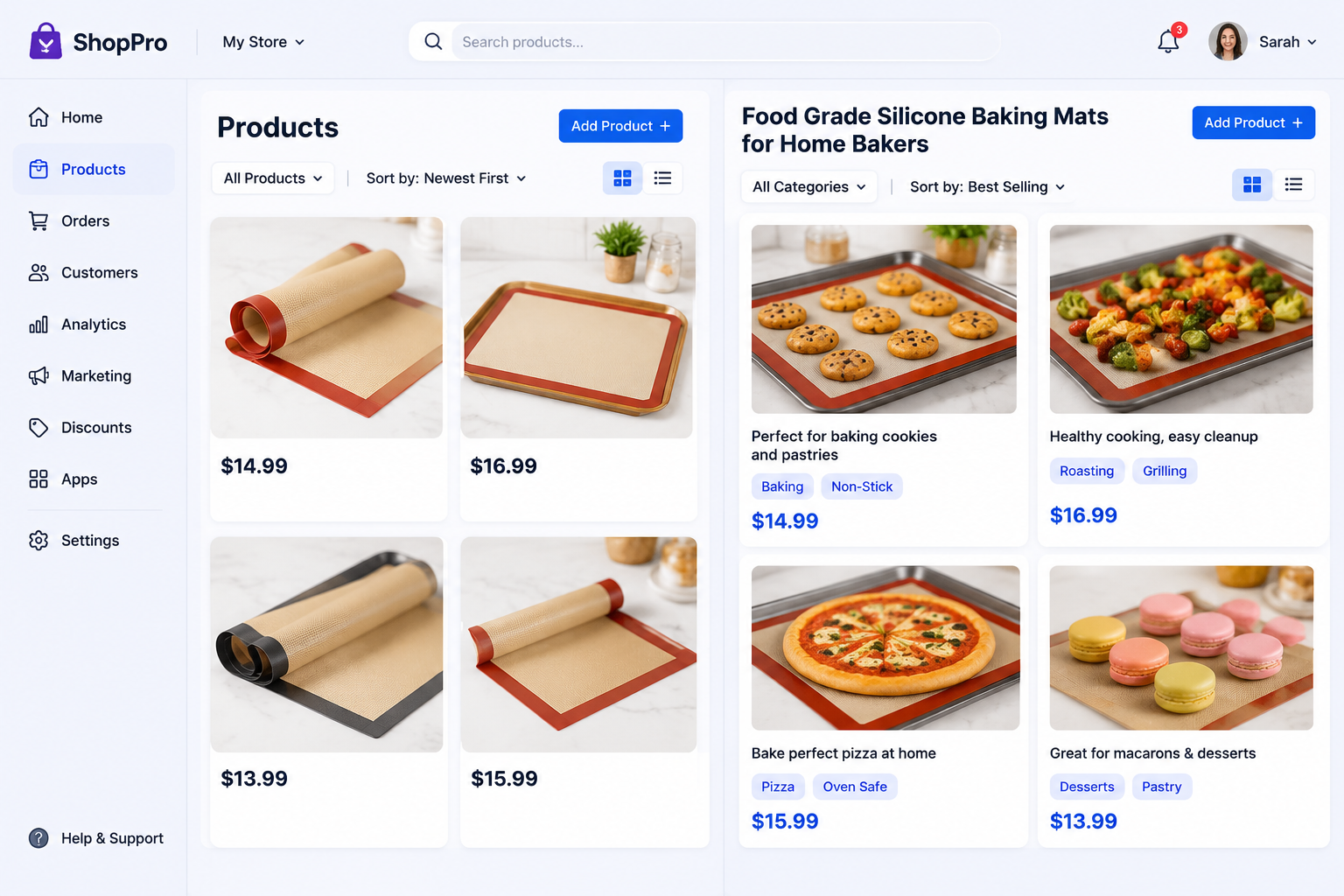
I took on a consulting client—a factory making silicone baking mats. The product listing page title was written as "Silicone Baking Mat," and the description said "we are a professional manufacturer." The page was indexed normally, but the clicks from organic search were pitifully low. The problem wasn't the product; it was that the title and description only stated what the product was, without saying who it was for or what scenarios it was used in.
The directional focus of TDK is to let the algorithm see at a glance which type of demand this page matches.
- Add audiences or scenarios to the title, such as "Food Grade Silicone Baking Mats for Home Bakers."
- Don't write company slogans in the description; write about what usage problem this listing page solves.
- Don't just stack one broad keyword; break it down into specific use-case words.
When creating such pages, we first conduct a round of keyword research, sorting out terms like "silicone baking mat for macaron" and "reusable baking mat for bread." Then we map them to different category pages instead of stuffing everything into a single product list.
Another overlooked layer in the listing page layout is the product card itself. Even if the title is correct, if the individual product card's title, image alt, and one-sentence description are still just model plus price, the overall page score still won't go up. We advise clients to add a line of scenario description to each product card, such as "Ideal for home baking, reusable." This line of text doesn't take up much space, but it gives both the algorithm and buyers a signal: this listing page is for a specific type of user.
Different product category keywords mean categories must be split; vertical is more useful than trying to be all-encompassing
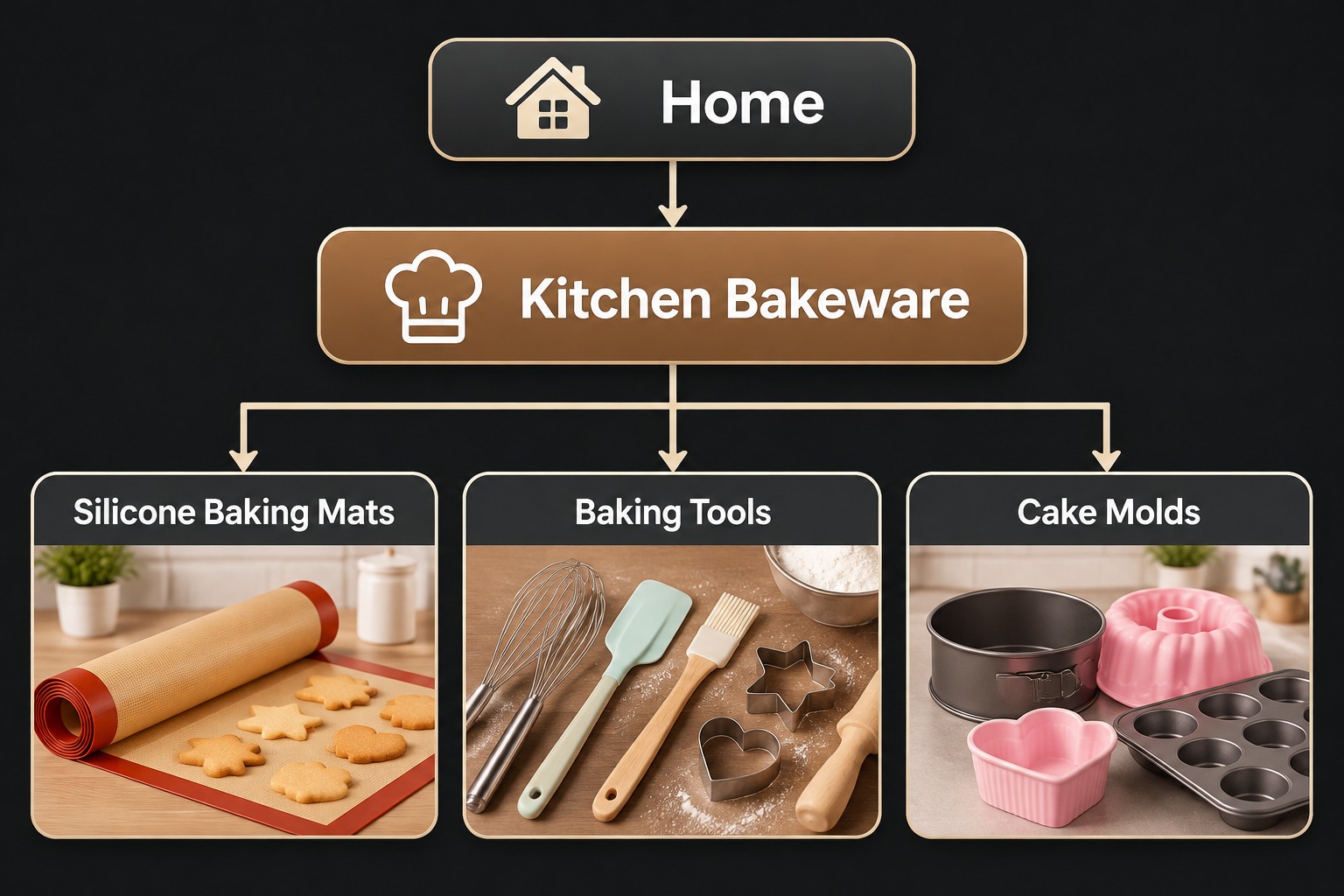
One thing repeatedly emphasized in Gu Xiaobei's cross-border e-commerce content is verticality. This verticality isn't just about vertical product selection; it also includes a vertical website structure. If a product listing page simultaneously features baking mats, oven mitts, and cake molds, no matter how the title is written, they will dilute each other.
Google and Bing determine whether a listing page deserves to rank higher by looking at whether the products in the list revolve around the same type of buying intent.
If product category keywords differ, create corresponding categories. Each category page should only cover one type of product, with the TDK written around that category. This reduces the competitive relationship between pages significantly and makes them easier to understand.
- One category corresponds to one audience or scenario; do not mix them.
- Include use cases or audiences in the category page titles to avoid just writing the product name plus "Products."
- The homepage can point to multiple categories, but keep a single line of focus within each category page.
Self-Check: Three questions to see if your listing page will be judged as low quality
You don't need to look at the code; you can judge by looking at the page itself.
- Can a stranger buying from this page's title tell "who it is for"?
- Do the products on this listing page all belong to the same usage scenario?
- Does the description of this page clearly state how it differs from another similar category page?
If you can't answer even one of these three questions, this listing page is unlikely to get a good position on Bing and Google. When we handle foreign trade independent site case teardowns, we often find that the money spent on ads in the early stages is wasted because these pages fail to catch the traffic.
Don't wait until your ad budget is burned to fix your listing pages. If page titles and category structures are not vertical, no matter how much traffic you drive, it will all leak out.
Finally, a reminder about timing: late August to early September every year is the preparation and redesign window for the cross-border peak season. If your product listing pages are still product image walls, take this time to sort out your TDK and categories before peak season traffic hits and you have to scramble.