
Why Aukey's Independent Site Has Stable Search Performance: Unpacking the Structured Data Layer Makes It Clear
Many business owners studying Aukey's independent site focus solely on visuals and traffic while ignoring the layer of structured data within its pages. I've seen too many sites fail to get indexed half a year after launch—the problem isn't thin content, but search engines failing to understand the relationships between products, prices, and breadcrumbs on the page. Sites like Aukey achieve stable results because they place the correct structured data types on the right pages. In this article, I

目录
- 1. First, Break Down Aukey's Independent Site into Three Layers Instead of Copying the Whole Site
- 2. Decision Tree Branching: Your Site and Aukey Are Not the Same Model; Copying Wrong is Worse Than Not Copying
- 3. When to Implement Structured Data and When Not To
- 4. Three Steps to Take Away from Aukey's Independent Site—Don't Rewrite the Entire Site Right Now
- 5. What to Learn Next
Many business owners, upon looking at Aukey's independent site for the first time, come to a counterintuitive conclusion: the pages aren't flashy, and many are even standard product lists with details. Why does it always show up in search results? I've been doing cross-border e-commerce independent sites for 8 years, and I've met quite a few people asking if they can replicate Aukey's site. My answer is: what you can copy is never the appearance; it's the layer of structure inside its pages that helps search engines understand them.

In our industry, we call this structured data. It's not for visitors to see; it's for Google to read. Once structured data is applied to a product page, Google can distinguish which is the price, which is the stock, and which is the review, without having to guess.
1. First, Break Down Aukey's Independent Site into Three Layers Instead of Copying the Whole Site
When I receive a site that needs optimization, my first priority isn't to look at whether it looks good, but whether it clearly explains page relationships. Large sites like Aukey's independent site typically deploy structured data across three areas:
- Breadcrumbs: Tell Google the position of this page within the entire site. Suitable for all pages and forms the absolute basis of basics.
- Product: Includes name, SKU, price, and stock status. Suitable for standard ready-to-stock items; forcing it on B2B customization pages will only mislead users.
- Organization Info: Mark up the company name, logo, contact info, and social media accounts. Suitable for the official website homepage and About Us pages to establish entity credibility.
These three points are not parallel; they have a sequential order. First, add breadcrumbs, then organization info, and finally decide whether to implement product data based on your business model.
2. Decision Tree Branching: Your Site and Aukey Are Not the Same Model; Copying Wrong is Worse Than Not Copying
The most troublesome situation I've seen is when a B2B inquiry site blindly copies Aukey's retail product structure. Aukey is a retail-type independent site with clear SKUs and inventory; if your site does custom machinery, you don't even have fixed prices or inventory, and forcing a Product markup will cause it to be judged as a mismatch.
Therefore, my decision tree looks like this—find where you fit:
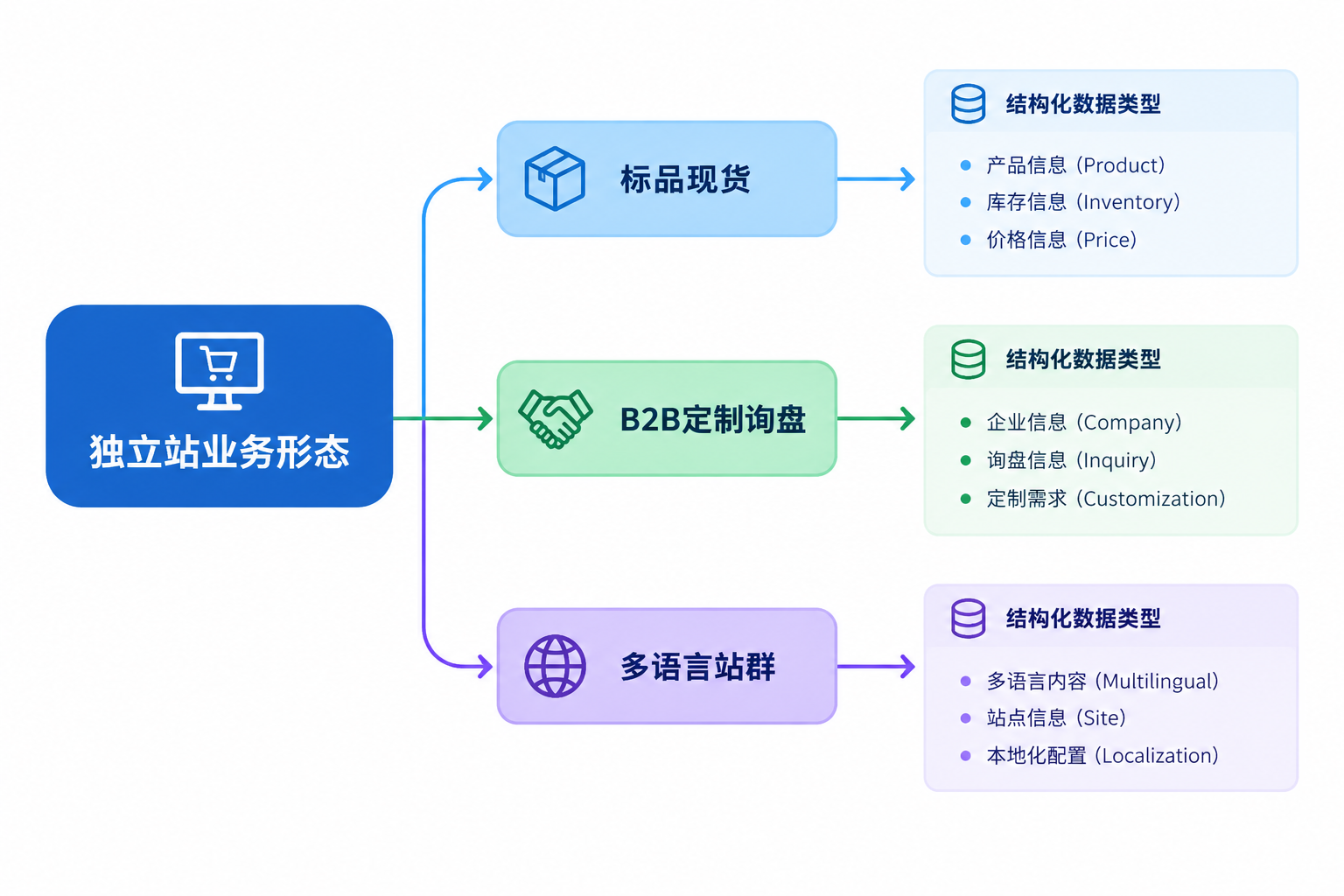
- If you sell standard ready-to-stock items, directly learn from Aukey's product layer: Product + Offer + AggregateRating. Mark up price, inventory, and ratings to give Google a chance to display rich snippets.
- If you do B2B custom inquiries, first implement Organization, BreadcrumbList, and FAQPage to clearly explain the company entity and FAQs. Product pages should only have basic markup—do not stack prices and ratings.
- If you operate a multilingual site network, first set up hreflang cross-links, then apply structured data. Without hreflang, Google treats language versions as duplicate pages, and structured data won't save them.
Pitfall warning: Do not stuff every page with all types. Google will think you are trying to manipulate search results, and stacking the wrong types is equivalent to self-inflicted site demotion.
3. When to Implement Structured Data and When Not To
The function of structured data is to help search engines more accurately understand page entities; it does not guarantee rich snippets. After completing this type of optimization, I usually suggest clients verify it using Google's Rich Results Test. Passing means the code itself is fine, but whether rich snippets ultimately appear is still determined by Google's algorithm.
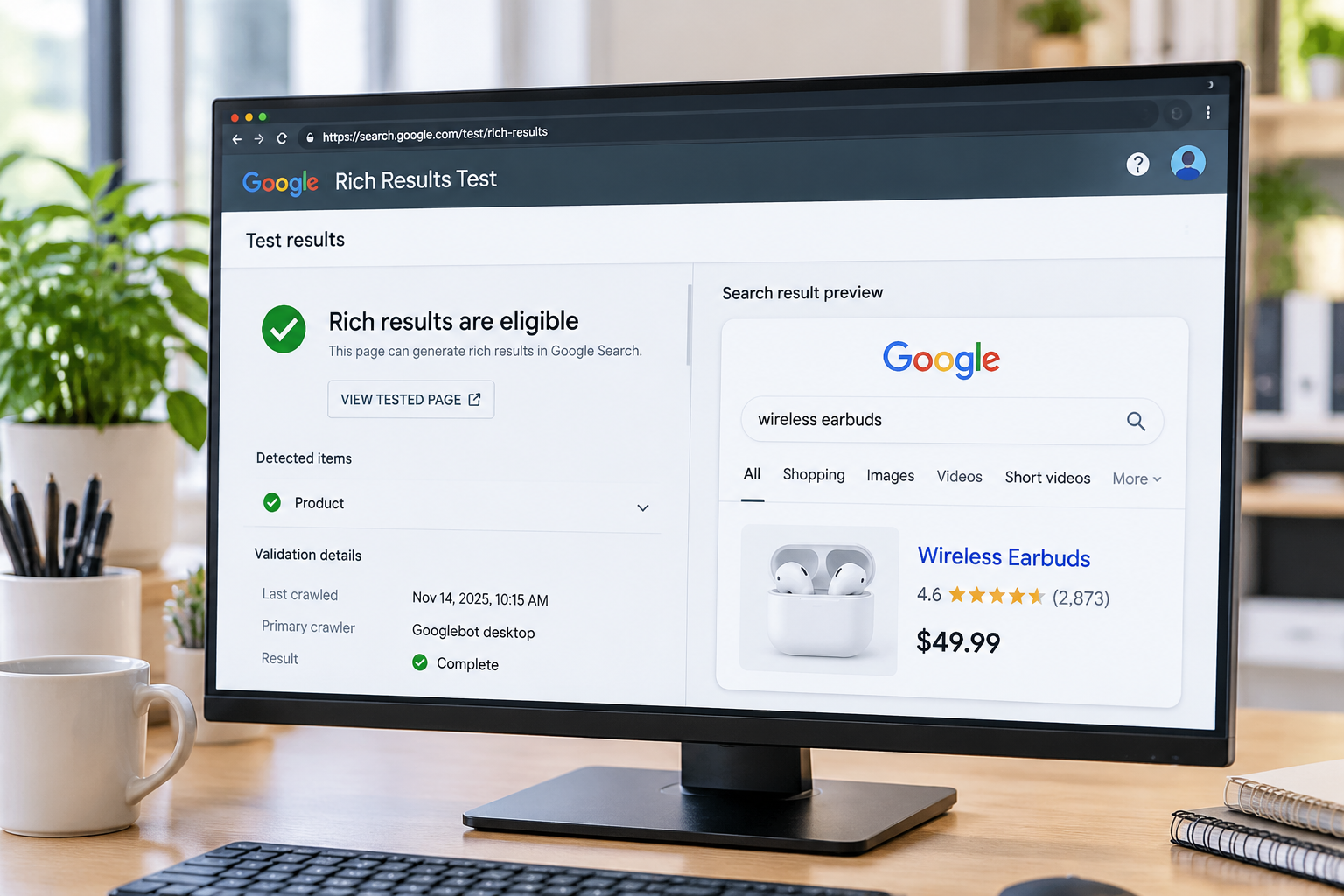
A few criteria for our internal judgment:
- Company information goes on the homepage and contact page, using Organization with a logo, not on product detail pages.
- Breadcrumbs go on every content page, especially for websites with category hierarchies exceeding two levels.
- FAQPage should only be placed on pages with genuine Q&A content; do not turn product selling points into Q&As just to chase rich snippets.
- Products should only be placed on landing pages with real purchasing or inquiry actions; content and blog pages do not need them.
This sequence is also what we solve first when doing indexing optimization for clients. Many sites are not indexed after launch; it's not because of thin content, but because Google crawls the page and cannot figure out what the main entity is. First make page relationships clear, and then talk about rankings—this is the sequence I've repeatedly verified over the past few years. You can refer to the foundational actions discussed in How to Do Google SEO for Cross-Border E-Commerce Independent Sites: 6 Steps in Order, Don't Just Start Publishing Articles to fix your technical foundation first.
4. Three Steps to Take Away from Aukey's Independent Site—Don't Rewrite the Entire Site Right Now
If you look at this and feel your site's structured data is a mess, don't rush to rewrite the entire site. My suggestion is to follow this order:
- Spend a day pulling one homepage, one category page, and one product detail page each, run them through the Rich Results Test, and see if they pass currently.
- Add the simplest breadcrumbs to pages that didn't pass; this change is small and low-risk.
- Evaluate your business model: add product data for standard goods, organization and FAQ for B2B, and prioritize hreflang for multilingual sites. Verify each change, and only roll them out in batches once verified.
The payoff for doing this is that Google doesn't need to re-understand your site, crawling efficiency will increase, and indexing will become more stable. But remember, structured data is infrastructure, not a ranking switch. True growth still relies on content, backlinks, and conversion coordination, which I mentioned in An Independent Site Is Not a Platform: 'Independence' Comes Down to Domain and Data Ownership. The foundation of an independent site is ownership, not piling on features.
5. What to Learn Next
If you really want to study the underlying logic of Aukey's independent site, my next suggestion is to look at two things: first, the official field definitions of Organization and Product on Schema.org, which are the source of structured data; second, open a competitor's product page, view source code to find the JSON-LD section, and check which fields they filled in and which they left blank. Don't just look at what Aukey's pages look like; look at what information they marked up for Google. Once this step is done, when you look at your own site, you will know which part needs supplementing and which doesn't.