
An independent site is not a platform: Unpacking "independence" down to domain and data ownership
An independent site is neither Shopify nor WordPress; it is not any single platform. It refers to a website format where you register your own domain, control your own data, and decide your own website structure. This piece takes a chronological approach from the platform store era in 2005 to the cross-border e-commerce boom in 2018, unpacking the true meaning of "independence," giving you three criteria to judge ownership, and explaining why it's worth starting early on a 3-5 year horizon.

目录
- Around 2005: Platform Stores Were the Only Choice for Foreign Trade
- From 2012 to 2018: How the Word "Independent" Came to Be
- From 2018 to the Present: What Exactly Is the Difference Between an Independent Site and a Platform?
- Looking 3 to 5 Years Ahead: Why This Matters and Is Worth Thinking About Early
An independent site is not a platform. It refers to a website format: you register your own domain name, control your own data, and decide your own website structure and content. It is not Shopify, not WordPress, not Wix, and not any website-building SaaS. These are simply tools you can choose when building an independent site, not the independent site itself.
In our industry, we are used to understanding an independent site as "a website that you completely own" (translated as independent site in English). The key is "ownership"—the domain name is under your name, the data is in your hands, and you have the final say on the page structure.
Around 2005: Platform Stores Were the Only Choice for Foreign Trade
Let's take it back twenty years. If you wanted to reach overseas customers for foreign trade, you practically had to use B2B platforms. Alibaba.com, Made-in-China, and Global Sources—you paid annual fees to open a store, listed your products, and waited for the platform to distribute traffic.
Your product page URL took the form of platform.com/your-store.
You are not the owner of the website; you are a tenant under someone else's domain name.
During this stage, the term "independent site" didn't exist because everyone only had one option: platforms, so there was no need to distinguish. It's much like how the term "offline store" didn't exist—when every store was inside a mall, no one needed to emphasize that they were independent.
From 2012 to 2018: How the Word "Independent" Came to Be
A group of foreign trade professionals began buying their own domain names and building websites. Back then, however, they were called "corporate websites" or "company websites," meant to serve as a storefront to complement exhibitions and email outreach. The website content was simple—a few product photos plus contact information—with very little structure to speak of.
Around 2018, cross-border e-commerce exploded, and tools like Shopify and WooCommerce lowered the barrier to entry for website building. A massive wave of sellers overflowed from platforms to build their own sites and sell goods. To distinguish themselves from "platform stores," the industry began frequently using the term "independent site."
"Independent" is not a brand name or a product name; it is a relative concept—relative to platforms, your site is independent.
Therefore, the question "Which platform is an independent site?" has a premise error right from the start: it is not a platform; it is the opposite of a platform.

From 2018 to the Present: What Exactly Is the Difference Between an Independent Site and a Platform?
It's not a difference in tools, but a difference in ownership.
- Domain Ownership: The domain name of an independent site is registered under your name, and as long as you renew it, it remains yours. A platform store's web address is assigned by the platform, and it vanishes the moment you leave.
- Data Ownership: Customer inquiries, visitor behavior, and page content all reside entirely within your own database. On a platform, the data belongs to the platform, and you cannot export it.
- Structural Autonomy: How categories are divided, how hierarchies are arranged, and how internal links flow are entirely up to you. Whatever template a platform gives you is what you get; you cannot change the underlying architecture.
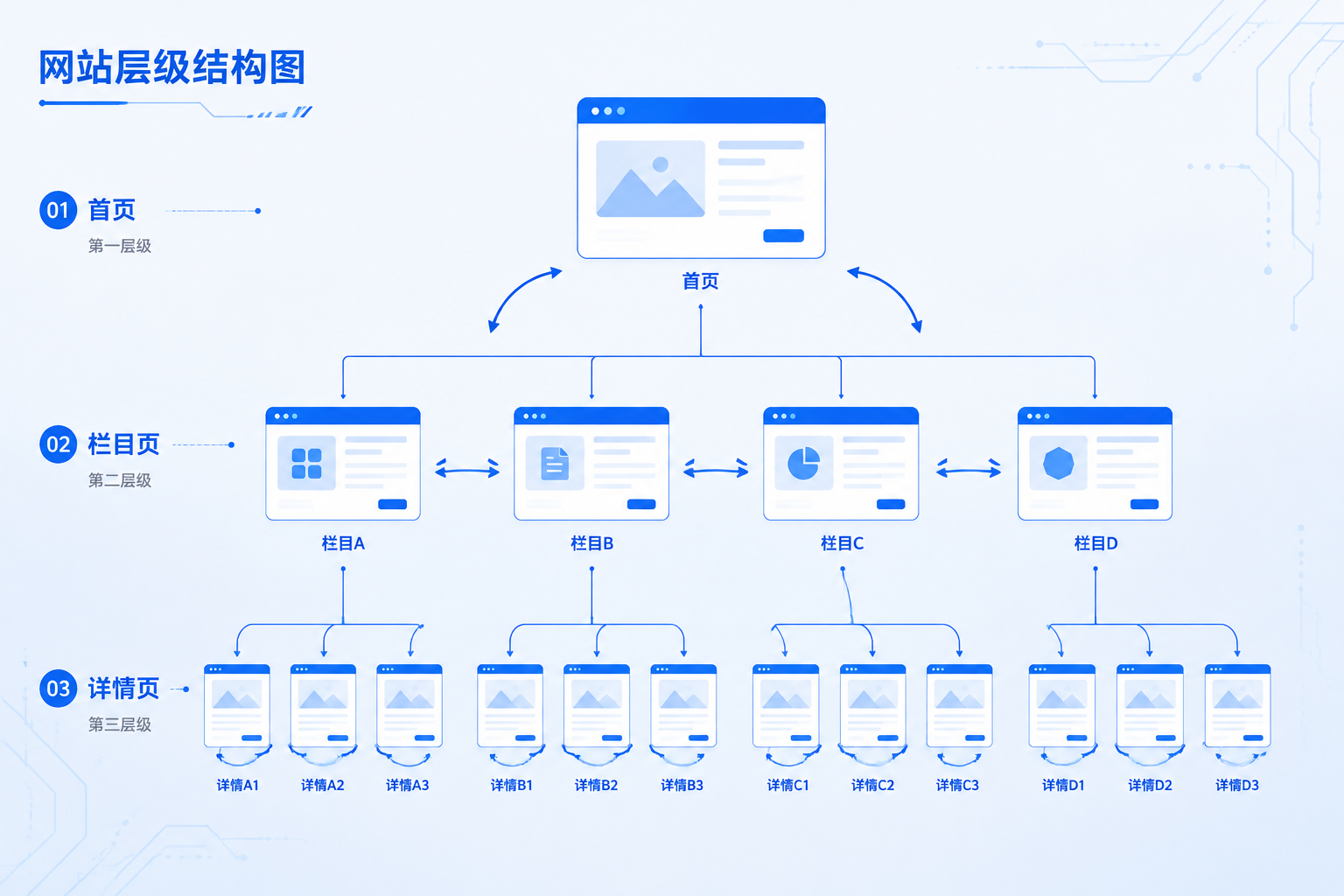
Let's elaborate a bit on structure here. When building independent sites, we usually keep the page hierarchy within three layers, keeping important pages closer to the homepage. This isn't a layout preference; search engine crawlers have limited crawling depth, and if the hierarchy is too deep, no amount of content quality will help them find it. Internal link anchor text must also be diversified; using the exact same keyword as anchor text for every single link across the whole site is equivalent to telling Google you only have one topic. When building content clusters, using a hub page to direct traffic to subpages mutually is far more effective than randomly adding internal links. You have zero control over any of this on a platform.
The core of an independent site is not "what tool was used to build it," but "whether the domain name and data belong to you." Tools can be changed at any time, but changing a domain name means starting from scratch.
To determine whether a site is a true independent site, check in this order:
- Check the domain WHOIS to see if the registrant is you or your company.
- Check whether data can be fully exported, including customer inquiries and content.
- Check whether you can modify page structures and category hierarchies yourself without needing platform approval.
Regarding specific building methods, SaaS, open-source, and custom development are three paths that can all create an independent site; the differences lie in cost and flexibility. We previously compiled a guide titled Independent Site Platform Comparison: SaaS, Open-Source, and Custom Development—Where the Cost and Time Differences Lie, which you can read alongside this.
Looking 3 to 5 Years Ahead: Why This Matters and Is Worth Thinking About Early
Platform rules change. Annual fees go up, traffic is redistributed, and algorithms shift; exposure you get today might go to someone else tomorrow. But an independent site's domain is yours, its content is yours, and the accumulated backlink authority is yours.
It's not that platforms shouldn't be used, but that you shouldn't rely solely on platforms.
Among the projects we've seen, the most common stumbling block is this: the moment a platform tweaks its rules, inquiries drop off a cliff, and that's when people finally think about building an independent site. From domain registration to content population to Google indexing, a standard corporate website takes 5 to 15 working days to launch, while one including multi-language and e-commerce modules takes 7 to 25 working days. If you treat your independent site as infrastructure from day one, three years from now you will have accumulated a batch of ranking pages and customers who find you directly.
What you need to prepare for getting started with website building is broken down step-by-step in the Website Building Getting Started & Preparation section. You don't need to read everything all at once; just getting your domain and category structure figured out is enough to get started.