
How to Approach an Independent Site: "Build First" vs. "Plan First" Involves Much More Than Just One Step
Many business owners immediately ask "how to get started with an independent site," but behind that question lie two completely different mindsets. One is spending money to throw a site together first, while the other is figuring out the customer acquisition path before lifting a finger. This article provides a checklist to help you evaluate where you currently stand, what must be decided before work begins, and how to structure your site so Google can easily find it, ultimately turning search t
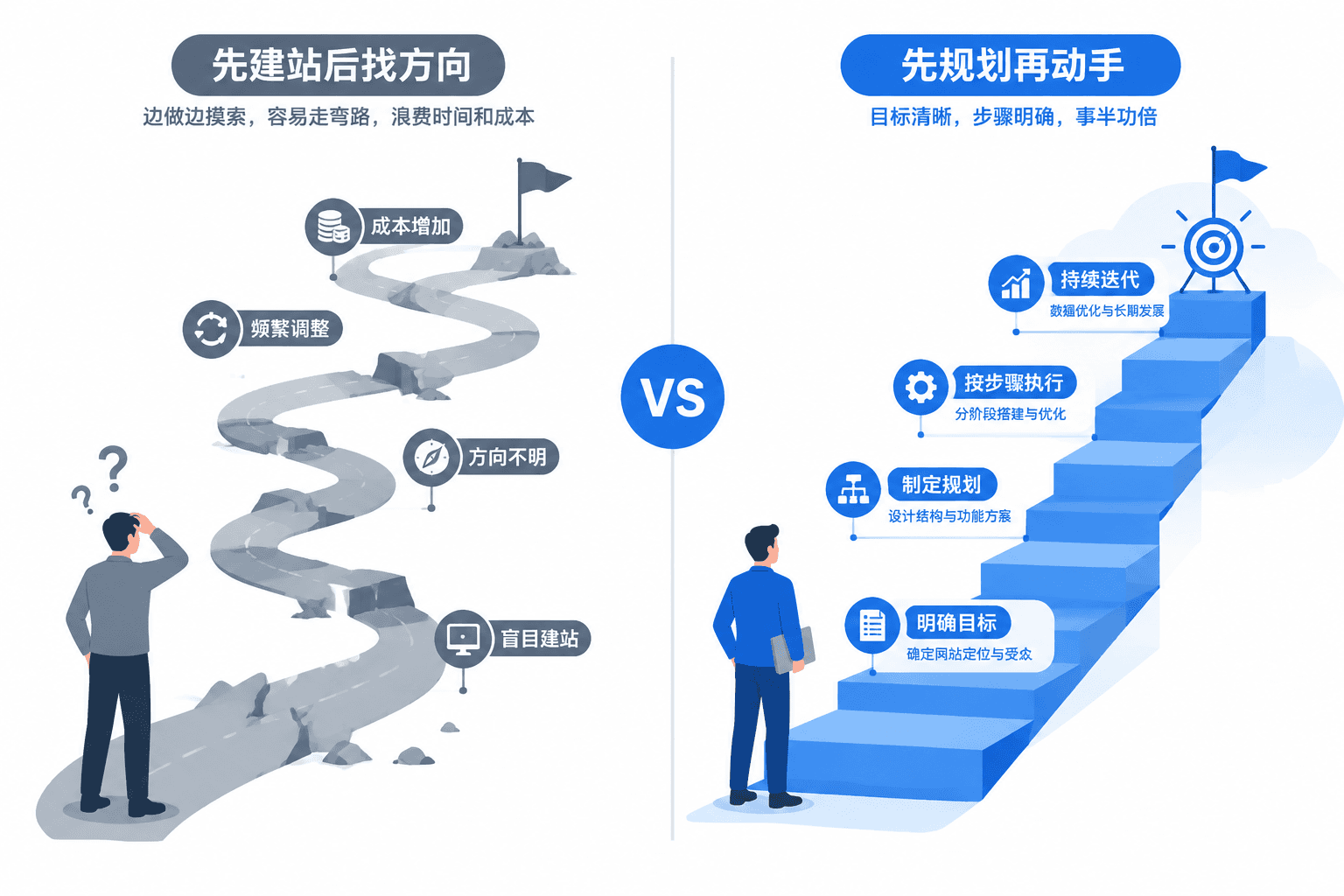
Ask yourself three questions first:
First, what terms will your target customers search for on Google to find your type of product?
Second, how do you plan to bring in your first batch of visitors after the website goes live?
Third, is the core purpose of this site to generate inquiries, or just to sit there as a digital business card?
If you can't answer at least two of these three questions, it means you aren't ready to start building yet. Getting started with an independent site isn't as simple as "finding a company to build the site"; it requires figuring out first where you're starting from, where you're heading, and what constitutes a complete setup.
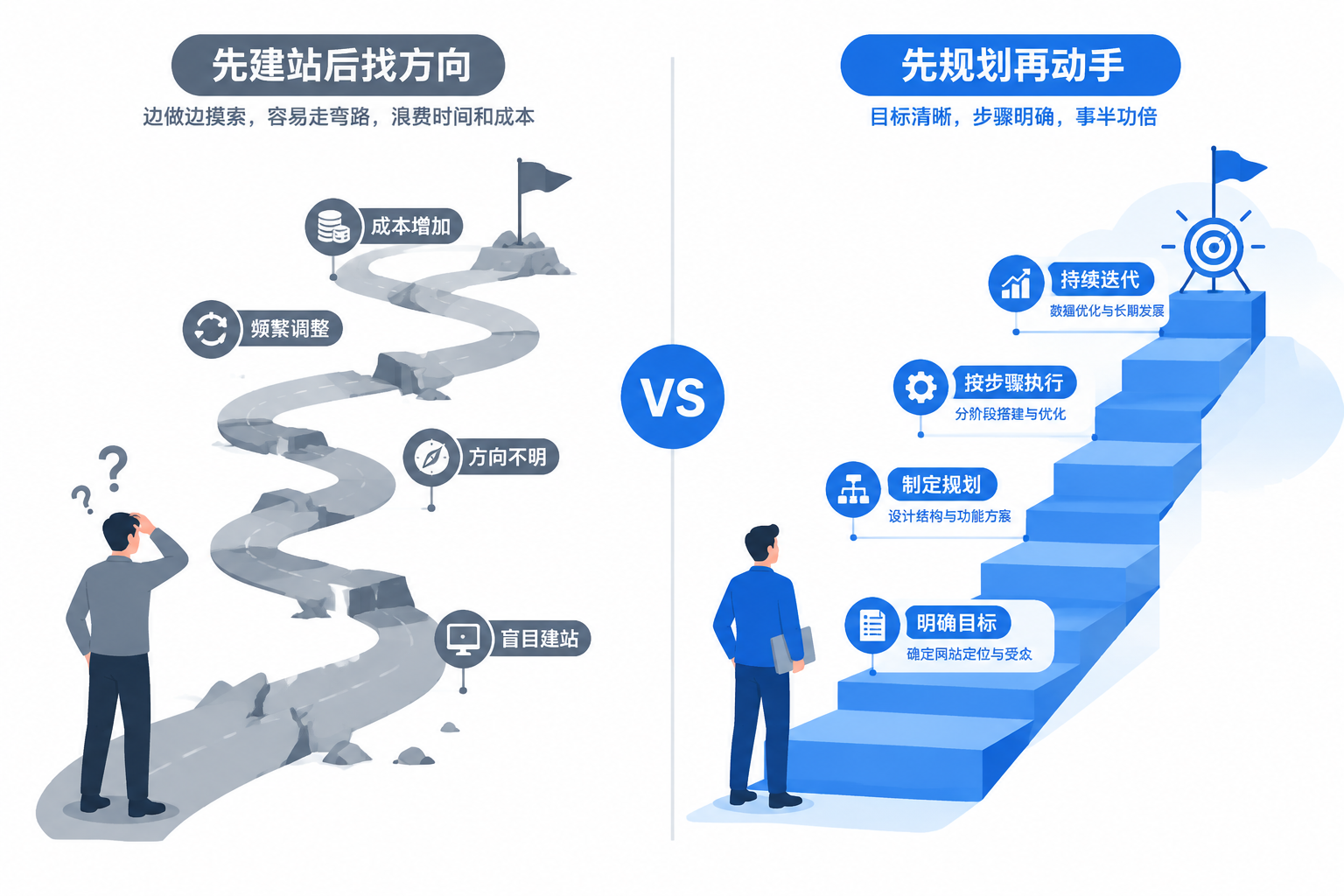
The Difference Between "Build First, Ask Questions Later" and "Figure Out the Path First"
Many business owners' first reaction is: let's build the website first, and customers will naturally come.
However, an independent site is not a marketplace store; it doesn't come with its own built-in traffic pool. Once you launch the site, Google doesn't know you exist, and customers can't search for you.
So what should you do? Start marketing right away?
What pages are you going to promote?
What keywords are those pages built around?
Where do the keywords come from?
You see, tracing these questions back step by step leads you to the fundamental question: "What terms will your target customers use to search for you?" If you haven't figured this out, everything else will just lead to rework.
Therefore, the difference between "building first" and "figuring out the path first" isn't just a matter of order—it's a matter of whether your customer acquisition logic actually works. The former is spending money to buy a URL; the latter is building a pipeline from search results to inquiries.
The Launch Checklist: Verify Item by Item Before You Start
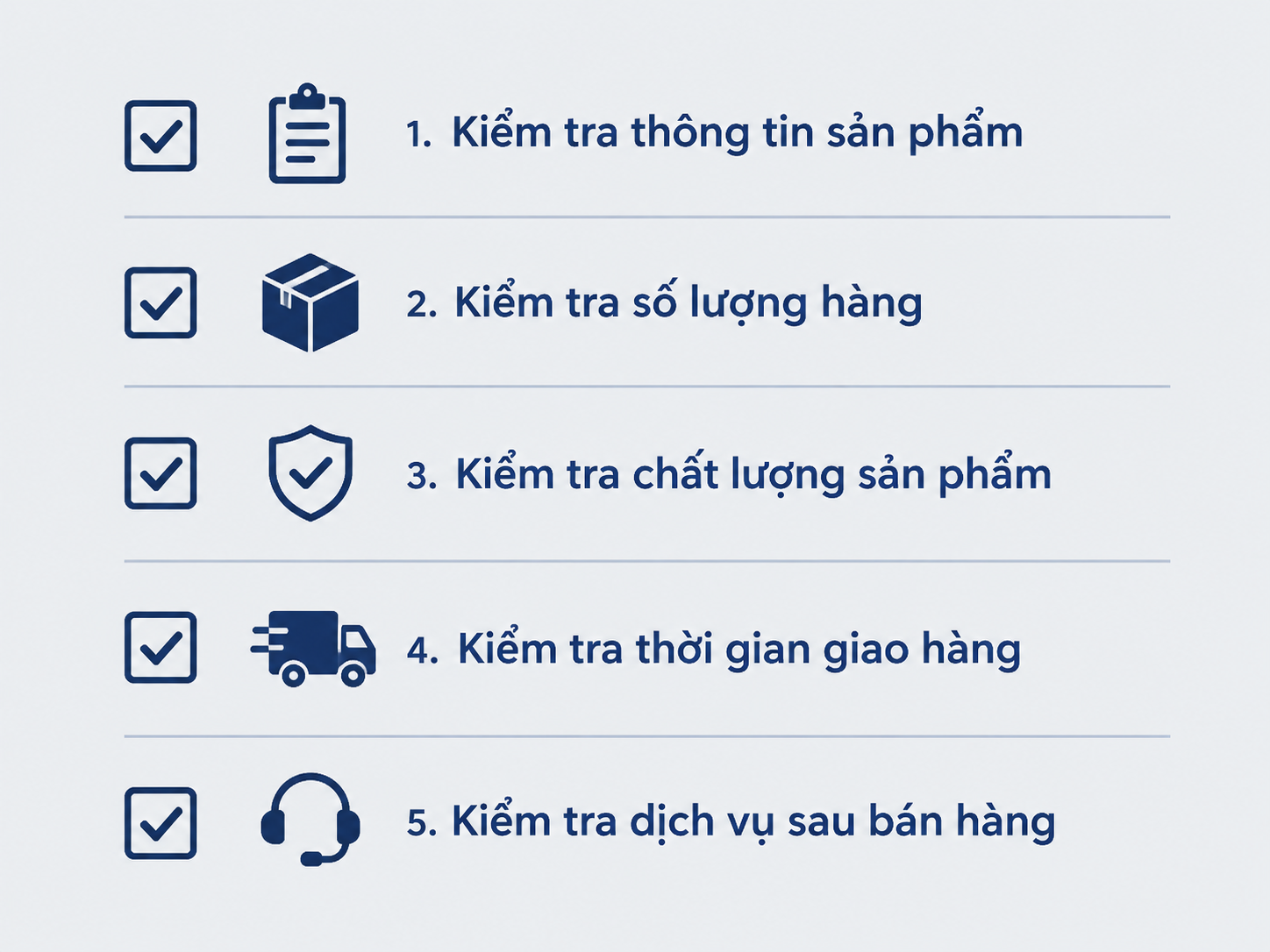
I've broken down "how to approach an independent site" into a checklist. Go through it item by item, and address whatever you haven't figured out yet:
□ Site Type: Do you want a showcase website to capture inquiries, or an e-commerce store with online checkout? Different site types require completely different backend functions, costs, and timelines. Specific quotes are assessed based on requirements, with details provided within 1 business day after submission. You can check the Website Building Service Solutions to understand what each tier covers.
□ Target Markets and Languages: Are you focusing mainly on Europe/America or Southeast Asia? Do you need multilingual support? The number of languages directly impacts the amount of content needed and the launch timeline. Standard website types launch in 5 to 15 business days, while versions with multilingual and e-commerce modules take 7 to 25 business days.
□ Core Keyword Direction: You don't need to finish your entire keyword database right away, but you should at least know your 3 to 5 main product keywords. This determines the content direction of your homepage and core pages, as well as how the hub pages for future content clusters should be structured.
□ Asset Preparation: Product images, real factory photos, company introductions, and qualification certificates. If these aren't ready, your launch will be delayed by at least two weeks. I previously wrote an article titled Don't Rush Your Foreign Trade Website Build: Missing These 4 Types of Assets Will Delay Launch by at Least Two Weeks, which you can use as a checklist.
□ Conversion Action: Once visitors finish reading the page, what do you want them to do? Fill out a form, click WhatsApp, or send an email? This action must be determined during the design phase; you cannot add it as an afterthought after launch.
If Your Structural Hierarchy Is Wrong, Even Being Indexed Won't Bring Traffic
A client recently came to me for a consultation, saying their website had been live for over half a year and Google had indexed it, but they still had zero traffic and zero inquiries. When I opened the backend, the problem was obvious: the website structure was flawed.
Why is it indexed but getting no traffic?
Because important pages are buried too deep.
Why are they buried too deep?
Because the hierarchy wasn't planned; users have to go through four levels of directories to reach a product page.
Why wasn't it planned?
Because during development, the only goal was stuffing content in, without considering how search engine crawlers crawl or how users click.
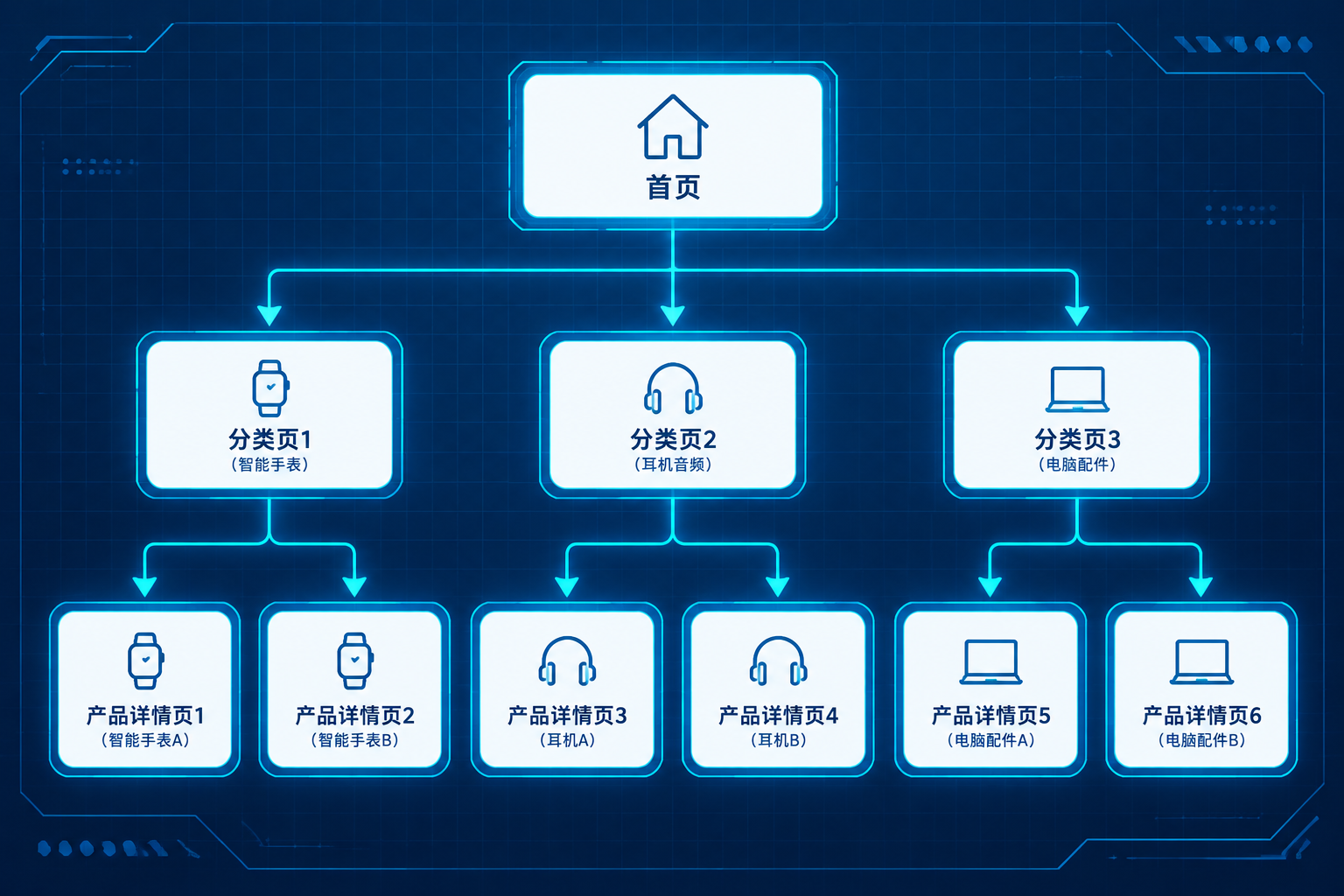
Their product pages were hidden four levels deep under "Products → Category → Subcategory → Specific Product." Search engines have limited crawl budgets, and when the hierarchy is too deep, important pages struggle to be fully indexed. Looking at the internal links, every anchor text across the entire site used the exact same word, which essentially tells Google: my entire site is only about one keyword. Additionally, several blog posts had no links pointing to them at all, turning them into isolated orphan pages that couldn't be crawled or seen—making them completely pointless to write.
The correct approach is: keep the hierarchy to a maximum of three levels, and keep important pages close to the homepage. Use diverse and semantically relevant anchor texts rather than relying on a single word site-wide. When building content clusters, using a hub page to direct traffic back and forth to subpages is far more effective than randomly scattering internal links everywhere. The previously published Bt.cn Website Building Tutorial: From Panel Installation to Google Indexing also covers what should be delivered at each stage, with structural planning being a crucial part.
Where to Find Authoritative Resources
If you want to master the basic concepts on your own first, I recommend checking Google Search Central's official documentation directly. Its explanations regarding site architecture, crawling and indexing, and structured data are firsthand sources and much more accurate than any secondary tutorials. Search for "Google Search Central" or "Google SEO Starter Guide" to find them. Review the official recommendations first, and then come back to cross-reference the checklist above—everything will become much clearer.
If you have already figured out your direction and need someone to help you seamlessly set up the structure, content, and indexing all at once, you can start with a free requirements assessment to lock down your site type, languages, and core page count before deciding your next steps.