
Manzhouli Website Construction Pitfalls: 4 Common Traps, 1 Table to Calculate Where Your Money Goes
For foreign trade in Manzhouli, what you should fear most in website building isn't spending too much money, but spending it where it fails to generate inquiries. Over the past two years, enterprises in Hulunbuir and Manzhouli that we've worked with most frequently asked about how to build Russian sites, how quotes are itemized, and how to monitor indexing after launch. These 4 pitfalls are broken down: quotes must be itemized, Russian versions are more than just translations, GSC data must be u
目录
- Pitfall 1: Quotes showing only a lump sum without detailing where the money goes
- Pitfall 2: Treating the Russian version as a translation task rather than a multilingual architecture
- Pitfall 3: No one monitoring indexing after launch, leading to widespread misinterpretation of GSC data
- Pitfall 4: Making the foreign trade site look like a corporate brochure with no inquiry entry points
Over the past two years, the number of foreign trade enterprises in Manzhouli that our team has worked with has been steadily increasing.
The most common question isn't "How much does it cost?", but rather "Can you build the Russian version as well?"
This is a positive sign in itself, showing that border trade is recovering and everyone is thinking about how to transition from platforms to their own channels.
However, the catch lies right here: most people still treat website building as a simple transaction of web pages, without thinking about how to build a Russian-language site, break down the quotes, or monitor data after launch.
My verdict is: What you need to guard against in Manzhouli website construction isn't choosing the wrong service provider, but spending money on things that yield no visible long-term returns.
Below, we break down 4 common pitfalls from the projects we've handled. Each pitfall is explained clearly through "Where the pitfall is, how to recognize it, and how to bypass it."
Pitfall 1: Quotes showing only a lump sum without detailing where the money goes
Where the pitfall is: The quote you receive only has a single figure for "website construction" with no itemized breakdown.
How to recognize it: Ask whether the domain name, server, and SSL certificate are included. If the other party starts hedging or adds "that will be calculated separately," you'll know that the low price was just bait.
How to bypass it: Have the quotation broken down into the following parts. You can take this table directly to evaluate providers.
| What you pay for | What you get |
|---|---|
| Domain name | One-year domain ownership; the registration email must be tied to your own name |
| Server | Where the website is hosted, renewed annually; do not cheap out on shared, poor-quality hosting |
| SSL certificate | Turns the URL into https, prevents browser warnings, and is recognized by Google |
| Design & Frontend | The page structure and operational paths seen by visitors |
| Multilingual configuration | Russian, English, and Chinese versions pointing to each other; it's not just a one-time translation |
Every single item here could potentially be split out and billed separately later.
Therefore, the quotation must be itemized—this is the baseline for determining whether a service provider is reliable.
Specific website building costs and quotes vary depending on site morphology and functional integration; they cannot just be pulled out of thin air.
If you want to understand the cost structure first, you can also check out our article Cost Breakdown for Overseas Independent Sites: 4 Modules and a Complete Checklist.
Pitfall 2: Treating the Russian version as a translation task rather than a multilingual architecture
Where the pitfall is: Believing that using a translation plugin to convert a Chinese site into Russian makes it a multilingual site.
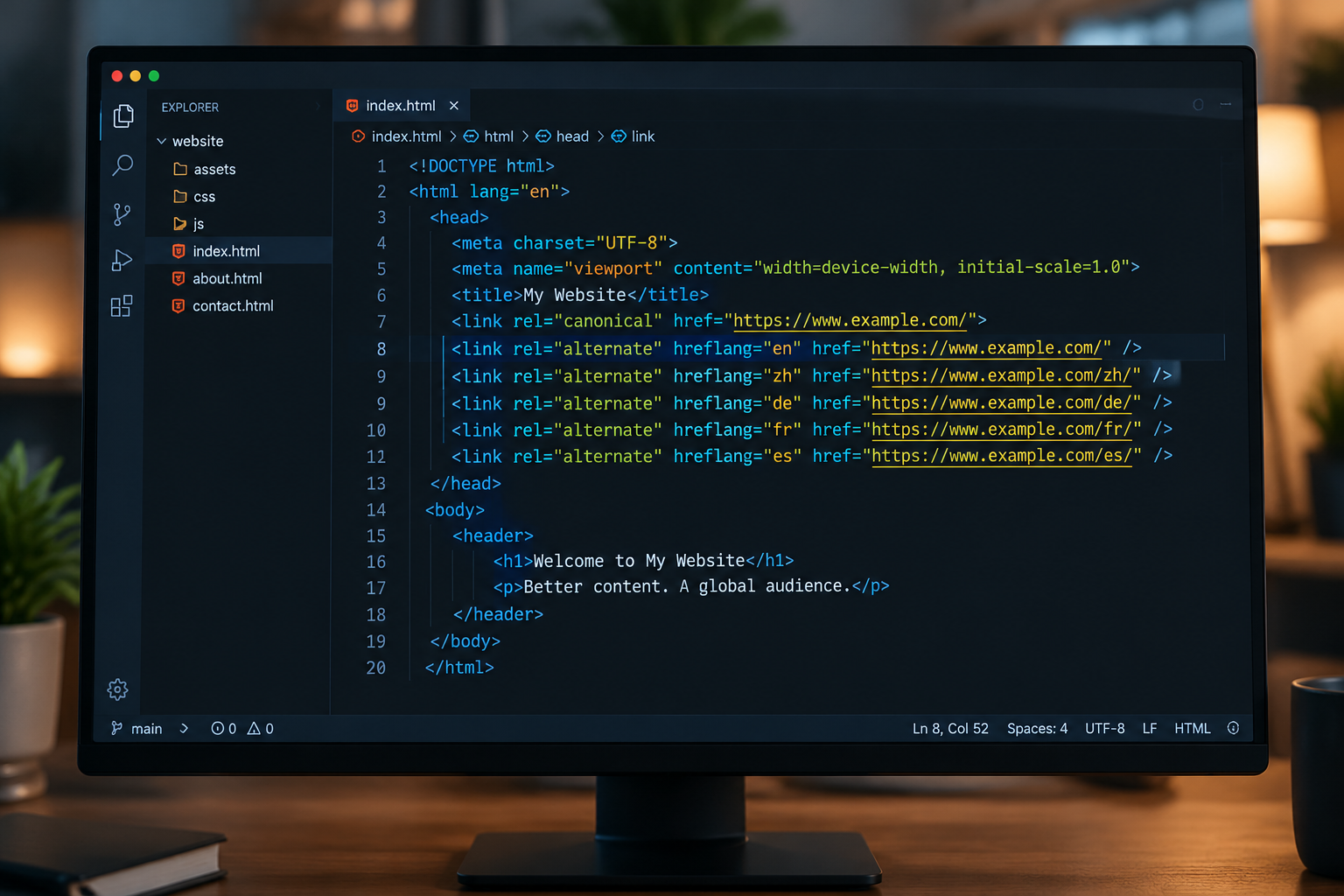
How to recognize it: Check whether the provider mentions terms like hreflang cross-linking or x-default. If they don't mention them at all, they are likely just trying to fool you with a plugin.
How to bypass it: The core of a multilingual site is helping search engines distinguish pages in each language version. Guide Russian visitors to Russian pages, and English visitors to English pages.
In our line of work, we are accustomed to breaking this down into three tasks: making language versions independent pages, using hreflang to point to each other, and rewriting content according to the target market.
Manzhouli's business with Russia has its own unique characteristics. For Russian pages, simply translating "products" and "contact us" isn't enough; you also need to consider Russian buyers' browsing habits and trust factors.
Our article Building Independent Sites for Cross-border E-commerce: Why Multilingual Architecture Is More Than Just a Translation explores this relationship in greater detail.
Pitfall 3: No one monitoring indexing after launch, leading to widespread misinterpretation of GSC data
Where the pitfall is: Believing that once the website is built, people will naturally arrive, only to find months later that search engines haven't fully crawled it.
How to recognize it: The provider stops providing any data reports after handing over the site, or simply tosses you the phrase "the rankings are up" without any proof.
How to bypass it: After launch, you must check the coverage report in Google Search Console. Because pages cannot be found, the root cause is usually that crawling and indexing haven't been set up properly, rather than poor rankings.
We follow a fixed sequence when reviewing GSC data.
Impressions reflect demand—whether anyone is searching for your keywords.
Clicks reflect relevance—whether titles and snippets are compelling enough for people to click through.
CTR reflects titles and rich snippets—if CTR is low, modify the titles first rather than rushing to change the page content.
Average ranking should only be used to look at general positioning; it's merely an average and cannot be taken as real rankings.
Coverage reports reflect crawling and indexing—which pages have been crawled but haven't entered the index.
Crawl stats show what search engines are actually crawling; if they spend all day crawling invalid parameter pages, it indicates a structural problem with the site.
Common misinterpretations here include three things: treating impressions as traffic (impressions just mean the page appeared in results, not that someone came in); treating average ranking as actual ranking (an average of 8 doesn't mean you rank 8th, it might be a mix of 3rd and 30th); and looking only at rankings without conversions (ranking high without inquiry forms is pointless).
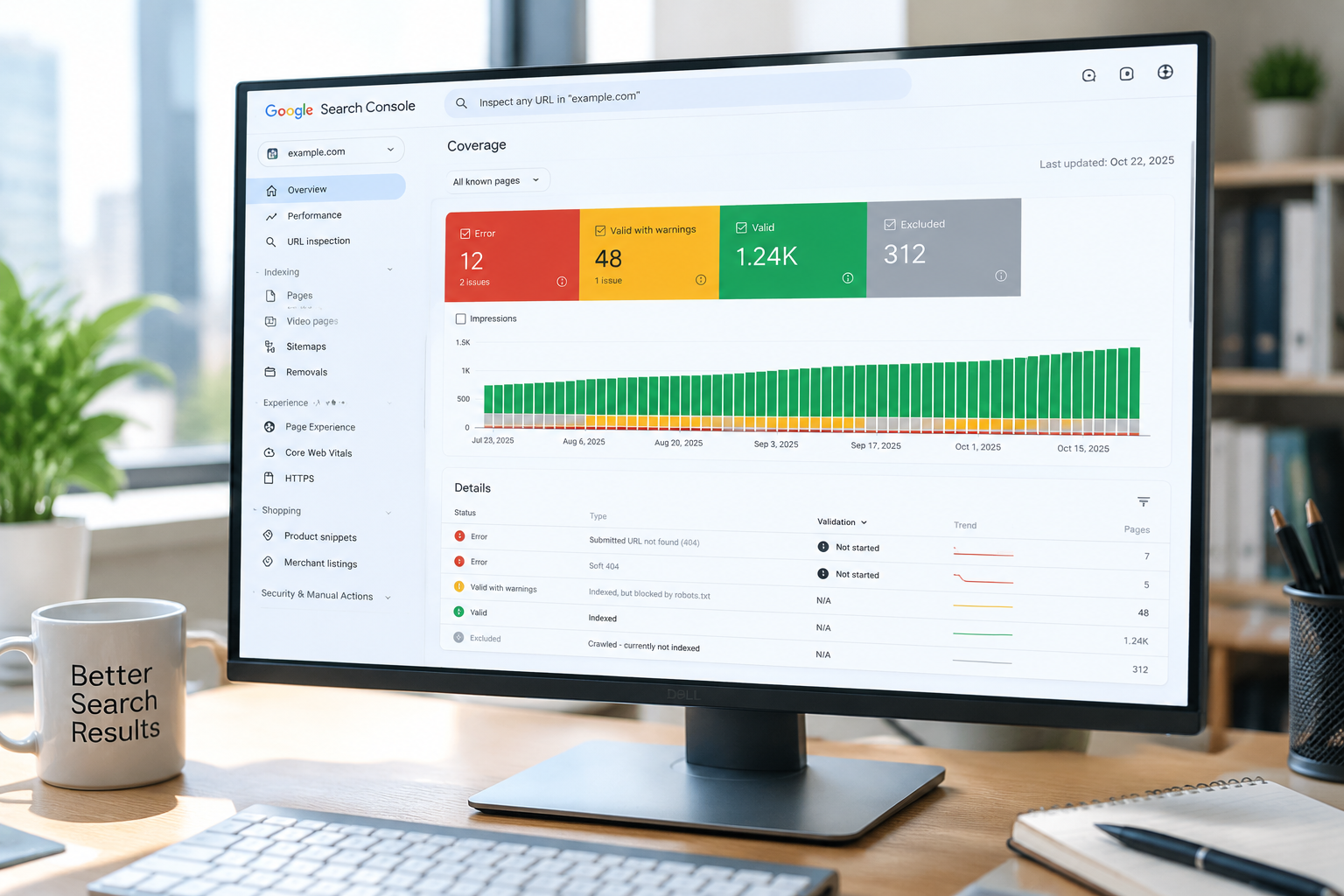
By the way, monitoring GSC data nowadays doesn't necessarily require manual daily checks. Our own backend pulls monthly changes in coverage, clicks, and CTR so that you only need to look at anomalies.
Pitfall 4: Making the foreign trade site look like a corporate brochure with no inquiry entry points
Where the pitfall is: The homepage looks gorgeous, but there are no forms, no online customer service, and no clear call to action.
How to recognize it: Open the homepage on your mobile phone and scroll through three screens without finding a single button to contact you.
How to bypass it: Foreign trade websites and domestic corporate brochures are two different things. The conversion action for an independent site is an inquiry, not a direct purchase. Every screen should give visitors an action to take: leave a WhatsApp contact, fill out a form, or click on online customer service.
We have built quite a few foreign trade sites for Manzhouli and surrounding areas, and a common stumbling block is that clients only care about "how good it looks" during construction, only to ask "why are there no inquiries?" after launch.
Budget isn't just a randomly picked lump sum. It follows four variables: Site morphology (a display-style official website is different from an online transactional mall); Page and column scale (10 pages versus 50 pages involve vastly different workloads); Functional integration (cross-border payments, logistics tracking, multi-currency support each require extra development); and Multilingual versions (many Manzhouli enterprises require Chinese, Russian, and English trilingual support, which forms a significant part of the cost).
To estimate accurately, don't just guess a number. First, list out the site morphology, page volume, language versions, and functional integration you need, then come to us for a free requirements assessment. You'll receive a detailed quote within 1 business day, clearly spelling out where every penny goes.