
View B2B platform rankings by scenario: Spot goods can reference, customized inquiries shouldn't blindly follow
Foreign trade B2B platform rankings vary greatly in value across different business models. Standardized spot goods can use them as a screening condition, whereas customized, engineering, and high-unit-price products cannot blindly replicate rankings for decisions. First break down three questions: what is the data source, are ranking metrics inquiries, and does the business match. Then use four self-assessments to judge the practical reference value of platform rankings. After clarifying termin
目录
- Breaking down "foreign trade B2B platform rankings" into three minor questions
- Key terms in ranking data, explained through our perspective as a website builder
- Regional differences in keywords also affect your platform judgment
- How to use rankings as a reference: Four self-assessment criteria
- Platform rankings and independent sites are not an either-or choice
- One action you can take today
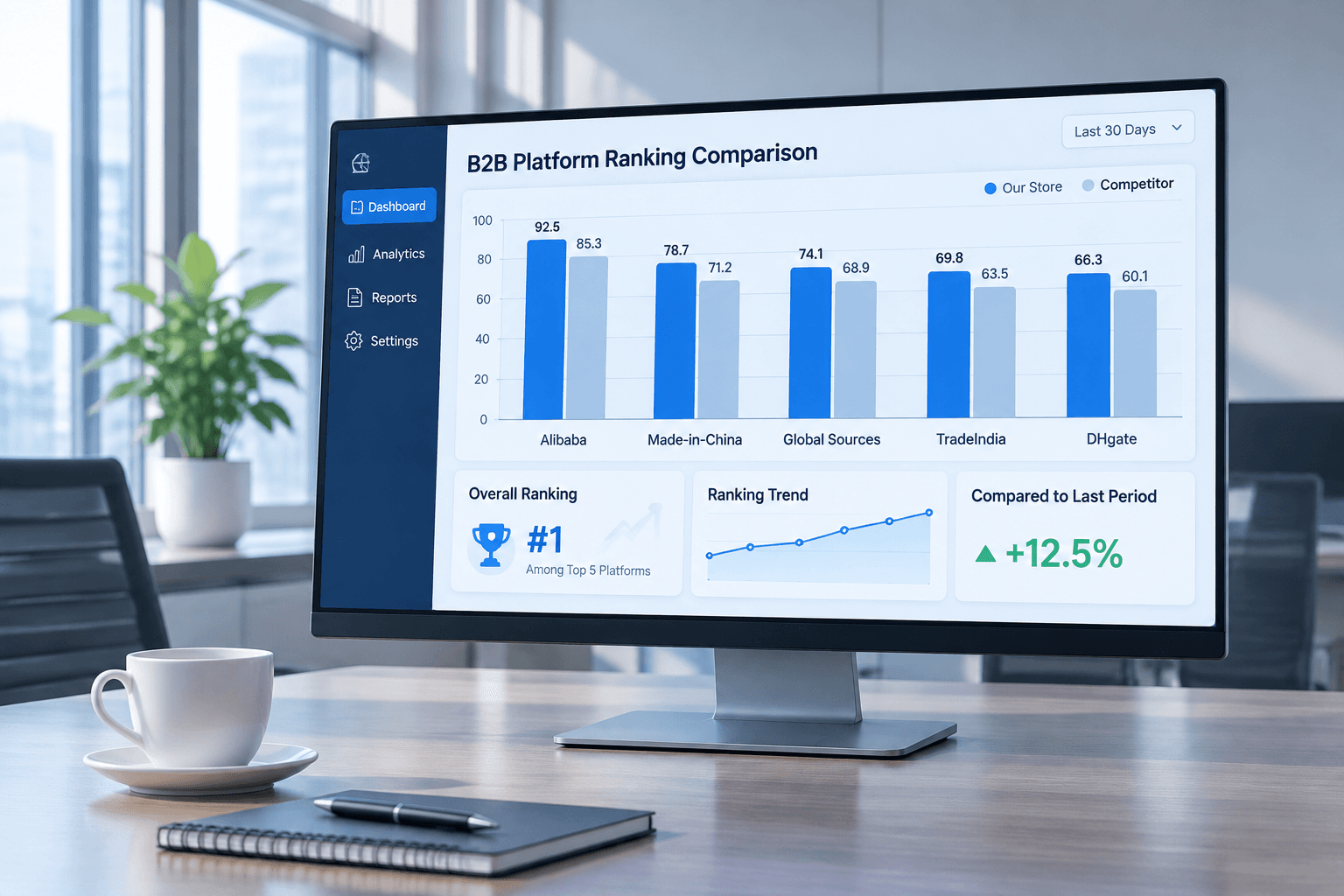
Foreign trade B2B platform rankings are a frequent topic of discussion. Clients often ask: Which ranks higher, Global Sources or Alibaba.com? Is Made-in-China still worth investing in? My usual approach is not to talk about the platform first, but to ask what they sell and how transactions are closed. Because platform ranking information varies wildly in value depending on the business model.
Breaking down "foreign trade B2B platform rankings" into three minor questions
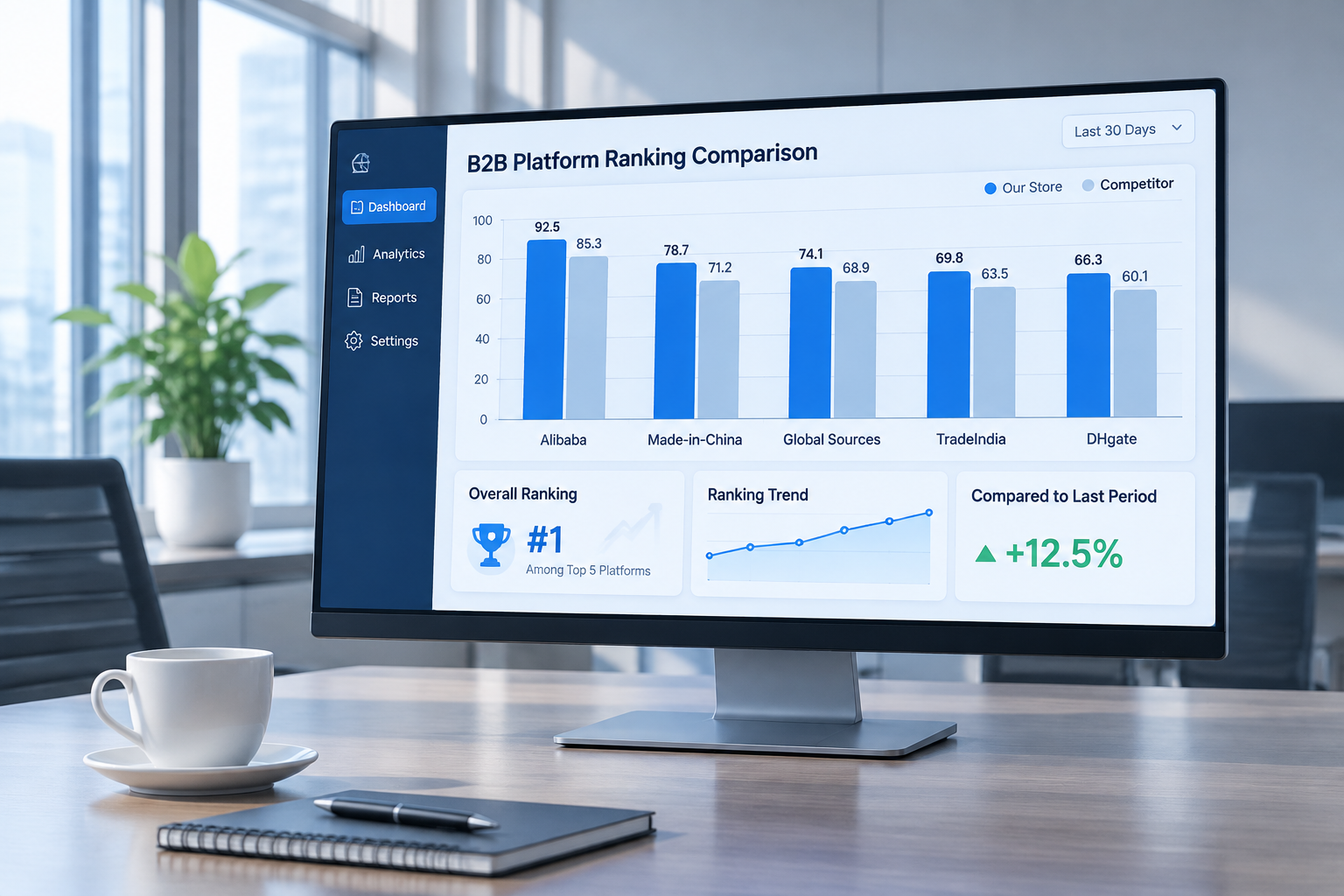
First, which ranking are you looking at? There are rankings by traffic, by inquiry volume, by unique buyer count, and by industry popularity. The order yielded by different sources can vary by several spots. We encounter a similar situation in Google SEO: for the same keyword, the search volume and difficulty checked via Ahrefs and Semrush can differ quite a bit, and the reason lies in the difference in sampling criteria. The same goes for platform rankings—first figure out how the data is generated.
Second, what does a high ranking mean to you? Is it more exposure, more inquiries, or more orders? Most platform ranking charts only display traffic scale, not inquiry conversion. A large overall traffic pool doesn't mean you get a larger share in your bowl.
Third, does your product format fit the platform's logic? Standardized spot goods are suited to capture a platform's organic traffic, whereas non-standard customized goods tend to be price-compared on platforms. The platform's price-comparison environment is not friendly to customized products; when buyers search for a model and dozens of suppliers pop up, it ultimately turns into a price war.
Once you think these three points through, looking at any "foreign trade B2B platform ranking" will essentially help you avoid the pitfall of paying for positions that only yield exposure.
Key terms in ranking data, explained through our perspective as a website builder
- Organic traffic: Visits generated through in-platform searches and category browsing without running ads. Platforms with high rankings have a large baseline of organic traffic, but the share allocated to a single store heavily depends on category competitiveness.
- Inquiries: Consultations sent to you by buyers through the platform. A B2B site should look at inquiries, not traffic volume, and certainly not the number of favorites.
- Data ownership: Who has the right to export buyer contact information and historical inquiry records. In a platform store, this data is in the hands of the platform; on an independent site, the data is in your own hands.
- Buyer quality: Refers to whether the buyers sending inquiries are genuine procurement decision-makers, and whether their procurement volume and cycle match your production capacity. A platform with high traffic does not equate to high buyer quality; on some platforms, buyers are predominantly individual consumers, offering limited value to factory-type sellers.
- Category traffic: Visits brought by browsing paths organized by product categories on the platform. Category traffic is strongly correlated with product categories, and overall rankings lose meaningful reference value at the category level.
Once the terms are sorted out, a common problem becomes apparent when looking at ranking tables: most rankings treat traffic as the primary metric, and traffic does not equal inquiries. High overall traffic on a platform does not mean high traffic for your specific category; high category traffic does not mean buyers are willing to send inquiries.
Regional differences in keywords also affect your platform judgment
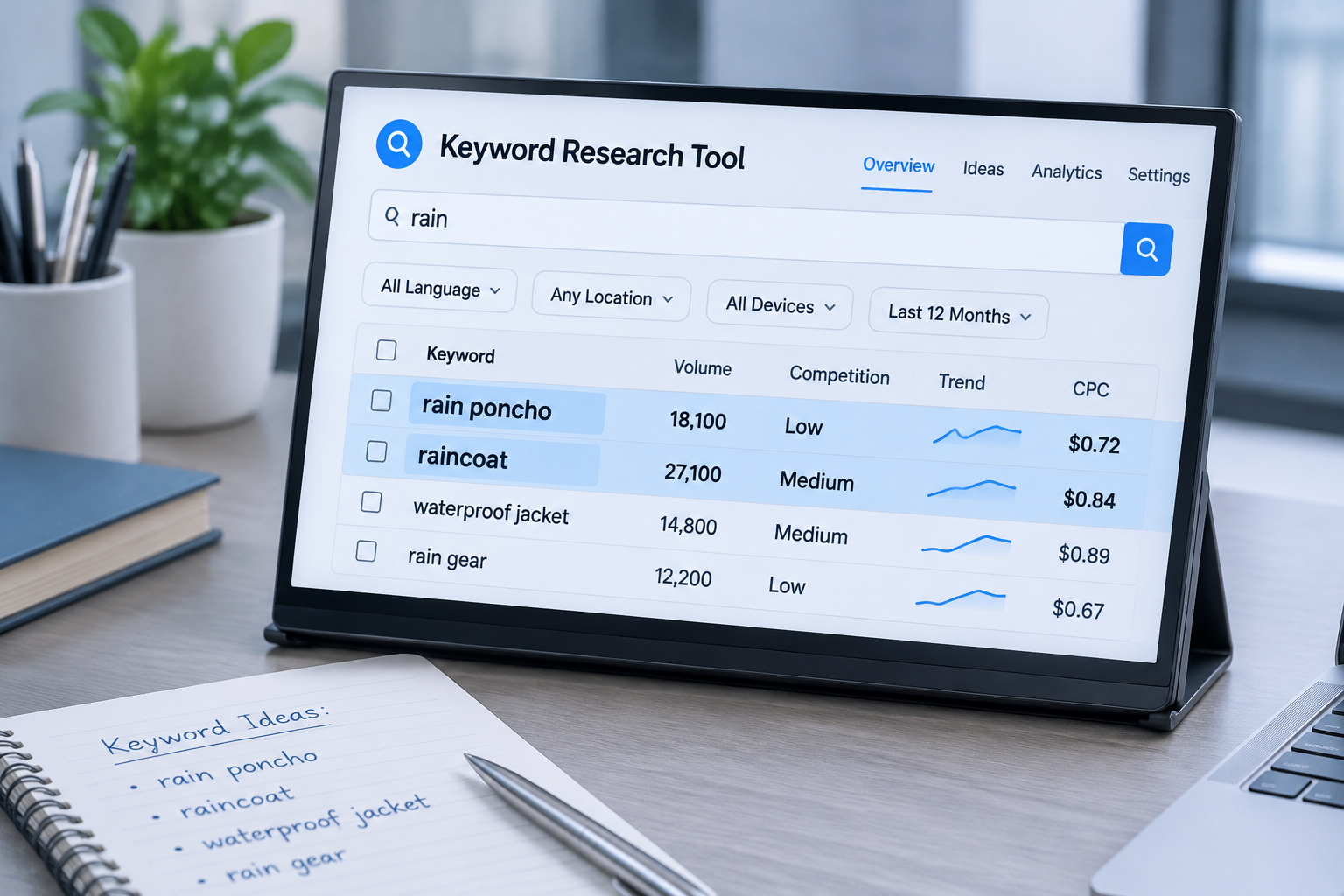
When doing keyword research, we have a habit: directly translating and using a Chinese product term will likely miss the terminology used in the target market. For example, for "raincoat", many North American buyers search for "rain poncho" rather than "raincoat", as the latter more often refers to functional outerwear. Foreign trade B2B platforms have a similar issue: a platform may be well-known within Chinese seller circles, but your target buyers' locations might not necessarily use that platform. Before making a judgment, use Ahrefs or Semrush to check the distribution of B2B-related search terms in the target region, and incidentally see which platform domains have organic rankings locally. This is much more practical than looking at a global leaderboard.
How to use rankings as a reference: Four self-assessment criteria
- Are goods spot inventory or customized? For spot inventory with sufficient stock and the ability to accept small-batch rapid shipping, the platform's organic traffic holds higher value. For customized goods, production based on blueprints, and unstable lead times, no matter how high the ranking is, buyers won't place orders just because the platform is large.
- What is the unit price range? Low-unit-price standardized products are prone to price comparisons within platforms, where a high ranking means fiercer competition. For high-unit-price non-standard products, the buyer decision-making chain is long, and relying solely on platform list page displays is far from enough; independent sites or offline communication are required to convert them.
- Target region and platform fit: Some platforms have a high proportion of Eastern European buyers, some Southeast Asian, and others North American. Rankings are just global figures; regional matching has actual practical significance.
- Can you accept platform rule changes? Platform rules will be adjusted, and the traffic allocation logic corresponding to rankings will also change. When data is in the hands of the platform, rule changes have a huge impact on stores. What we've encountered is that sellers' accumulations on a platform are reshuffled as rules change.
Once you check off these four items, you'll find that "whether to look at rankings" transforms into "whether the platform should be your main battlefield." The two questions are different: the former judges information, while the latter judges the business path.
Platform rankings and independent sites are not an either-or choice
We've worked on quite a few cases where clients first invested in platforms and later added independent sites. The platform handles organic and category traffic, while the independent site thoroughly explains brand information, customization capabilities, and case studies. Content that cannot fit into a platform store can be hosted on an independent site; data that platform rules cannot govern can be accumulated on an independent site.
If you want to calculate the cost structure of platform investment beforehand, you can read this article: Before registering a B2B foreign trade platform, break down costs into annual fees, traffic costs, and data ownership. That piece breaks down annual fees, traffic costs, and data rights in relative detail. If you are still torn between independent sites and platforms regarding which is more suitable for getting inquiries, this article is also worth reading: What is an independent site? A 3-step check to see if your site is truly in your own hands.
Platform ranking pages that fail to indicate data update times and statistical dimensions should only be used as a reference, not as a decision-making basis.
Platform ranking pages are frequently packaged by SEO content as "authoritative leaderboards," but most fail to state data statistical cycles and sample scopes. A platform's standing can differ by several spots across different leaderboards, often not because the platform changed, but because the statistical criteria differed. When you see a ranking, check two things first: data update time and statistical dimensions.
One action you can take today
Pick out the platform you currently intend to invest in most and list three facts: the true number of peers for your product on this platform, the proportion of peers acquiring valid inquiries (which can be estimated from product reviews and merchant activity), and whether the platform's traffic support for this category is explicit. Don't rush to count platform rankings; fill out these three numbers first, and once filled, you can basically tell whether the platform is an effective channel for you.
Conclusion: Leave rankings to platform selection, and leave pathways to business judgment. Standardized spot goods can use rankings as a screening condition; for customized, engineering, and high-unit-price products, top-ranking platforms may not necessarily solve your inquiry problems. Pass through the four self-assessment items first, then look at rankings, and your decisions will be much more sound.