
Can an Independent Website Make Money? Yes, But Do 3 Self-Assessments First and Don't Rush to Build One
Many bosses treat building an independent website as a new moneymaking channel, thinking orders will roll in the moment it launches. But having worked on foreign trade independent websites for 8 years, I've seen the exact opposite: the website itself doesn't make money; what makes money are your chosen products, traffic model, and inquiry-handling capability. To figure out if you can profit from an independent website, take three self-assessments first: do you have validated products, can you wi

目录
- The answers to your profitability are hidden within these three self-assessments
- Follow the decision tree based on your situation: only one of three paths suits building a site right now
- Treat the search engine results page like a mirror: look at what profitable players look like first
- To you, preparing to launch an independent website: list your requirements first, then talk price
Having worked on B2B independent export websites for 8 years, whenever my boss asks me "Can building an independent website make money?", my first reaction isn't to say yes or no, but to have him take three self-assessments first. It's not that I want to beat around the bush, but this question is just like "Can opening a store make money?"—the answer depends on whether you have all the necessary conditions in place before entering.
- Do you currently have a product that has already been sold on a marketplace or offline?
- Can you withstand the first 3 to 6 months of an independent website having no organic inquiries, spending money without output?
- Can you set aside time every week to write a product or industry content piece, consistently for at least half a year?
The website itself doesn't make money; what makes money are the products, the traffic model, and the inquiry-handling capability. You might think an independent website is a new customer acquisition channel and clients will come the moment it goes live. In reality, an independent website is just a container. If the products inside are unwanted, incoming traffic cannot be converted.

The answers to your profitability are hidden within these three self-assessments
Let's talk about the first one: whether you have a validated product. "Validated" here means someone has actually paid money, not just that you think the product is good. If the product has already made sales offline or on a marketplace, building an independent website gives you cash flow to offset advertising costs. If no one has bought the product yet, don't rush to build a site; test the demand with minimal cost instead.
The second one: whether you can survive the cold-start phase. For a newly launched independent website, Google won't rank you immediately, and organic traffic takes months to trickle in. During this time, you need to invest in advertising budgets or content time. If you expect inquiries in the first week of launch, you will suffer.
The third one: whether you can consistently produce content. An independent website isn't finished once designed; Google relies on content to understand what you sell and what problems you solve. You can write it yourself or outsource it, but updating one product description, industry knowledge piece, or case study every week for half a year will yield results. Without consistent output, the probability of making money drops significantly.
Follow the decision tree based on your situation: only one of three paths suits building a site right now
Don't ask "Can building an independent website make money?" yet; first determine which of the following situations you belong to.
If you have a validated product in hand and are willing to invest in Google Ads to test traffic first, you can go ahead with an independent website. But don't jump straight into a customized multi-language store; use a showcase-style official website first to run through the inquiry loop. Understand the differences between an independent export website and marketplace platforms: the site is yours, and the data is yours too. Once inquiries stabilize, consider adding an e-commerce store or multi-language modules.
If you only have a product but don't want to run ads, relying solely on Google SEO to slowly build up, then turn your independent website into a content site first. Write industry content while waiting for indexing. There is an expensive misconception here: in China, launching an independent website does not mean Google will automatically index it. Launching is only the beginning, and indexing and ranking take time—usually over 6 months to see organic inquiries.
If your product hasn't been validated and your budget is tight, don't build a site yet. Test product demand on B2B platforms or Google Ads single-page sites first, generate click and inquiry data, and then decide whether to launch an independent website. Doing this in reverse often leads to spending tens of thousands on a digital brochure.
Treat the search engine results page like a mirror: look at what profitable players look like first
Whenever I judge whether a product can make money through an independent website, I have a routine: open Google, search for the product's core keywords, and look at the structure of the search results page. Check how many ad slots there are, whether there are featured snippets, videos, local packs, Q&A sections, and finally how many organic positions are left. If organic positions are pushed past the first fold, it means ranking purely on SEO will struggle to secure stable inquiries, and Google Ads must be used alongside it. I've seen it many times where a boss immediately asks "Can an independent website reach Google's home page?", which is the same question as "Can an independent website make money?". Without checking the search results page structure first, you won't know whether the organic position for that keyword is worth fighting for.
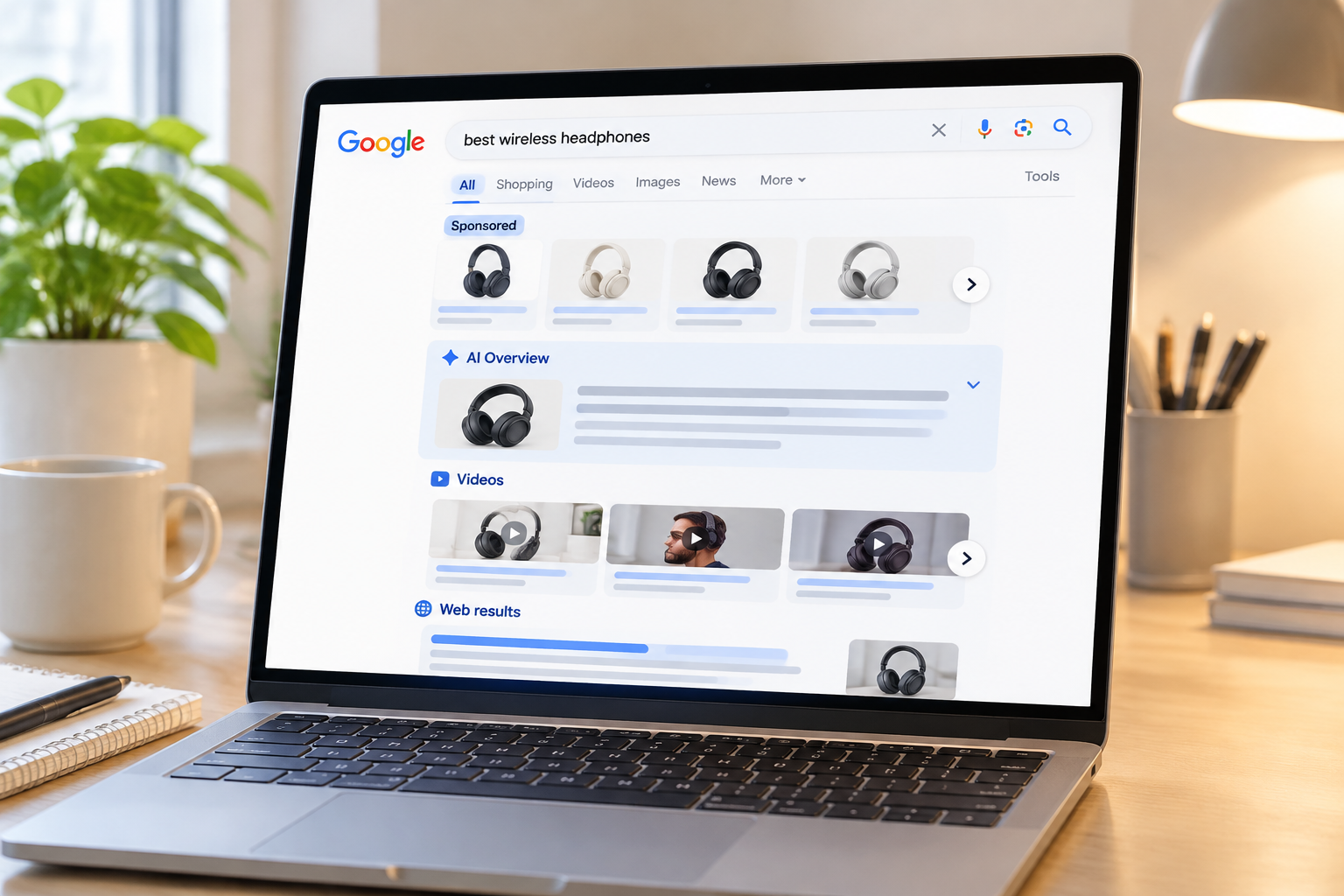
After reviewing the structure, benchmark your competitors' title formats, content depth, and H-tag structures. Use tools like Ahrefs or Semrush combined with manual searches. Our discipline in this industry is: you can copy the structure and angles, but you cannot copy the content and data. For example, if a competitor wrote a long article addressing procurement pain points, you can follow up with an article of the same structure but better tailored to your product, placing your inquiry entry in the middle of the article.
To you, preparing to launch an independent website: list your requirements first, then talk price
If two of your three self-assessments are "Yes", and your decision tree has led you to the "build a site now" branch, your next step shouldn't be asking for quotes everywhere, but rather clarifying your requirements. Only four things affect the price; write them down on paper and have us evaluate them, and you'll avoid many detours.
- Site format: Do you want a showcase official website, an e-commerce store with online checkout, or a multi-language site network?
- Page and section scale: How many products are you planning to list, how many languages to support, and do you need a blog or knowledge base?
- Functional integration points: Do you need cross-border payment gateways, logistics tracking, multi-currency support, or internal system integration?

Once you write these clearly, look at the list of foreign trade independent website building services. Specific quotes are assessed based on requirements and provided with breakdowns within 1 working day, clearly detailing where every penny goes with no hidden fees. Standard official websites go live in 5–15 working days, while those containing multi-language and e-commerce modules take 7–25 working days. List your requirements first, then talk price—this is the first step to avoiding pitfalls.
Conclusion: Building an independent website can make money, but profitable people usually don't start making money the moment the site goes live; they figure out their products, traffic models, and inquiry-handling capabilities beforehand. Take the three self-assessments first, follow the decision tree to the step that suits you, and don't rush into building a site.