
What does cross-border B2B mean? Which is easier for getting inquiries: independent sites or B2B platforms?
Many factories and trading companies struggle with whether to build platforms or independent websites first for cross-border B2B. My judgment is that the core of cross-border B2B is not choosing a channel, but enabling overseas buyers to find you, research you, and send inquiries directly. Independent sites are your own stronghold, while B2B platforms are rented storefronts. By building solid independent site content and Google indexing first, and then matching it with platform traffic, inquiry
目录
- What does cross-border B2B mean? Let us break it down
- Independent websites vs. B2B platforms: It is not about features, but ownership
- How to achieve Google rankings for cross-border B2B independent websites? Do these four things in order
- Inquiry conversion is the ultimate goal of cross-border B2B
- A counter-example: Relying solely on platforms leads to traffic cutoffs when rules change
Previously in cross-border B2B, people were used to opening a B2B platform account first, paying annual fees, uploading products, and waiting for platform traffic distribution. Now it is different. Among the factories and trading companies we have served, most now use independent websites as their main stronghold for receiving inquiries, with platforms serving as just one of the channels.
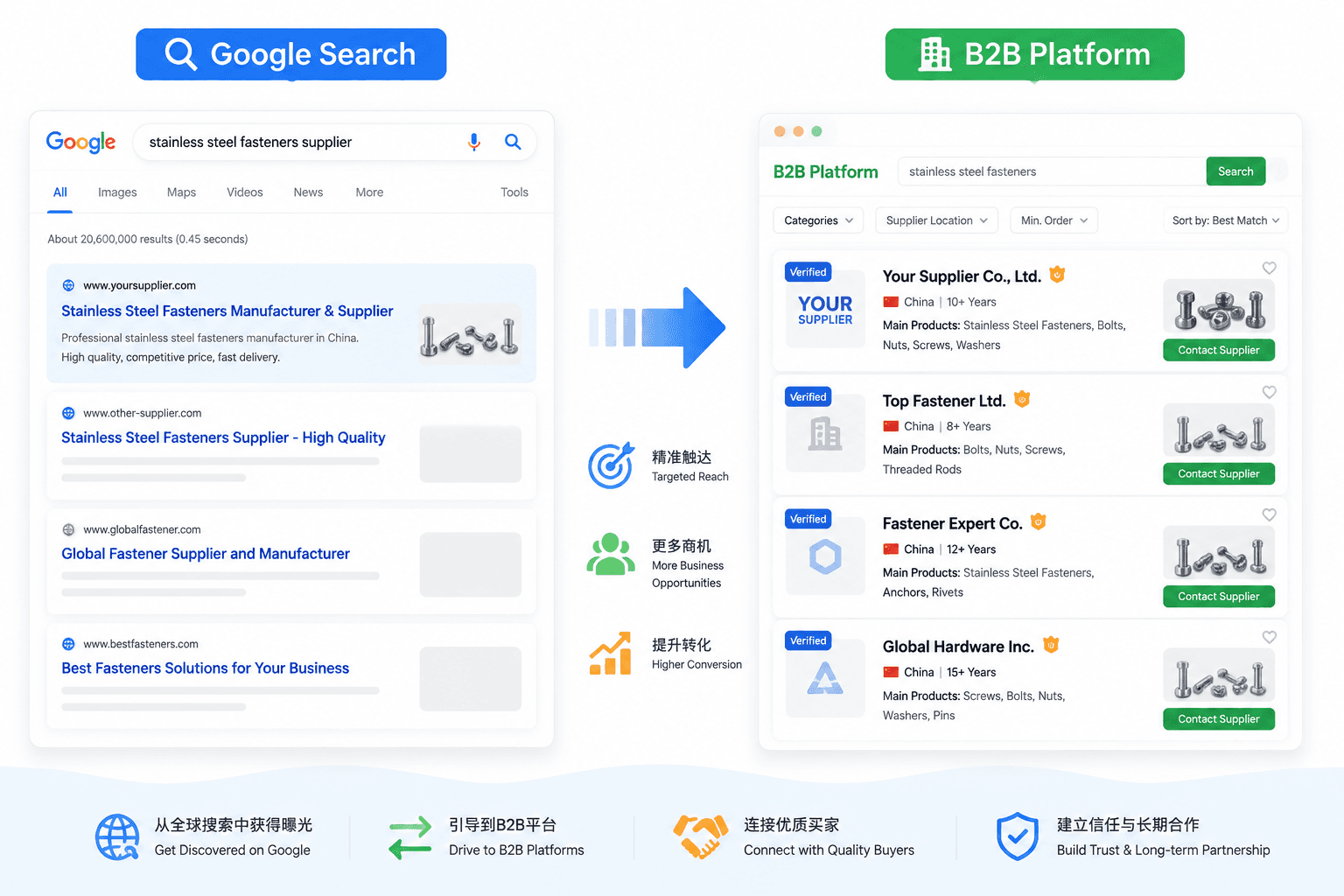
This change is not just following a trend; purchasing paths have changed. Overseas buyers looking for suppliers first search for product terms on Google, click into a few websites to check technical parameters, factory photos, and certification certificates, and then decide whether to send an inquiry. If your website cannot appear in the search results, it is equivalent to buyers not knowing you exist at all.
What does cross-border B2B mean? Let us break it down
Working in this industry, we are used to understanding cross-border B2B as: Chinese factories or traders selling directly to overseas enterprise customers through their own websites or platforms, where the conversion action is an inquiry, not a direct order. After reviewing the product page, the customer sends an email or fills out a form asking about price, minimum order quantity, and delivery time. This action is an inquiry.
The keywords here are "enterprise customers" and "inquiries." Enterprise customers make decisions slowly and purchase in large amounts at a time, so they do not pay directly like consumer (C-end) users. Instead, they compare parameters, qualifications, and response speeds first.
Cross-border B2B has three common carriers:
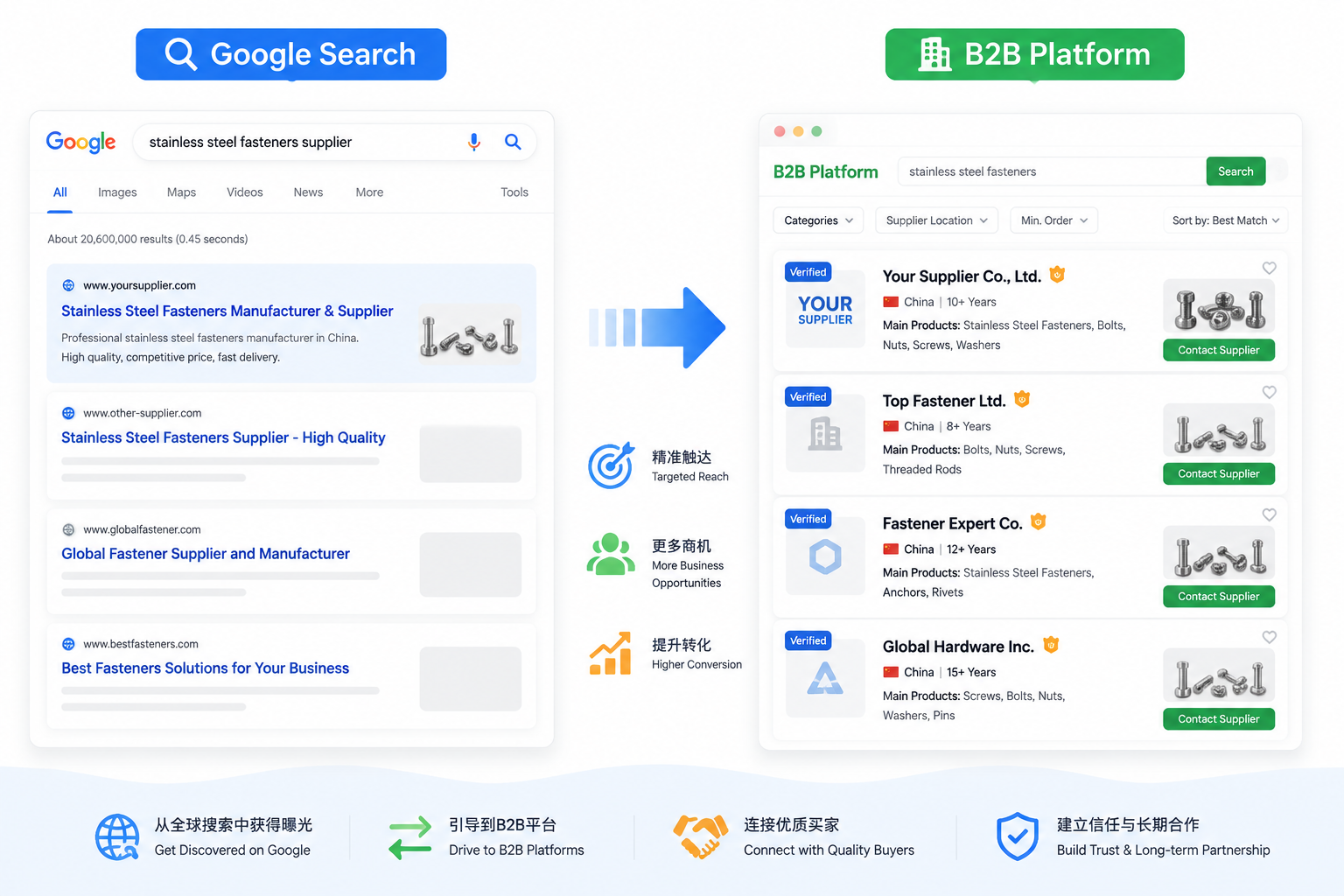
- B2B platforms: You open a store on the platform, and buyers find you through platform searches and direct messages. Traffic relies mainly on platform distribution.
- Independent websites: You register your own domain name and deploy a website. Buyers enter your site through Google searches, advertisements, and social media, and you manage the traffic yourself.
- Combination of both: Platforms provide trust endorsement, while independent websites offer in-depth presentation and Google indexing, using platform traffic to supplement the cold start of independent websites.
What is truly pulling apart the gap now is the third approach. Enterprises that only use platforms face inquiry costs that fluctuate with platform rules and bidding environments; those that only build independent websites without any promotion find cold starts too slow. Our advice to clients is usually: Launch the independent website first, build solid content, and then decide how much effort to invest in platforms.
Independent websites vs. B2B platforms: It is not about features, but ownership
We are often asked: Since platforms have ready-made traffic, why still build an independent website? My answer is: A platform is a rented storefront where changes in rules immediately alter your ranking and exposure; an independent website is your own land, and both the domain name and data are in your hands.
Platforms are useful, of course. A well-managed B2B platform store can help you quickly reach active buyers on the platform. However, platforms have several unavoidable limitations:
- Severe product homogenization means buyers searching for a keyword will see a dozen similar suppliers, ultimately competing on price and platform bidding.
- Platforms do not allow you to direct customers to your own website, and many buyer details remain incomplete.
- Whenever platform algorithms are adjusted, your natural ranking may drop directly, and the volume of inquiries can disappear overnight.
The logic of independent websites is the opposite. When buyers find your product page via Google search, they see your factory, your certifications, and your team introduction, without a dozen competitors comparing prices right next to you. We conducted a comparison: for the same product line, inquiries coming from independent websites feature buyers asking more specific questions, and the transaction cycle is shorter than platform inquiries.
If you are still hesitating about whether to join platforms, you can check this previously written evaluation standard: Should You Use Cross-Border B2B Trading Platforms: 3 Standards to Calculate Yourself First, which provides three metrics you can calculate yourself.
How to achieve Google rankings for cross-border B2B independent websites? Do these four things in order
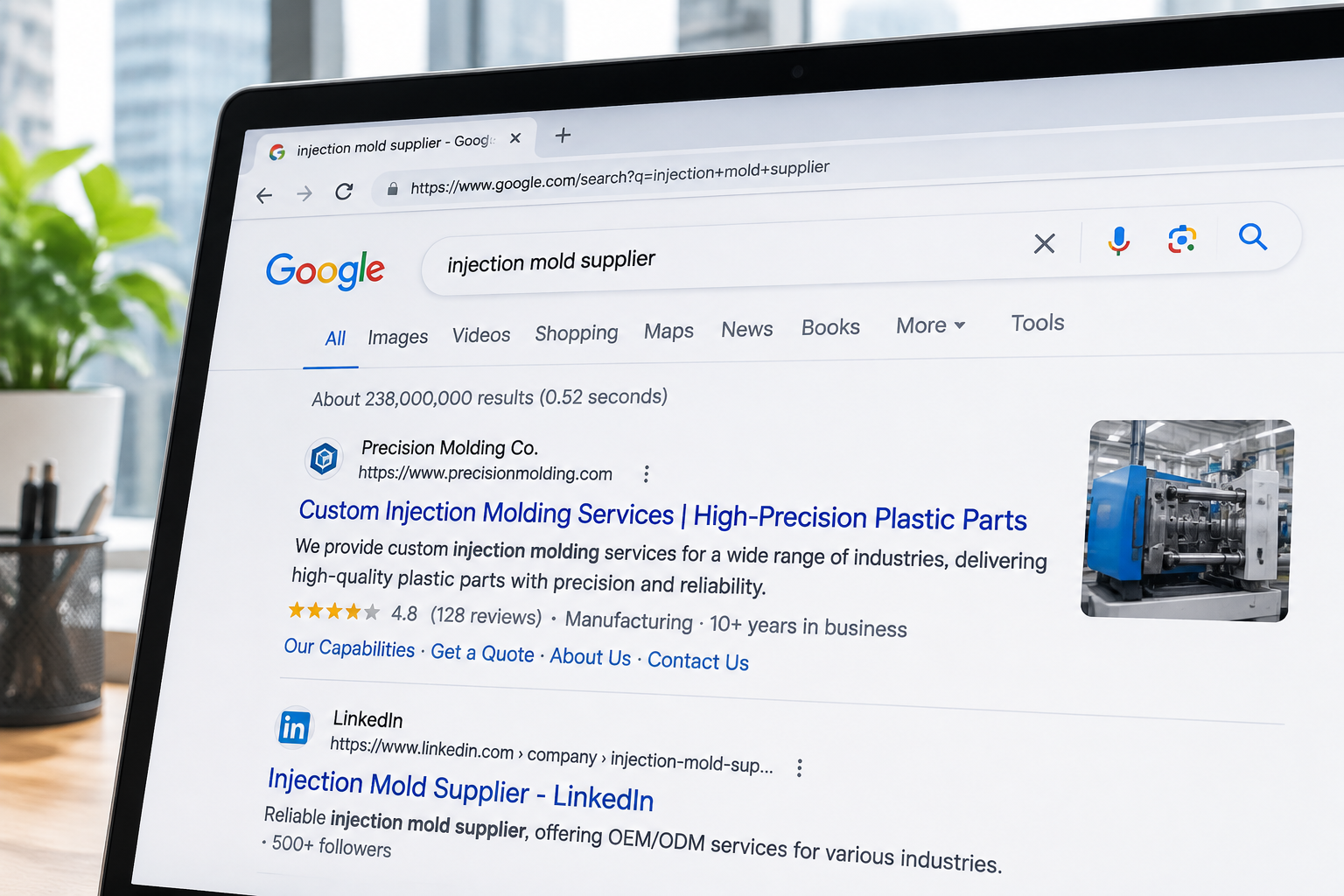
Launching a website is only the first step. Many business owners we encounter see few inquiries a few months after website completion, and their first reaction is to redesign or run ads. In reality, the problem is usually that Google has not indexed the site at all, or has indexed it without ranking it high enough.
Google rankings involve quite a few algorithms, such as officially disclosed ones like PageRank, RankBrain, and Helpful Content. You do not need to memorize these names, but remember one principle: Google prefers to rank pages higher that are useful, easily understandable, and load fast enough.
Moving into practical operations, we do this in the following order:
- First solve indexing: Set up a site map, submit it to Google, and use proactive submissions to let search engines discover new pages as soon as possible.
- Next solve page relevance: Create only one thematic page for each product category, naturally include terms buyers would search for in titles and main text without keyword stuffing.
- Then supplement trust signals: Upload factory photos, certification certificates, team introductions, and genuine customer feedback. The more specific the content, the easier it is for Google to judge it as a useful page.
- Finally, backlinks: Once the foundation within the site is stable, proceed to build links such as industry directories and external media reports, rather than posting a large number of low-quality backlinks from the beginning.
There is one step many people skip: Indexing optimization. Our habitual approach is to submit the site map on the very day the website goes live, while organizing product and category page URLs into a list to check Google crawling status one by one. Without crawling, rankings are out of the question. For troubleshooting Google indexing in order, you can refer to this article: Google Isn't Indexing Your Site? Check These 7 Things In Order.
Inquiry conversion is the ultimate goal of cross-border B2B
Once rankings improve and buyers enter, the final step is to make them willing to send inquiries. In the projects we have handled, the most common bottleneck is not a lack of traffic, but that the page fails to give buyers a clear next step.
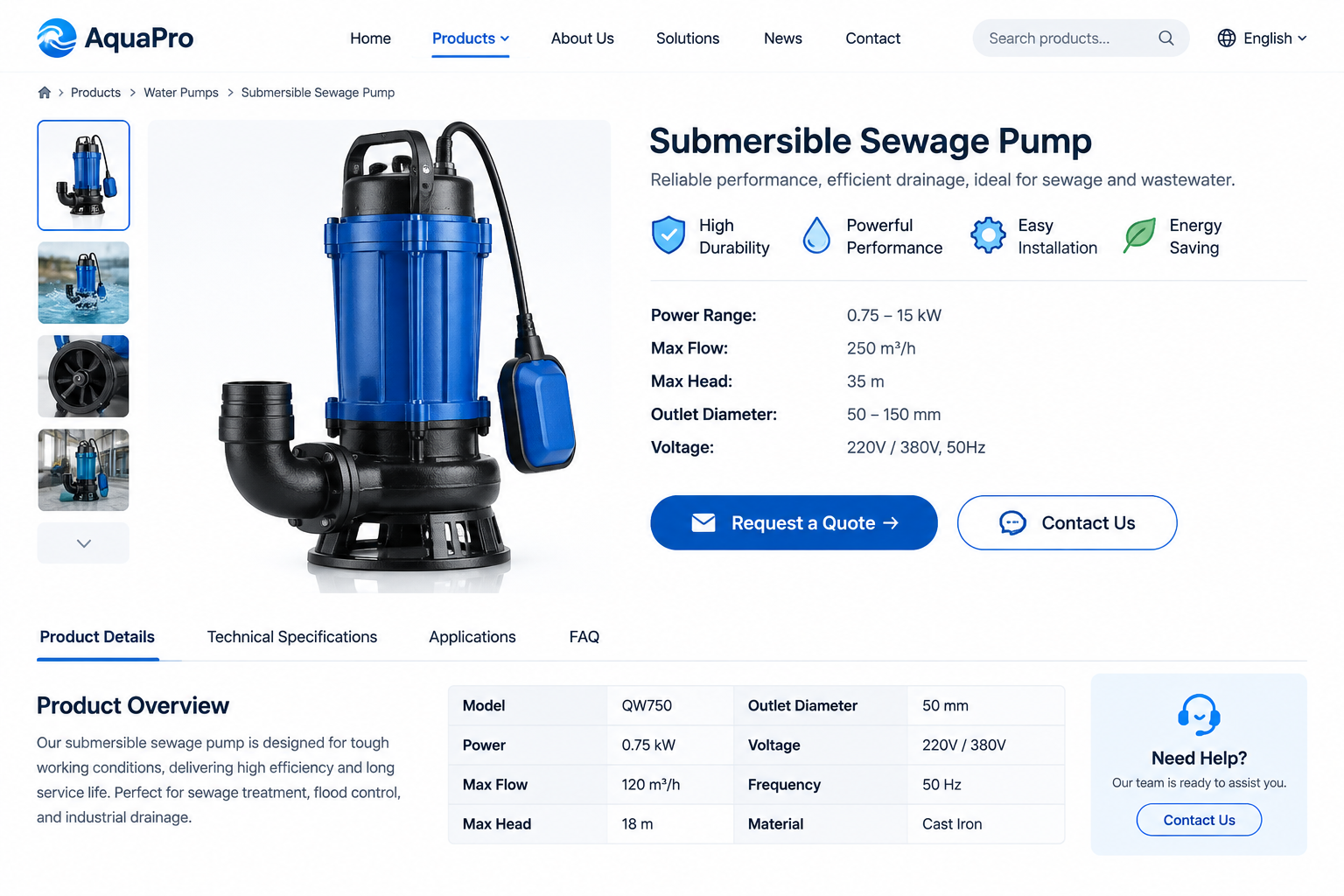
B2B websites are different from consumer e-commerce stores; buyers will not place orders upon seeing a product. What they want to know is: Can this supplier fulfill my volume? Can they meet my standards? How soon can they deliver? Therefore, your product page must clearly present the following:
- Inquiry form: Placed in a visible position above the fold, with not too many fields—leaving a phone number or email is enough.
- Online customer service: Bridge time zone issues with online customer service, letting buyers know someone is here to reply promptly.
- Parameters and certifications: Write out specification sheets, certificates, and packaging details fully to reduce hesitation from buyers asking back and forth.
We often tell clients that inquiry conversion on independent websites does not rely on a pop-up window, but on making buyers feel you are reliable at every step. Fast page loading, complete information, and prompt replies combined are more effective than any sales pitch. For specific breakdowns on inquiries and conversion, you can view the section Inquiry and Conversion.

A counter-example: Relying solely on platforms leads to traffic cutoffs when rules change
Last year we spoke with a factory making mechanical parts. They had opened two B2B platform accounts early on and received quite a few orders every year relying on organic platform traffic in previous years. Later, the platform changed its traffic distribution rules, free rankings dropped sharply, and without bidding there were no inquiries, while bidding made profit calculations impossible. By the time they wanted to find customer data to transfer to their own website, they realized the buyer information accumulated on the platform over the years could not be exported.
This example does not mean platforms are useless, but rather that putting the lifeline of cross-border B2B entirely on platforms equals placing customer relationships in someone else's hands. Conversely, enterprises that built up independent website content and Google indexing early on still receive inquiries from organic searches every day now, gaining passive traffic even without running ads.
Therefore, my advice is: Build your own website solidly first, and then consider how much to invest in platforms. If you are ready to launch a cross-border B2B independent website, you can organize your requirements first; we will provide a detailed quotation within one business day, without guaranteeing rankings, but clearly detailing where every step of the budget goes.