
Current State of Cross-Border E-Commerce: Independent Sites and Marketplace Stores Are Not Substitutes, They Are Two Parallel Customer Acquisition Pipelines
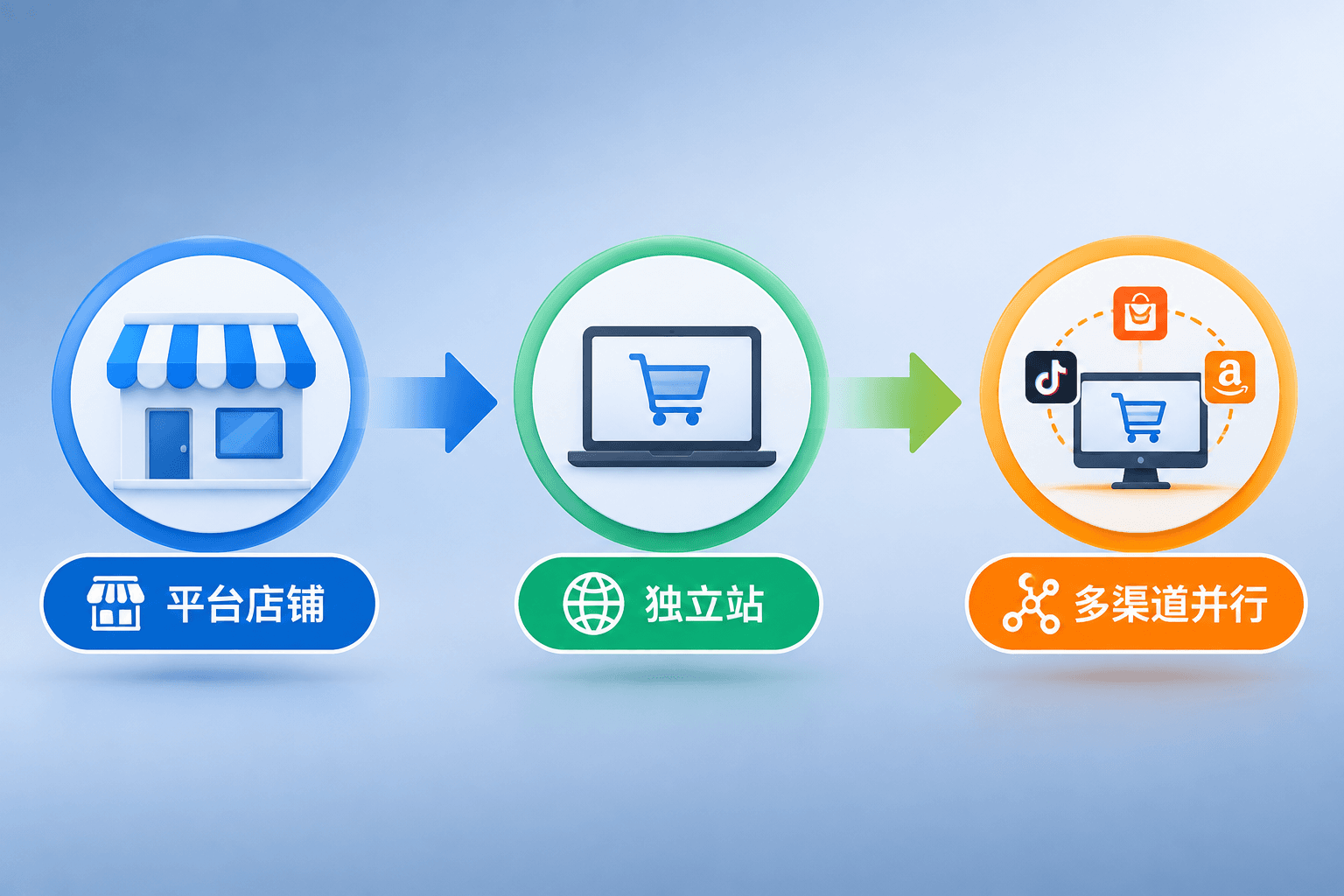
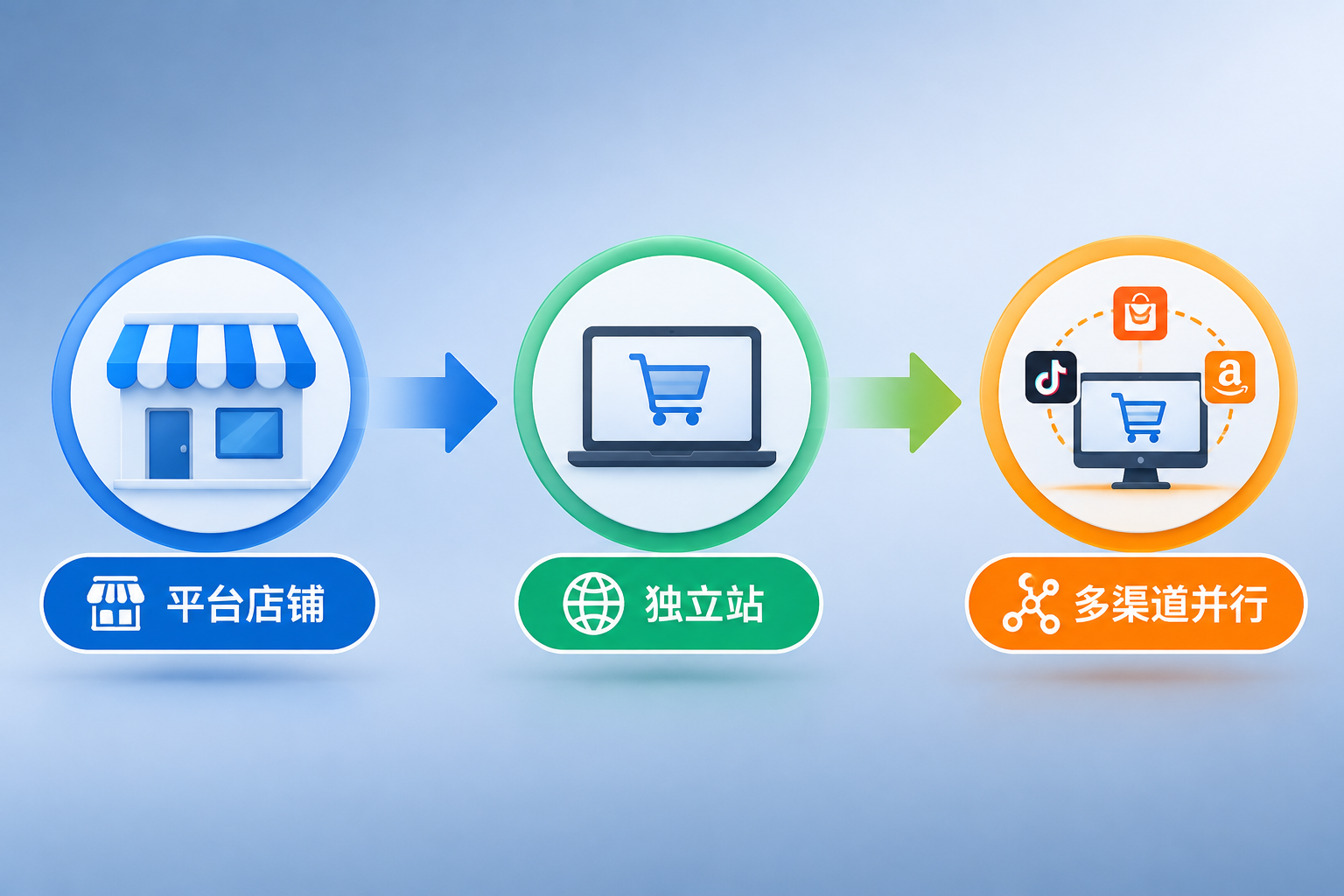
The current landscape of cross-border e-commerce isn't about marketplace stores closing down; it's a structural shift in customer acquisition. Over my years building foreign trade independent sites, I've seen many factories start with marketplace stores before transitioning to independent sites to capture inquiries. At this stage, three things must be recognized: marketplace order profit margins are narrowing, independent sites are shifting from display pages to inquiry channels, and multi-chann
目录
- Phase 1: Marketplace orders still have momentum, but profit margins are narrowing
- Phase 2: Independent sites evolve from brand displays into inquiry channels
- Phase 3: Multi-channel parallelism and compliance after 2024
- The core takeaway of cross-border e-commerce today: It's not about whether to do it, but how you acquire customers
The three questions cross-border e-commerce practitioners ask me the most in the past two years are: should we still enter the market now, should we start with marketplace stores or independent sites, and should our budget be weighted toward ads or content? Breaking down these three questions makes the current state of cross-border e-commerce clear: it is not simply a decline in marketplace dividends, but rather a shift in customer acquisition structures.
Over the past three years, many of the sites we have handled got stuck on these three questions. When broken down, however, the choices become much clearer.
Phase 1: Marketplace orders still have momentum, but profit margins are narrowing
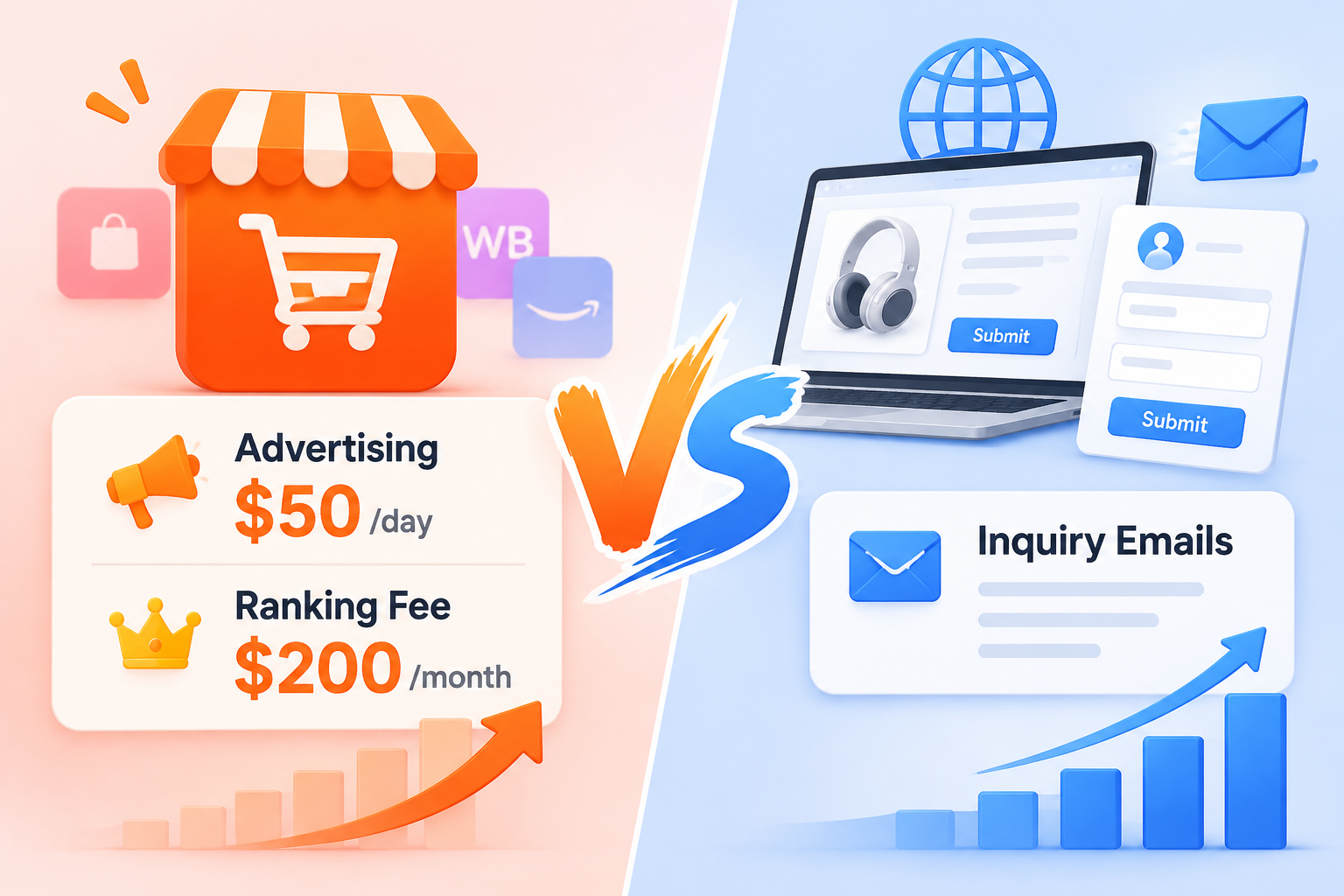
Among the projects we have taken on, quite a few factories opened marketplace stores around 2019, when listing a new product plus basic advertising was enough to generate orders. Today, the reality is that ranking fees and ad click costs are eating into gross margins. Order volumes haven't dropped, but what remains is cash flow rather than profit. The role of marketplace stores has shifted from a profit center to a place for clearing inventory and testing products.
Regarding the current state of cross-border e-commerce, you can no longer rely on marketplace stores as your sole customer acquisition channel. Every time the marketplace rules adjust, the traffic distribution for your store changes, and the data assets do not belong to you.
If you are still unsure how to choose between marketplaces and independent sites, you can check the decision-making logic I broke down in What is Cross-Border B2B? Which is Easier to Get Inquiries For: Independent Sites or B2B Marketplaces?.
In the projects we've handled, marketplace ad fees and commissions often consume the lion's share of gross profits. The exact proportion varies by category, but the more orders you get, the more obvious it becomes. This doesn't mean marketplaces shouldn't be used; rather, it means marketplaces are for rapid testing, while independent sites are for long-term accumulation.
Phase 2: Independent sites evolve from brand displays into inquiry channels
From 2020 to 2022, independent sites were treated as brand display pages, and many bosses felt that having a website with images meant the setup was complete. However, the independent sites that truly succeeded all focused on three things: page structures indexable by Google, forms and online customer service capable of capturing inquiries, and multi-language content segmented by region.
I often remind clients that an independent site is not an online business card, but an inquiry pipeline under your own control. Customers from marketplace stores can easily be lured away by price comparisons, whereas inquiries coming from an independent site usually carry specific needs.
Multilingual setup is not just a matter of running a translation once. As I previously discussed in Building Independent Sites for Cross-Border E-Commerce: Why Multilingual Architecture Is More Than Just a One-Time Translation, the language architecture must be determined first, and the content filled in afterwards.
When it comes to capturing inquiries, a form shouldn't just be an email address slapped onto a page. We provide clients with a trinity of landing-page-level forms + online customer service + automated email replies, ensuring that visitors coming from Google don't just browse once and leave forever.
Phase 3: Multi-channel parallelism and compliance after 2024
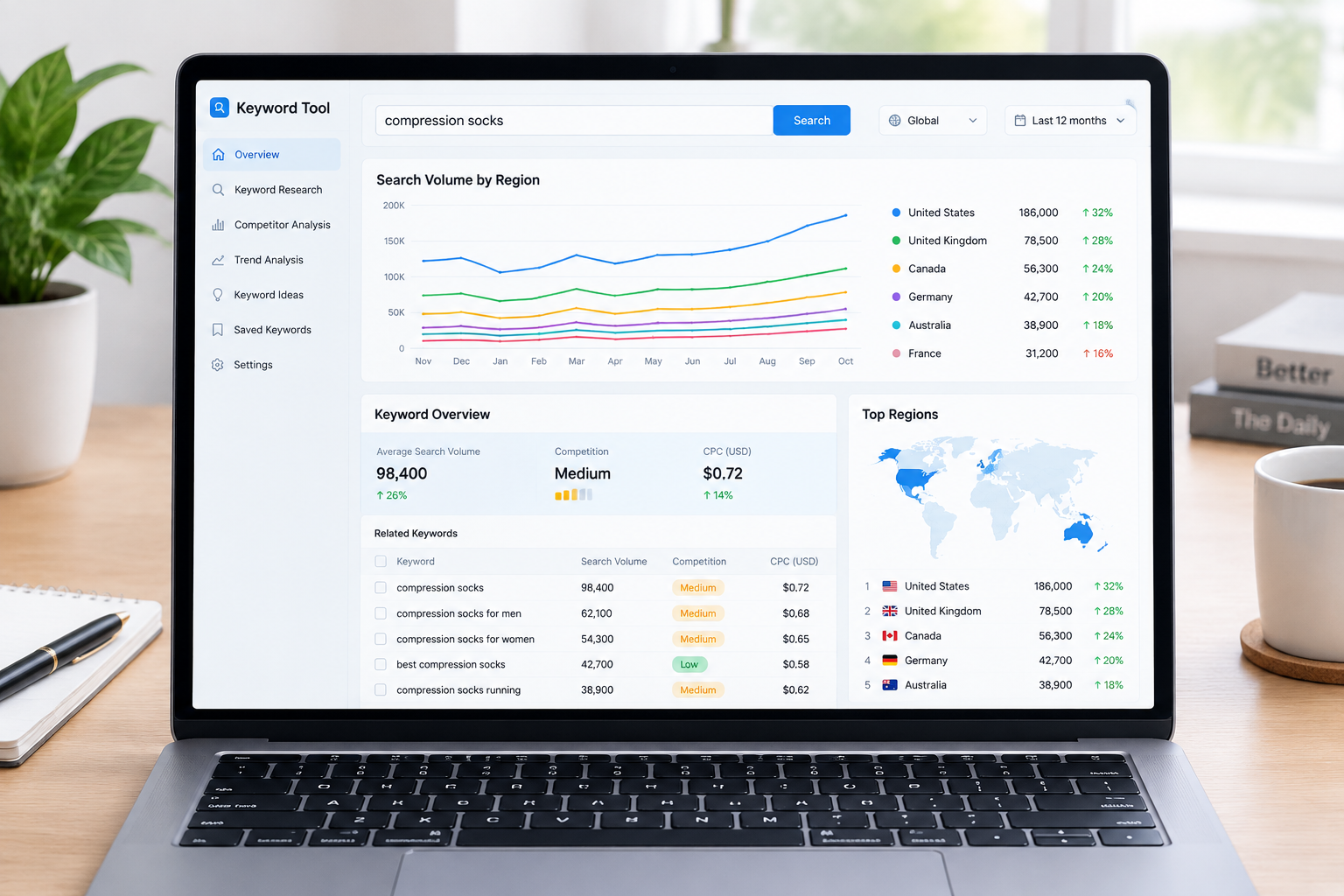
The most obvious change in the current landscape is that keyword acquisition can no longer rely on direct literal translations of Chinese product terms. For example, the real search term for "雨衣" in many overseas markets is "rain poncho", not the direct translation "raincoat". When doing keyword research, we first determine the region, then use Ahrefs and Semrush to check regional search volumes, competition levels, and related terms before deciding on page titles and column structures.
Three things to do for keyword acquisition:
- Use tools to check real search terms in target regions rather than relying on translation software results.
- Break a category down into multiple regional word forms, then sort them by search volume.
- Avoid the pitfalls of direct Chinese translation by prioritizing local terminology and situational vocabulary.
On the content production side, I recommend using keyword tools to determine the terms and regions a page should cover before having AI generate the first draft. If AI writes directly without this guidance, it easily goes off track because it doesn't know the terminology differences between North America and Southeast Asia for the same product category. Our approach is to build a keyword list first, have AI write 200–300 word paragraphs for each term, and finally have a human review the copy.
At the same time, payment processing, logistics, and privacy compliance have begun to impact operational pacing. When we build sites for clients, we confirm payment integration points, logistics tracking APIs, and privacy policy pages upfront to avoid rework after launch.
The core takeaway of cross-border e-commerce today: It's not about whether to do it, but how you acquire customers
Connecting all three phases together, the current state of cross-border e-commerce is a process of shifting from bulk marketplace listing to multi-channel content-driven customer acquisition. Marketplace stores handle immediate orders, independent sites accumulate inquiries and data, and content pages drive free traffic from search engines.
What can you truly sustain and output right now: supply chain cost advantages, content capabilities, or a traffic budget?