
How Much Does Cross-Border E-Commerce Development Cost: Cost Breakdown for B2C Sellers and Factory Foreign Trade Departments
Many cross-border e-commerce sellers immediately ask how much it costs to develop an independent site, then pick whoever is cheapest. This approach often leads to wasting money in the wrong places. The real cost differences lie in three things: site format, page scale, and feature integration. I broke down a B2C seller's case where they chose a low price to save money, only to come back three months later for maintenance hosting. In development costs, the difference between expensive and cheap l
目录
- Cross-Border E-Commerce Development Costs: Three Questions to Clarify First
- What are the basic cost components of developing a cross-border independent website?
- Why do quotes for building the exact same cross-border e-commerce website vary by several times?
- How much is considered reasonable, and is there a reference baseline?
- Keyword Research: How It Affects Development Quotes
- After Launch: How Long Before You See Results?
Many cross-border e-commerce business owners, when first inquiring about developing an independent website, immediately ask, "How much does it cost?"
Then they compare numbers and pick the cheapest one.
This approach is wrong.
Because the cost difference in cross-border independent site development isn't in the total price, but in three things.
Site format, page scale, and feature integration.
Let me share a project scenario we handled.
Background: A cross-border e-commerce seller of home goods who had previously only sold on third-party platforms.
They sent over a reference site and asked how much it would cost to build an exact replica.
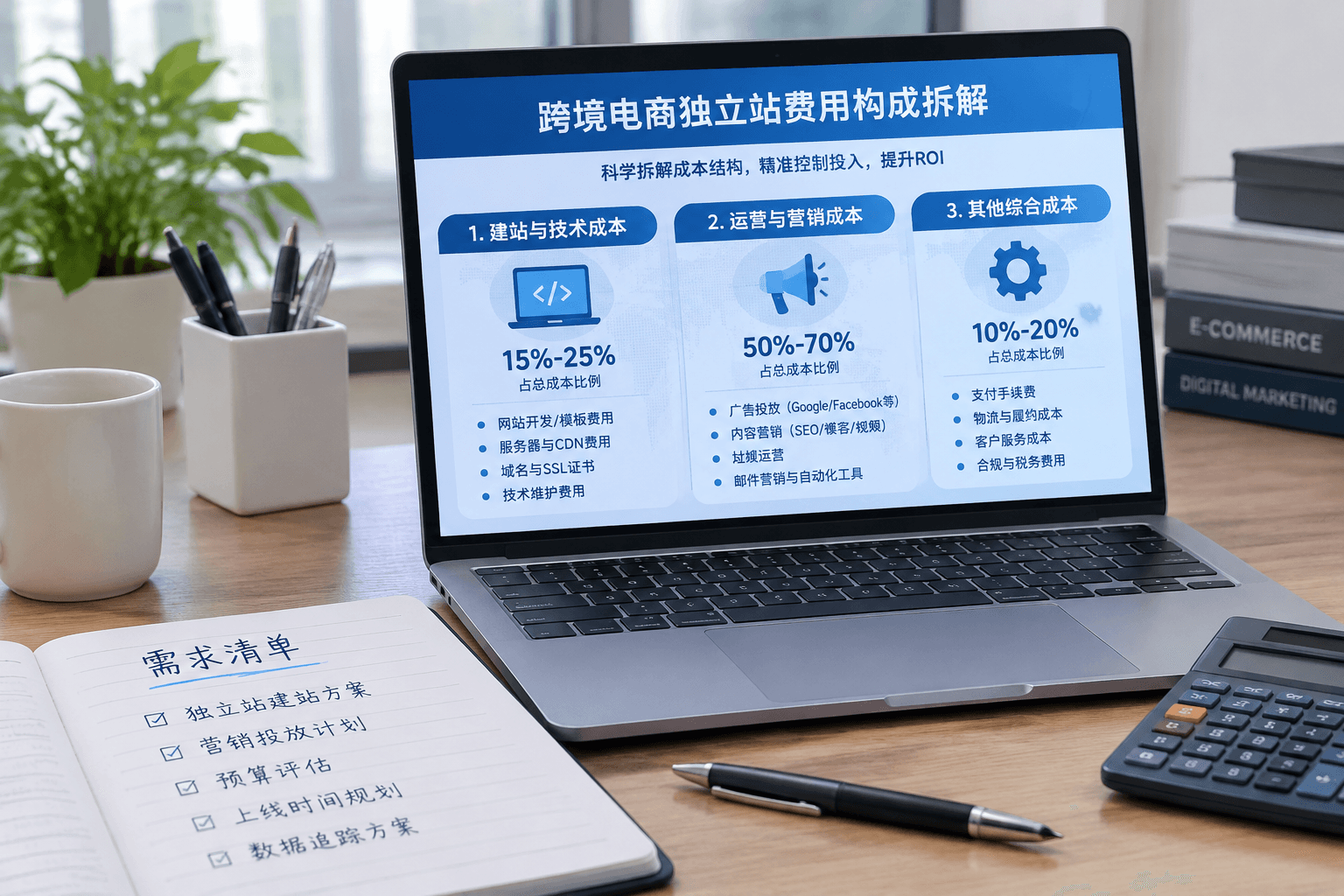
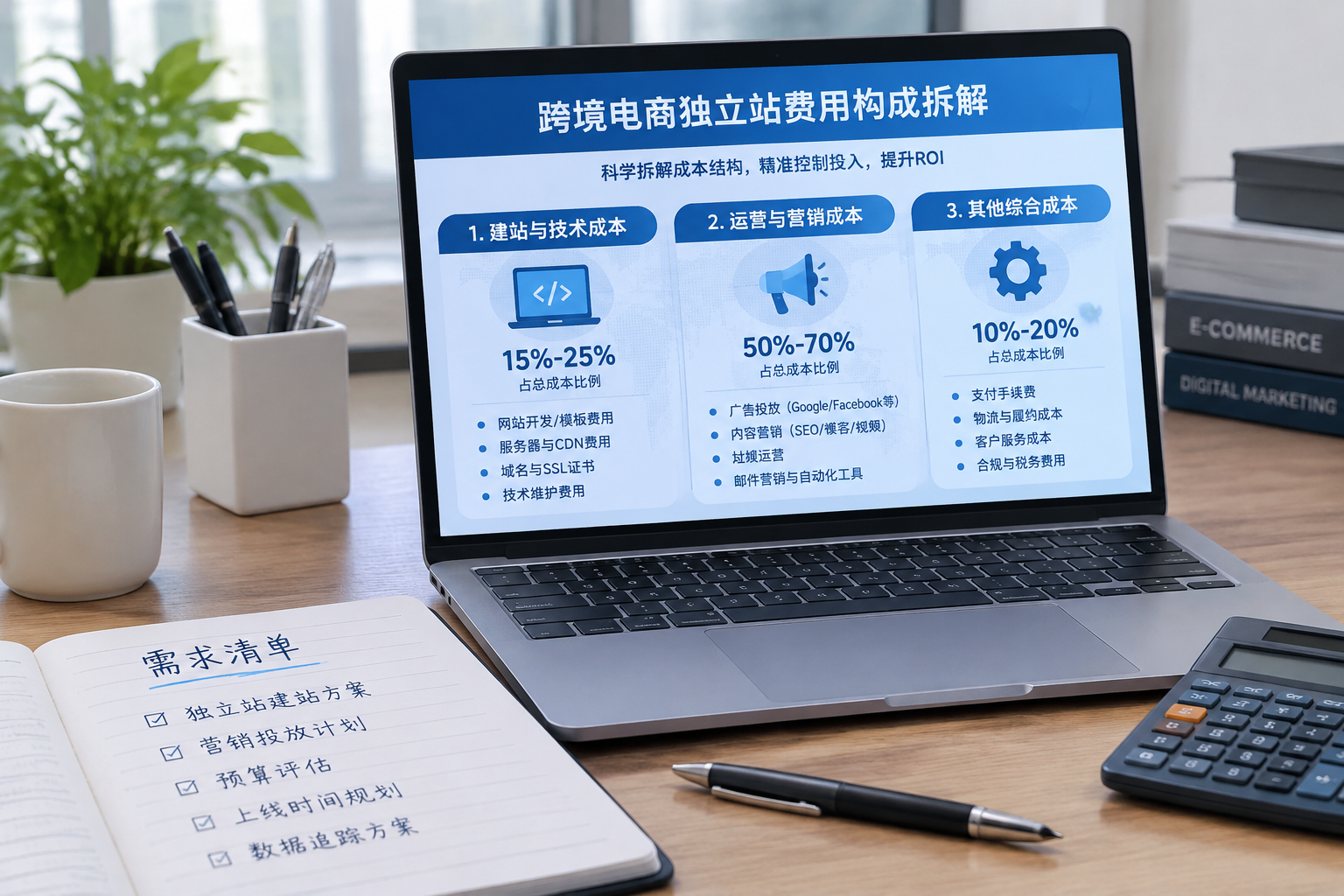
We didn't give a quote right away; instead, we had them fill out a requirement checklist.
The checklist required specifying the site format, expected page count, whether multi-language support was needed, and whether online payment processing was required.
After filling it out, it turned out they didn't want a simple showcase website.
They wanted an independent e-commerce store with cross-border payment collection, multi-currency display, and logistics tracking.
The reference site only looked similar on the homepage.
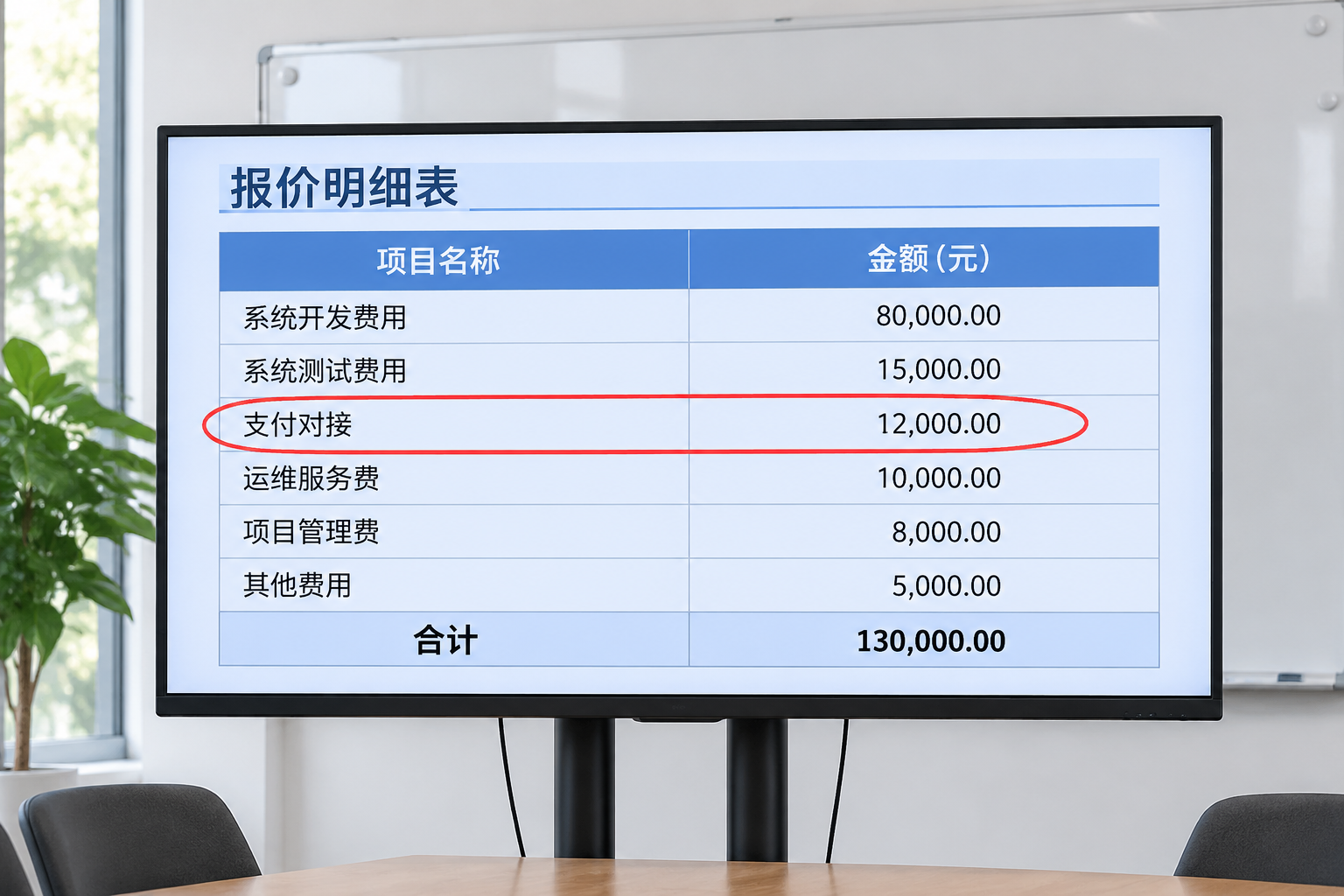
What we did: We broke down the quote into four parts.
Design and prototyping, programming development, content population, and launch deployment.
Every single expense was detailed clearly.
We also reminded them that cross-border payment and checkout integration would take up a significant amount of development time.
It's not just a matter of installing a plugin; it also involves handling chargeback callbacks and settlement risks.
I've written about this before: What cross-border payment acquiring means for independent sites.
Result: They thought it was too expensive at the time and chose another company that offered a low quote.
Three months later, they came back to us for annual maintenance and hosting.
Because the other agency built the shopping cart module entirely out of stacked plugins, settlement occasionally failed after launch.
Every time settlement failed, funds got stuck in the payment gateway.
Only after getting things sorted out did they realize that web development and payment processing are two completely different things.
Review: In development costs, the difference between expensive and cheap lies in whether you can reliably receive payments.
Not whether the pages look pretty.
Therefore, before getting a quote, confirm three things first.
Is the site format a showcase website or an e-commerce store with online checkout?
Is the page scale under 10 pages, or over 50 pages?
Does the feature integration include cross-border payment collection, logistics tracking, or internal system integration?
I have put these details in the Website Building Costs and Pricing section.
Cross-Border E-Commerce Development Costs: Three Questions to Clarify First
What are the basic cost components of developing a cross-border independent website?
Basic costs are divided into four parts: Design and Prototyping, Programming Development, Content Population, and Launch Deployment.
Design isn't about applying templates; it requires building prototypes based on your product category and inquiry logic.
Programming development handles multi-language support, forms, and structured data.
Content population ensures all languages you plan to launch are implemented at once.
Launch deployment includes servers, SSL certificates, and search engine submission.
For specific details, you can view the scope of each tier on the Services List page.
Why do quotes for building the exact same cross-border e-commerce website vary by several times?
The difference lies in the site format and feature integration, not design proficiency.
The development workload for a showcase website versus an e-commerce store with payment processing is completely different.
Creating independent language versions for a multi-language site is also not the same as just installing a translation plugin.
If the multi-language architecture is set up incorrectly, your SEO will suffer heavily down the road.
I wrote an article about this: Building an independent cross-border site: Why multi-language architecture isn't just a one-time translation.
How much is considered reasonable, and is there a reference baseline?
Looking only at the numbers will land you in a trap; a reasonable quote must be broken down into development fees, annual fees, and incremental costs.
Development fees are a one-time investment, while annual fees cover servers, domains, SSL, and technical maintenance.
Incremental costs include content updates, backlink building, and advertising budgets.
Many companies only quote the development fee, leaving annual and incremental fees to be added later.
That's why our itemized quotes will be sent to you within 1 business day.
Keyword Research: How It Affects Development Quotes
The expense most easily overlooked during the development stage is the confirmation of content keywords.
Many Chinese sellers in cross-border e-commerce like to directly translate Chinese product names.
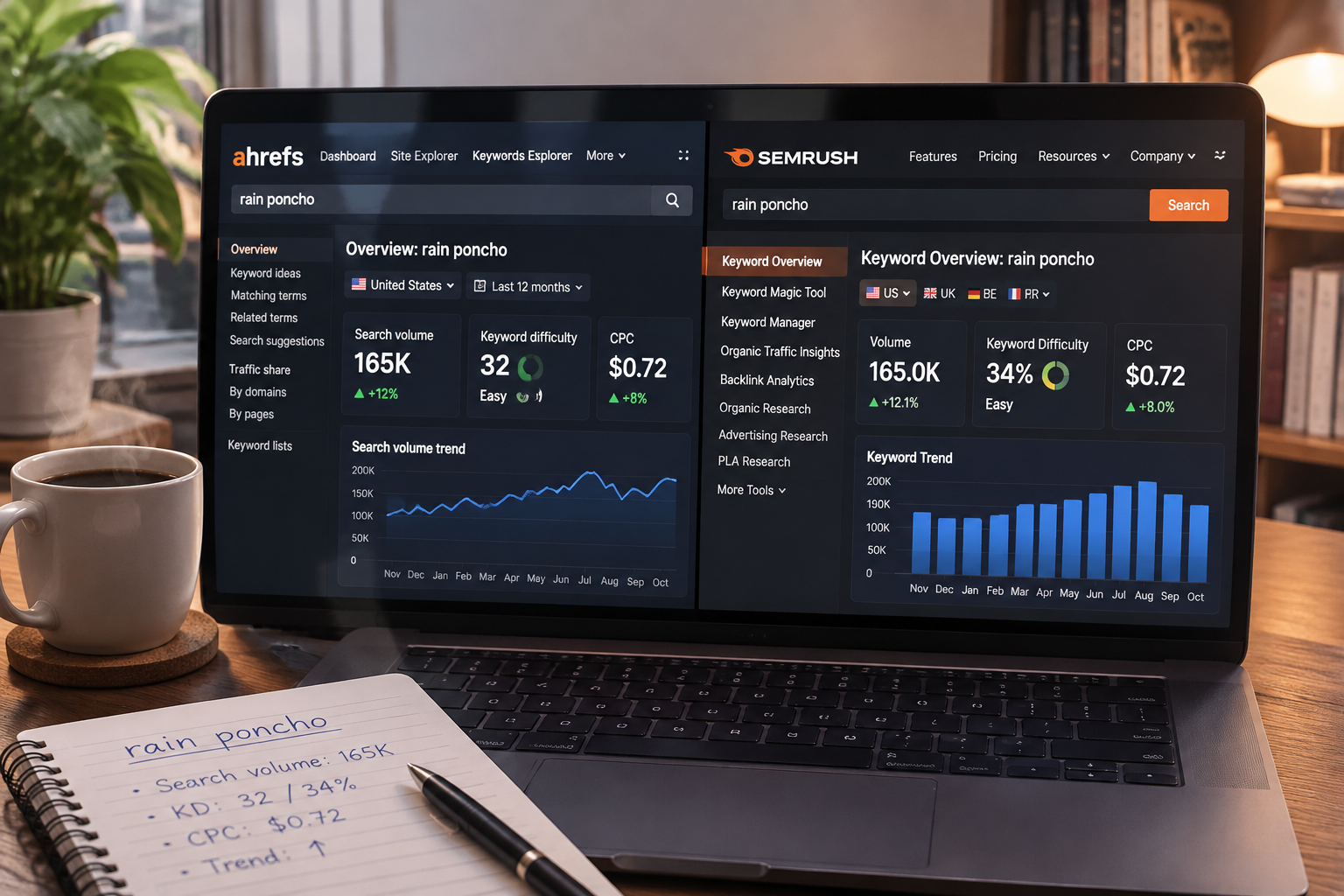
For example, raincoats are directly translated as "raincoat", but overseas buyers search for "rain poncho" much more often.
If you use the wrong terms during development, all the content population work will be done in vain.
It will require rework later, and your SEO rankings won't have a solid foundation.
There are two commonly used tools: ahrefs and semrush.
Using them to check your target market allows you to see search volumes in advance.
Cut keywords from multiple angles and compare multiple regions.
This way, keyword research can be listed as a separate item in the development quote.
It's not charged for every project, but it is recommended for sites with heavy content.
After Launch: How Long Before You See Results?
Independent site development fees don't immediately translate into orders the moment you pay.
After launch, Google indexing usually takes a few weeks.
Organic rankings generally take 3 to 6 months to rise.
If keyword competition is high, it might take even longer.
We don't promise "guaranteed first-page rankings," nor do we promise "guaranteed inquiry volumes."
However, we can get the technical foundations right.
On-site SEO, structured data, active index submission, and multi-language cross-linking—doing these right the first time.
Later, when you run ads or do content marketing, your money won't go to waste.
You can send us your requirements first for an evaluation.
There's no need to decide on development immediately.
Within 1 business day, I will provide you with an itemized quote.
Every single expense will be clearly written out.