
The Three Stages of Cross-Border First-Leg Logistics: From Factory to Overseas Warehouse
You just received a cross-border e-commerce first-leg shipping quote where the ocean freight, customs clearance fees, and destination port charges all look reasonable, yet the total is nearly 20% over budget. The first leg isn't just a single freight charge, but rather a combination of three distinct phases: domestic pickup and customs, international transit, and destination customs clearance and delivery. I've encountered four major misconceptions that burn money: focusing solely on ocean freig
目录
- The Three Stages of Cross-Border E-Commerce First-Leg Logistics, Broken Down
- Four Common Misconceptions About First-Leg Logistics I See All the Time
- Misconception 1: The First Leg Is Just "Ocean Freight"
- Misconception 2: The Lower the First-Leg Quote, the Lower the Total Cost
- Misconception 3: The First Leg Has Nothing to Do with Your Independent Site
- Misconception 4: Once the First Leg Is Complete, the Financial Calculation Is Over
You just received a cross-border e-commerce first-leg shipping quote from your freight forwarder, listing "ocean freight," "customs clearance fees," "destination port charges," and "overseas warehouse inbound fees." Each item looks reasonable on its own, but the total comes out nearly 20% over budget. I've seen this scenario far too many times. The first leg isn't just a single freight charge; it's three distinct business phases stacked together.
The Three Stages of Cross-Border E-Commerce First-Leg Logistics, Broken Down
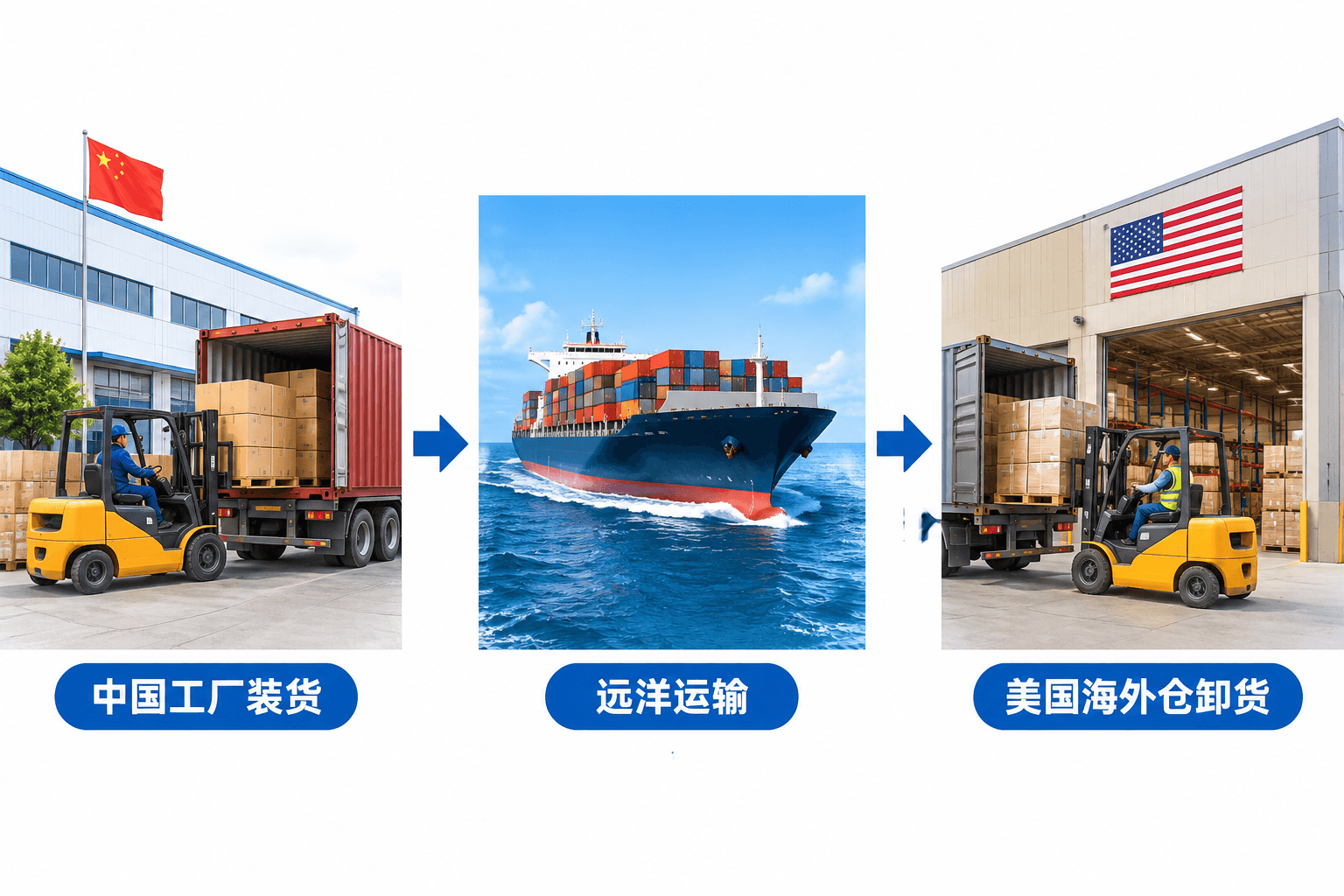
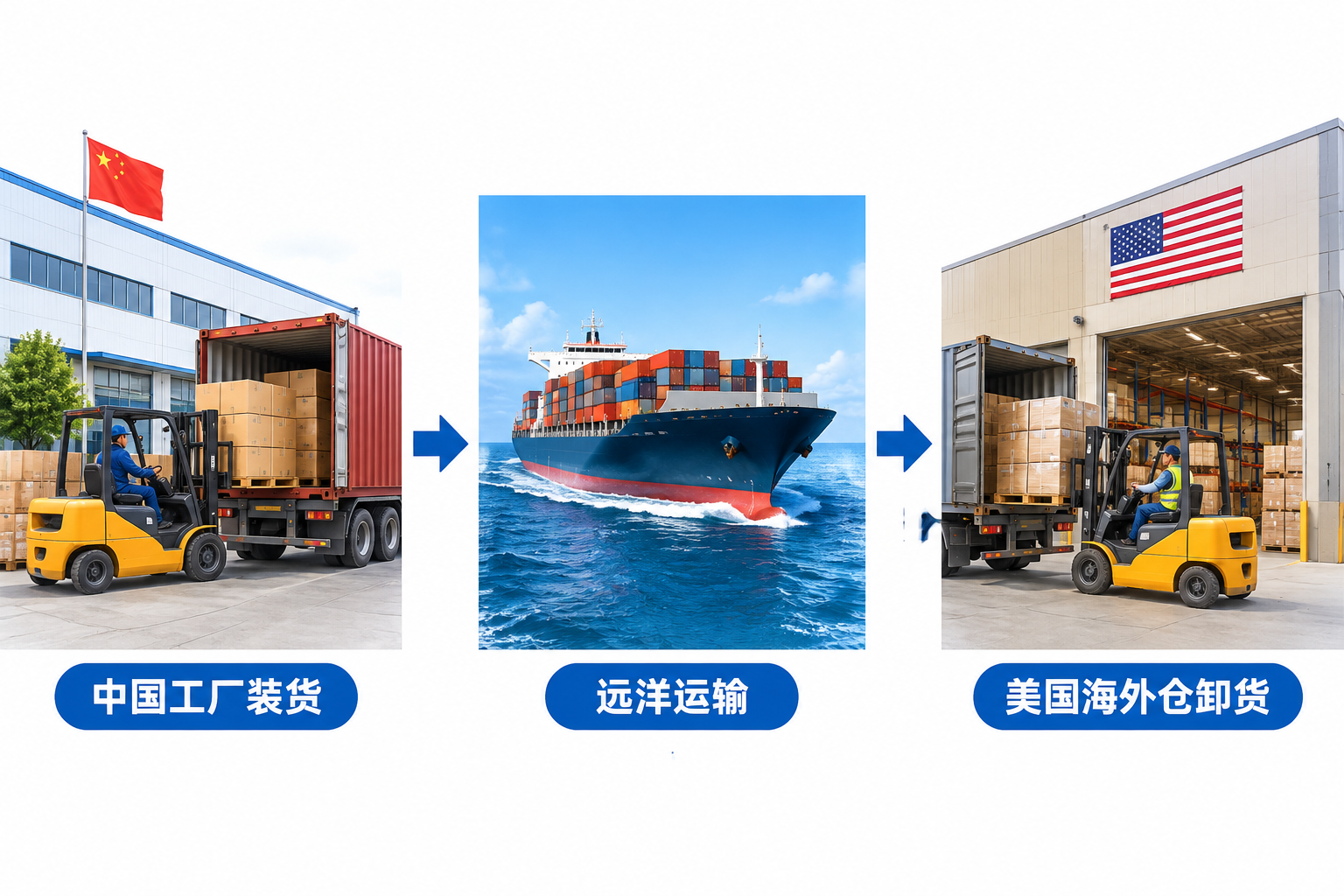
When we build cross-border e-commerce independent sites for our clients, we always have them split their logistics costs into three segments first; otherwise, their pricing model is built on shaky ground. Chronologically, the first leg is divided into three parts:
- Domestic Pickup and Customs Declaration: Picking up goods from the factory or consolidation warehouse, container loading, and export customs clearance. The deliverable here is completing the export declaration and getting the goods on the ship.
- International Mainline Transportation: Ocean, air, or rail shipping to the destination country's port or airport. The deliverable here is receiving the arrival notice at the destination country.
- Destination Customs Clearance and Delivery: Customs clearance, tariff payment, container pickup, and delivery to an overseas warehouse or Amazon fulfillment center in the destination country. The deliverable here is warehouse check-in scanning of the goods.
Billing methods differ completely across these three stages. The domestic segment is charged per shipment or per cubic meter, the international segment by the greater of weight or volume, and the destination segment is commonly billed per shipment, cubic meter, or pallet. If you only fixate on the middle ocean freight segment, the other two segments will easily rack up unexpected markups.
Four Common Misconceptions About First-Leg Logistics I See All the Time
Misconception 1: The First Leg Is Just "Ocean Freight"
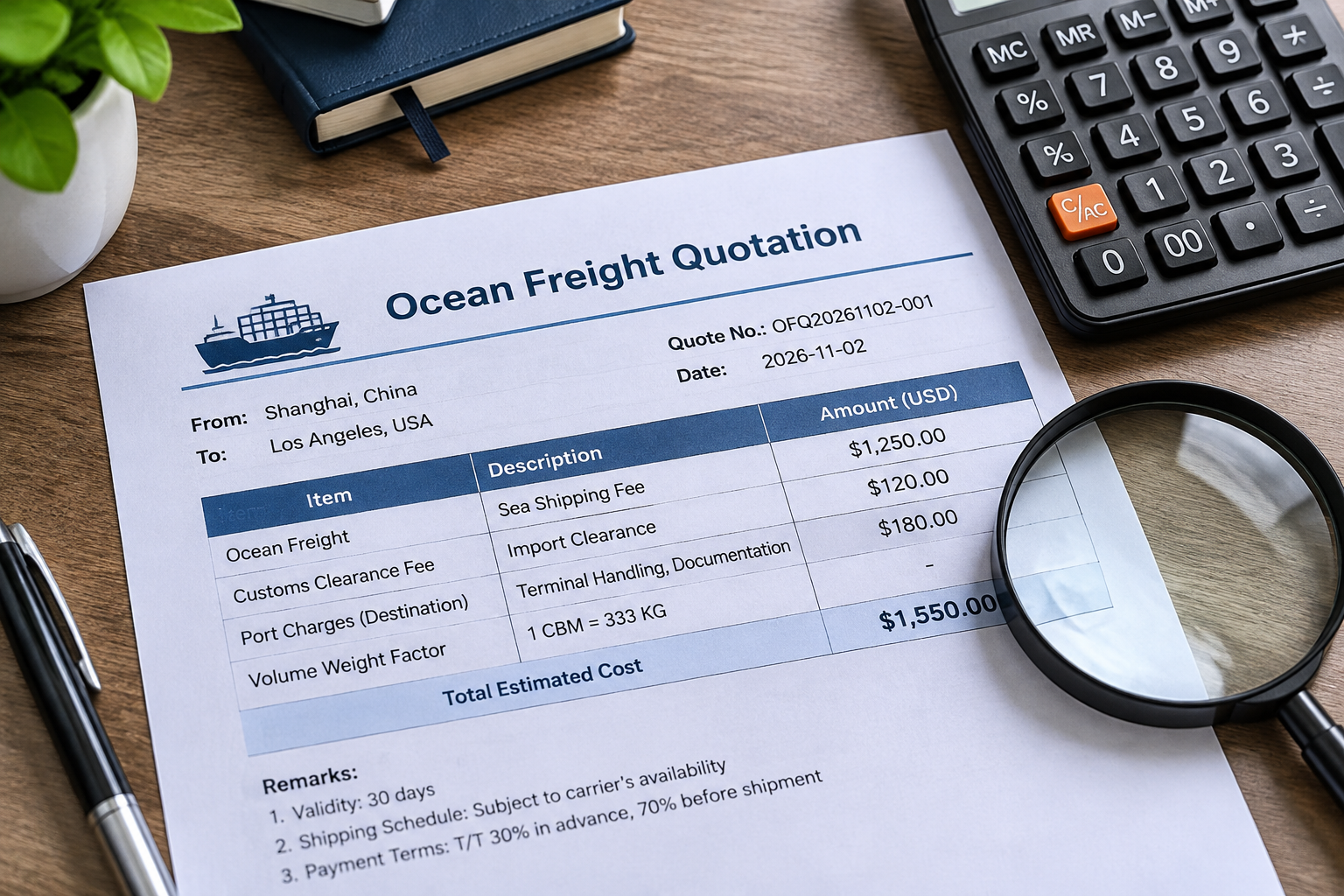
Many business owners ask for a quote for the first time by immediately inquiring, "How much is it per kilogram?" However, ocean freight might account for less than half of the total first-leg quote. Customs clearance fees, destination port charges, overseas warehouse inbound fees, and bunker surcharges are all billed separately.
Comparing a freight forwarder based solely on a single unit price is equivalent to assuming they will handle the last two segments for free. What you really need to compare is the all-inclusive price for the exact same shipment and destination, with the chargeable weight explicitly locked down.
- When asking for a quote, clarify whether it is "FOB or DDP": FOB excludes destination country fees, while DDP includes both duties and delivery.
- Request a line-by-line breakdown of "domestic pickup fee," "customs declaration fee," "ocean freight," "destination port charges," "customs clearance fee," and "delivery fee."
- Ask clearly: Is the chargeable weight based on actual weight or dimensional weight? Is the dimensional divisor 6,000 or 5,000?
Misconception 2: The Lower the First-Leg Quote, the Lower the Total Cost
We once ran a comparison: for the exact same shipment, Forwarder A quoted 11 RMB/kg, while Forwarder B quoted 13 RMB/kg. As it turned out, Forwarder A applied a much harsher dimensional weight factor, making their final actual charge 8% higher than Forwarder B's.
A low unit price on a quote does not mean a low total settlement price, because chargeable weight and surcharges are the real variables.
- For light and bulky goods, always ask about the dimensional weight ratio first; otherwise, your freight might be calculated at 1.5 times the dimensional weight.
- Find out clearly whether "bunker surcharges," "peak season surcharges," and "low-sulfur surcharges" are included in the quote.
- Set applicable conditions: If your goods are heavy and compact, the unit price holds more weight; if they are volumetric/bulky, the dimensional weight calculation method matters much more than the unit price.
Misconception 3: The First Leg Has Nothing to Do with Your Independent Site
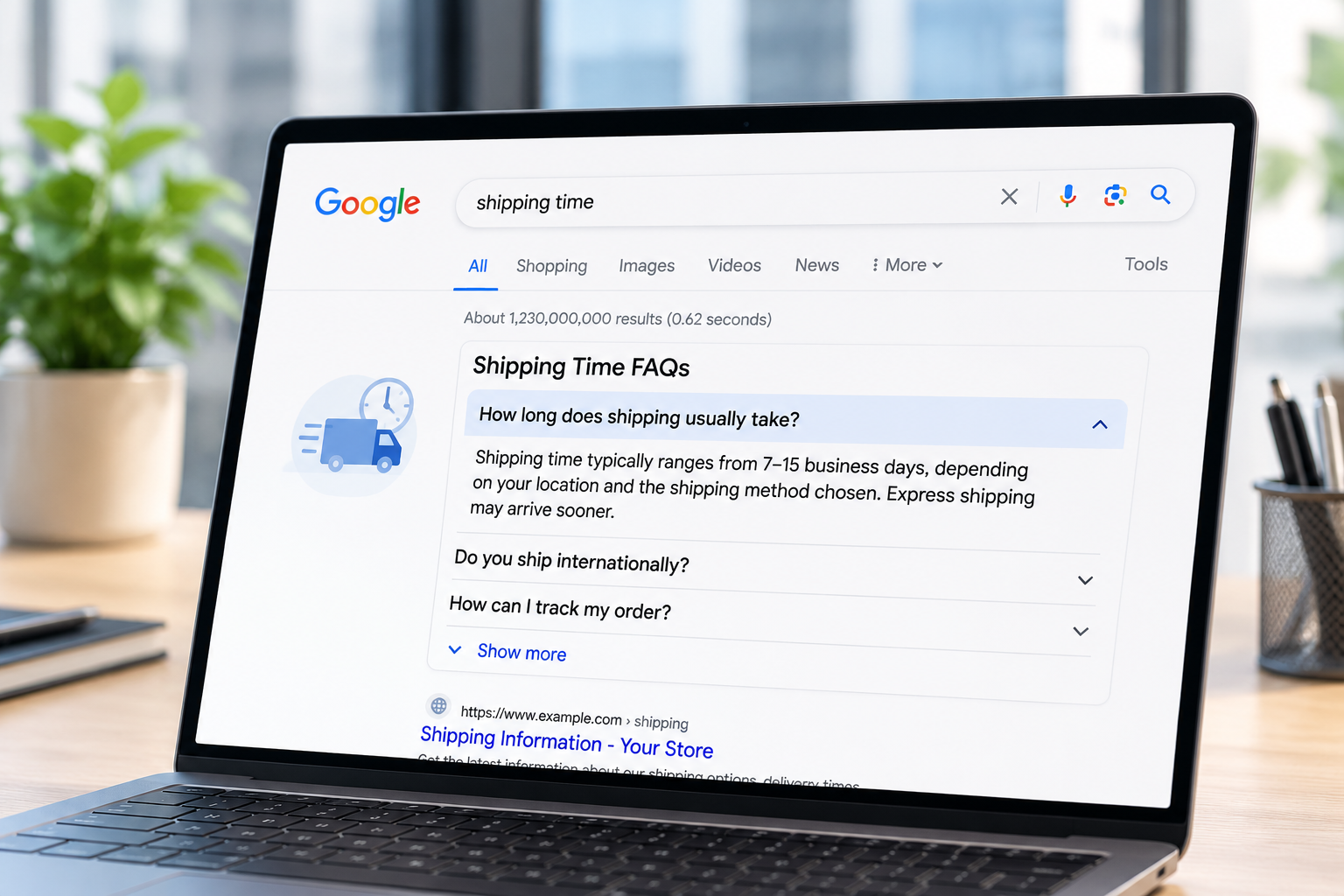
Many independent e-commerce practitioners feel that the first leg is offline logistics and has nothing to do with their website. But as soon as customers ask about delivery timeframes, customer service can only flip through chat logs because there is no structured information whatsoever on the website.
If your independent site's logistics shipping page lacks structured data, it's hard for Google to understand your delivery timeframe commitments, route coverage, and FAQs, making it impossible to display rich snippets. You can turn pages related to logistics integration into a structure that search engines can easily read.
- If your independent site has a "Logistics Delivery Timeframes" or "Shipping Instructions" page, organize your common questions into an FAQ structure and mark it up with FAQPage structured data.
- You can add Product structured data to product pages and include estimated delivery times within `shippingDetails`, which is a permitted field.
- However, don't randomly stuff types just to chase rich snippets: do not hardcode Recipe data onto logistics information pages, or Product data onto FAQ pages; misusing types will be flagged as spam by search engines.
- Structured data simply helps Google understand your pages more accurately. Verify your implementation using the Rich Results Test after writing it, though rich snippets are never guaranteed.
Misconception 4: Once the First Leg Is Complete, the Financial Calculation Is Over
True cost recovery happens when you gradually deduct costs from your pricing after your independent site goes live. Beyond the first leg, you still have tariffs, overseas warehousing, last-mile delivery, and return/exchange losses. If your independent site pricing only accounts for the first leg, everything that follows will result in a loss.
You cannot calculate profit margins accurately based on the first leg alone; only by factoring subsequent warehousing and last-mile delivery into your model will you know whether taking on a specific order makes sense.
- Independent site pricing should at least break down into: procurement cost + first leg + tariffs + overseas warehouse rent + last-mile delivery + platform/payment processing fees.
- The proportion of first-leg costs allocated to a specific SKU depends entirely on its product category; there is no universal number.
- If you are using the DDP model, where tariffs are already included in the first-leg quote, do not add tariffs a second time when setting your retail price.
The more thoroughly you break down cross-border e-commerce first-leg expenses, the less likely your independent site's pricing is to result in losses.