
Don't Just Bookmark Foreign Trade Directories: 4 Steps to Filter Actionable Reference Sites
Most people searching for "foreign trade website directories" bookmark dozens of websites but fail to take action. The problem isn't looking at too little, but lacking filtering criteria. This article uses 4 steps to help you lock in 3 to 5 truly worthwhile competitor sites from massive reference sites, and warns you about the easiest keyword trap of direct product term translation. After reading, you'll know whether to deconstruct the structure next or do keyword verification first, stopping ai
目录
- Step 1: Determine whether you need a showcase type or a transactional type
- Step 2: Target the same industry and target market
- Step 3: Deconstruct the structure, don't copy the design
- Step 4: Verify keyword layout, avoid the trap of direct translation
- The most easily overlooked risk: the reference site itself may not have good SEO foundations
When people search for "foreign trade website directory," they usually want two things: to see what other international trade sites look like, and to find templates they can use directly for building their own site.
However, a more accurate definition is: it's a "collection of competitor websites." Your job isn't to look through a hundred sites one by one, but to filter out 3 to 5 sites that are closest to your business, and break down their page structure, product presentation methods, and inquiry entry points.
Last week, a client who makes hardware products came for a consultation, saying they had bookmarked over 60 websites recommended in various foreign trade website directories, yet after two weeks they still didn't know how to build their own site. Where did the problem lie? They had no filtering criteria, mixing B2C retail stores and B2B factory display sites together, making things more confusing the more they looked.
Step 1: Determine whether you need a showcase type or a transactional type
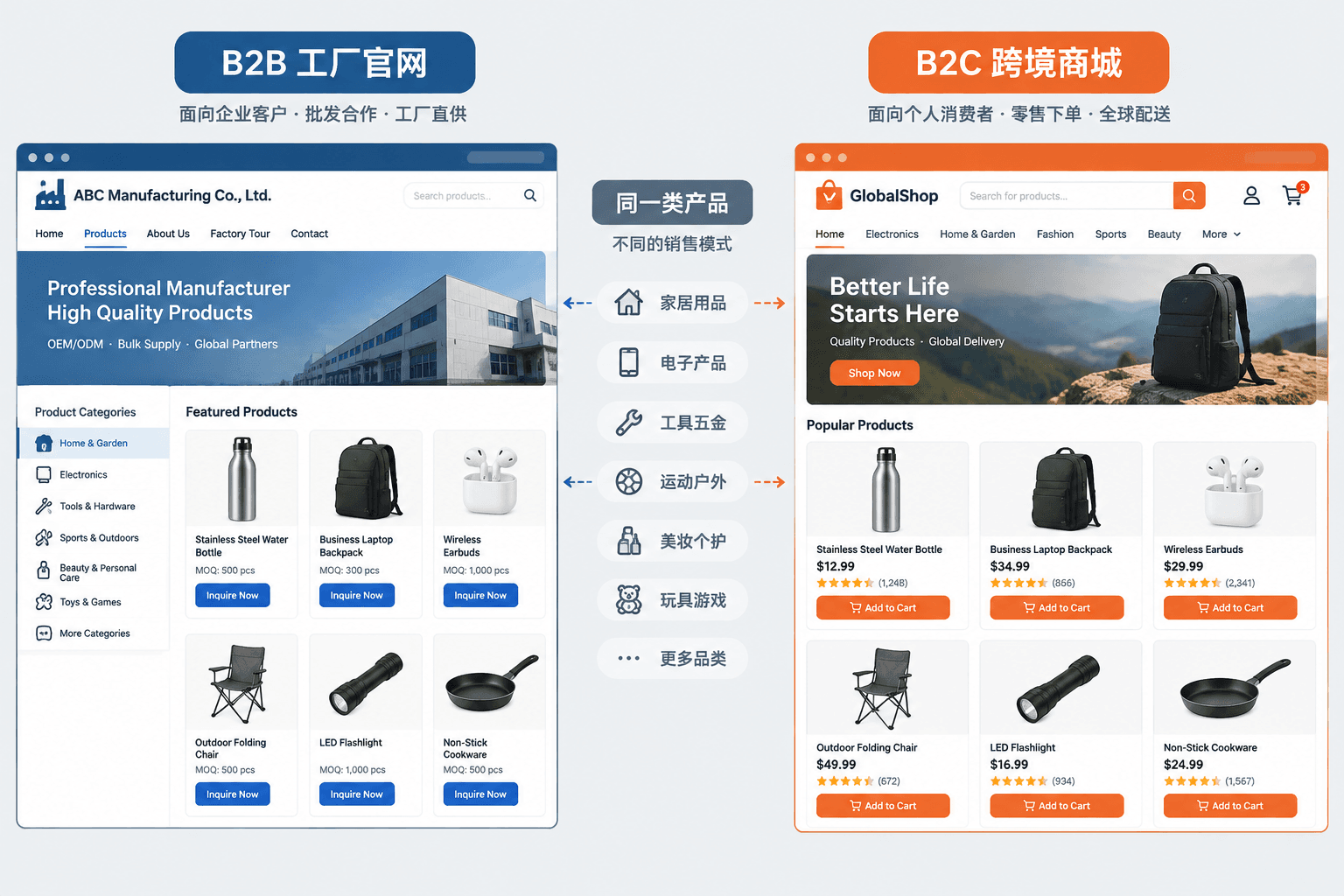
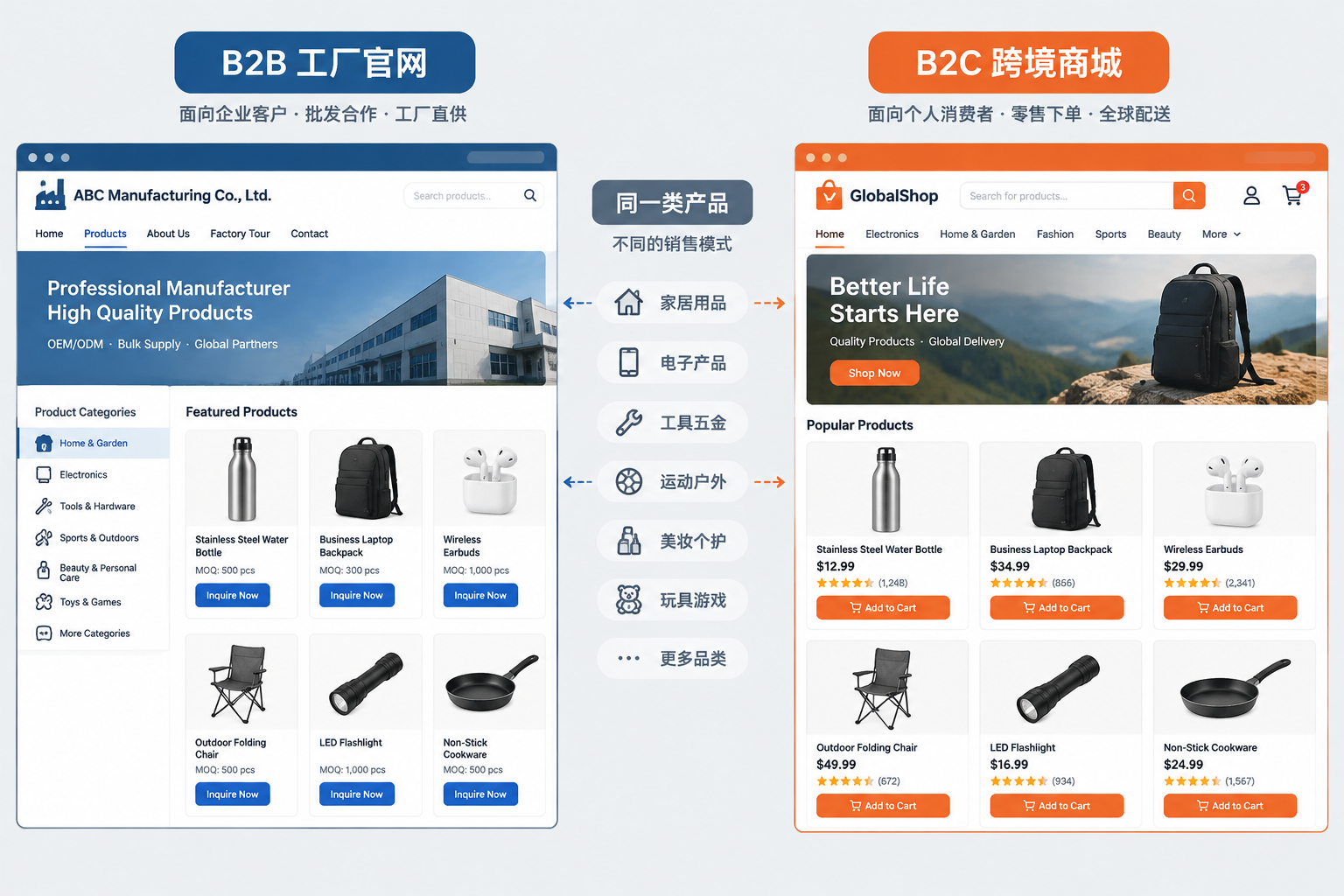
Conclusion first: if you do B2B foreign trade and close deals through inquiries, you should reference showcase-style official websites; if you do cross-border retail where customers place orders and pay online, you need to look at e-commerce store websites.
The page logic of these two types of sites is completely different. The core of a showcase site is the product page, company strength page, and inquiry form; the core of a store site is the shopping cart, checkout process, and logistics information display. Mixing the two is like learning to cook Chinese and French cuisine at the same time—in the end, you won't master either.
The judgment method is very simple: open a reference site and check if there is an "Add to Cart" button and a checkout page. If so, it's a store type; if not, it's most likely a showcase type.
Step 2: Target the same industry and target market
After filtering out different site formats, the next step is to find sites in the same industry and target market as yours. If you export auto parts to North America, look at sites exporting auto parts to North America; if you export home goods to Europe, look at sites exporting home goods to Europe.
Why focus on the target market? Because buyers in different regions have different browsing habits. European and American buyers are accustomed to concise pages with low information density; Southeast Asian and Middle Eastern buyers may be more used to colorful, information-dense layouts. If the target market of your reference site differs from yours, the layout logic you copy may not fit well locally.
How to find them specifically? Search in Google using "your product English term + target country", and look at the top-ranking competitor independent sites—these are your most direct reference objects.
Step 3: Deconstruct the structure, don't copy the design
When many business owners look at reference sites, their first reaction is "this color looks nice" or "this slider is cool." But what you should really deconstruct is the structure: how many levels does the navigation bar have? What modules are on the product page? Is the inquiry entry placed above the fold or at the bottom of the page? Is there an FAQ or resource download center?
Structure determines whether buyers can find the information they want within 3 seconds; design just makes it look a bit better. Get the structure right first, then talk about visual style. It is recommended to take a piece of paper and sketch out the navigation items, product page modules, and contact location of the reference site. After sketching three or five sites, the commonalities will emerge.
Step 4: Verify keyword layout, avoid the trap of direct translation
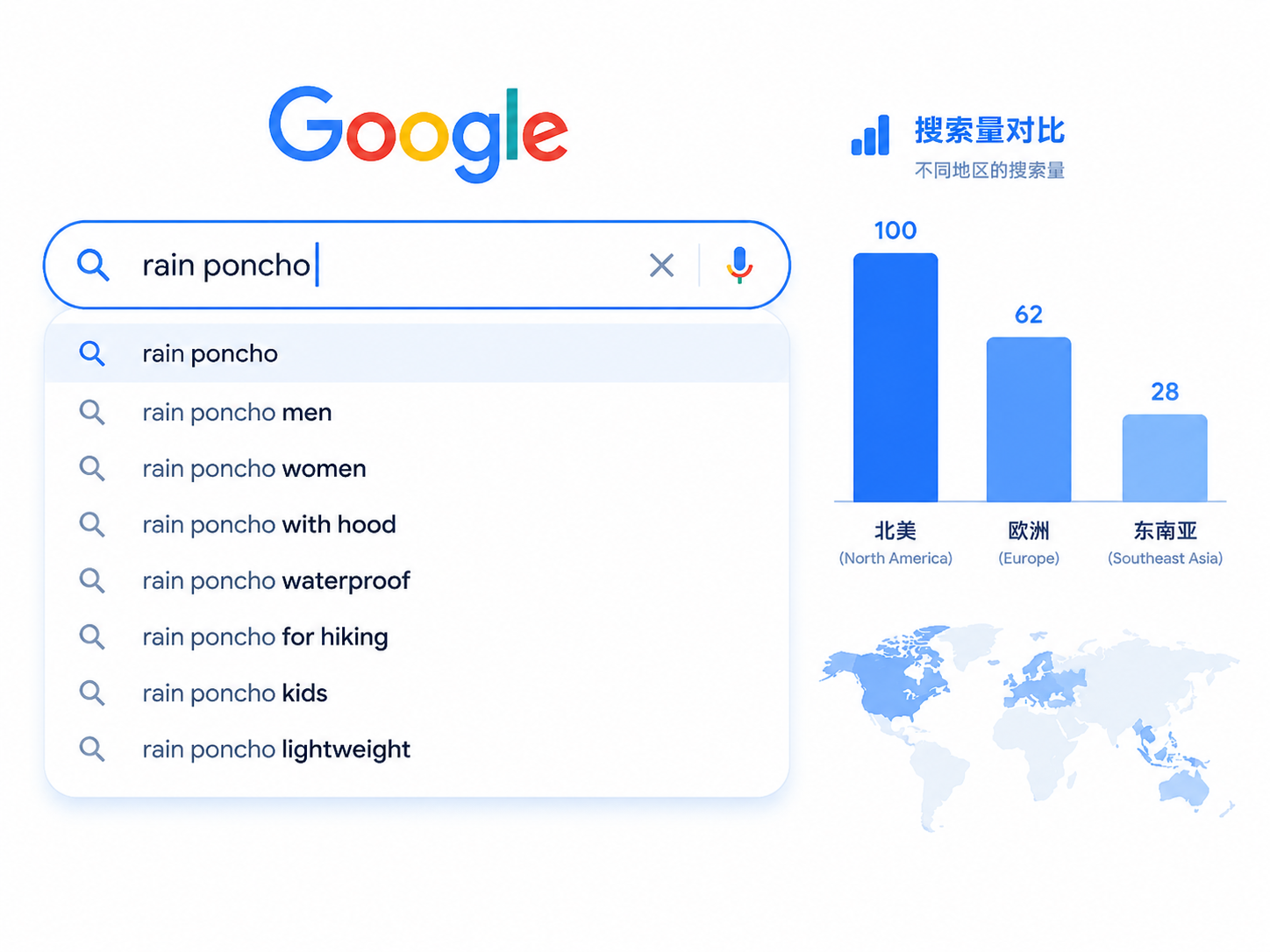
This step is a blind spot for the most people. You see a product page title on a reference site written as "raincoat" and you use it directly. But in reality, in the North American market, buyers are more likely to search for "rain poncho." For the same product, different regions have different names, and the search volume gap can be several times over.
Common keyword research tools include Ahrefs and Semrush, which can check the monthly search volume and competition difficulty of a term in different regions. If you don't want to pay for a subscription temporarily, you can also use Google Keyword Planner to get a general direction, confirming whether people in your target market are actually searching for your product terms and which terms they use.
Remember: translating Chinese product terms directly into English often misses the real search habits of foreign buyers. Adding one regional perspective gives you another batch of potential traffic. Don't just focus on a single English translation; list synonyms, near-synonyms, and regional colloquialisms before making your choice.
The most easily overlooked risk: the reference site itself may not have good SEO foundations
Some of the websites in those "directories" you've bookmarked look pretty, but they might not even have completed basic Google indexing—no sitemap, no structured data, page loading taking over 5 seconds. Learning by copying such a site means you're only learning superficial tricks.
The judgment method is simple: right-click in your browser to view the source code, search for "sitemap" to see if there is a site map link, or check if there is JSON-LD structured data markup in the page header. If there is nothing, the reference value of this site is discounted; don't take it as a benchmark.
If you want to dive deeper, it is recommended to continue reading the 5-Item Free Website Building Self-Check List to first confirm which path suits you; for planning multilingual sites, check out Cross-Border E-commerce Multilingual Site Architecture Breakdown; to estimate your budget, Overseas Independent Site Cost Breakdown in 4 Modules provides a complete checklist.
Final reminder: Don't just guess a round number for your website building budget before starting. The variables affecting quotes are site format, page and category scale, and functional touchpoints. Specific quotes need to be evaluated based on requirements and will be provided in detail within 1 working day after submission.