
If we build a website: Correct these 3 misused myths before starting
As soon as the idea of "building a website" comes up, don't rush to look for templates or compare prices. This article breaks down the 3 most likely misunderstood statements when communicating with a web developer: templates do not equal website building, launching does not equal having customers, and product detail pages are even less about just pasting a few pictures and calling it a day. I will lay out the evaluation standards for both B2B inquiry and B2C retail paths, allowing you to confirm
目录
- Myth 1: If we build a website, just slap on a template
- Myth 2: If we build a website, customers will come as soon as it launches
- Myth 3: If we build a website, just put a few pictures on the product detail page
- A clear table: Which path does your business take?
- If we build a website, ask yourself which statement first
"If we build a website"—we hear this phrase in quote inquiries far more often than you might think.
It also frequently comes with a second half: If we build a website, should we just buy a template first? If we build a website, will we get customers right after launch?
Let's clarify the definition first. In our line of work, we are used to understanding website building as: Building a site that can be indexed by Google, brings in inquiries or orders, and keeps the data entirely in your own hands.
It is neither buying a skin theme nor a digital brochure hanging on the internet.
If you haven't confirmed whether what you're currently using counts as an independent site yet, check this rule first: What is an independent site? A 3-step check.
Myth 1: If we build a website, just slap on a template
This statement is the easiest way to lead people astray.
A template solves appearance. It does not solve how categories should be structured, how content should be organized, how languages should be matched, or how indexing should be configured.
How to spot it? Look at the quote. If it only lists "template fee" and "installation fee," you will most likely have to pay more later.
How to bypass it? Answer one question first: What action do you want visitors to take on this site?
- If you do B2B, the desired action is an inquiry, so the site should be built around forms and product application scenarios.
- If you do B2C, the desired action is placing an order; checkout paths, SKU pricing, and shipping displays are all mandatory.
- If it's just brand display, the goal is trust endorsement, and the category logic follows a completely different set of rules.
Determine the action first, then look at the template.
If you are planning to use WordPress, the article 3 misconceptions about WordPress foreign trade website building explains this more straightforwardly.
Myth 2: If we build a website, customers will come as soon as it launches
This statement equates "launching" with "customer acquisition."
In reality, launching only means the website can be opened. It does not mean Google has indexed it, and it certainly doesn't mean target customers can find you through search.
How to spot it? You treat the launch as the end of the project, and the website developer doesn't mention indexing or subsequent content either.
How to bypass it? Treat the launch as a starting point:
- Submit your sitemap and perform active pushing; don't just wait for Google to crawl slowly.
- Confirm that Google has actually crawled it, rather than just assuming submission is the end of the job.
- Create content around your products, rather than just piling up product pages.
Among the projects we've done, the most common stumbling block is: The site is launched, Google hasn't even finished crawling yet, and the boss starts asking why there are no inquiries.
Regarding post-launch optimization, don't rush into building backlinks; check 3 evaluation standards for cross-border independent site optimization first.
Myth 3: If we build a website, just put a few pictures on the product detail page
This statement is most damaging to B2C sites, and B2B sites cannot escape it either.
Product detail pages are not image walls. Parameters must be complete, images must be regular, and the mobile experience must be on point.
Google has a clear mechanism called mobile-first indexing, and page experience directly participates in evaluation. If detail pages fail to load on mobile phones or tables overflow horizontally, you lose right on the first screen.

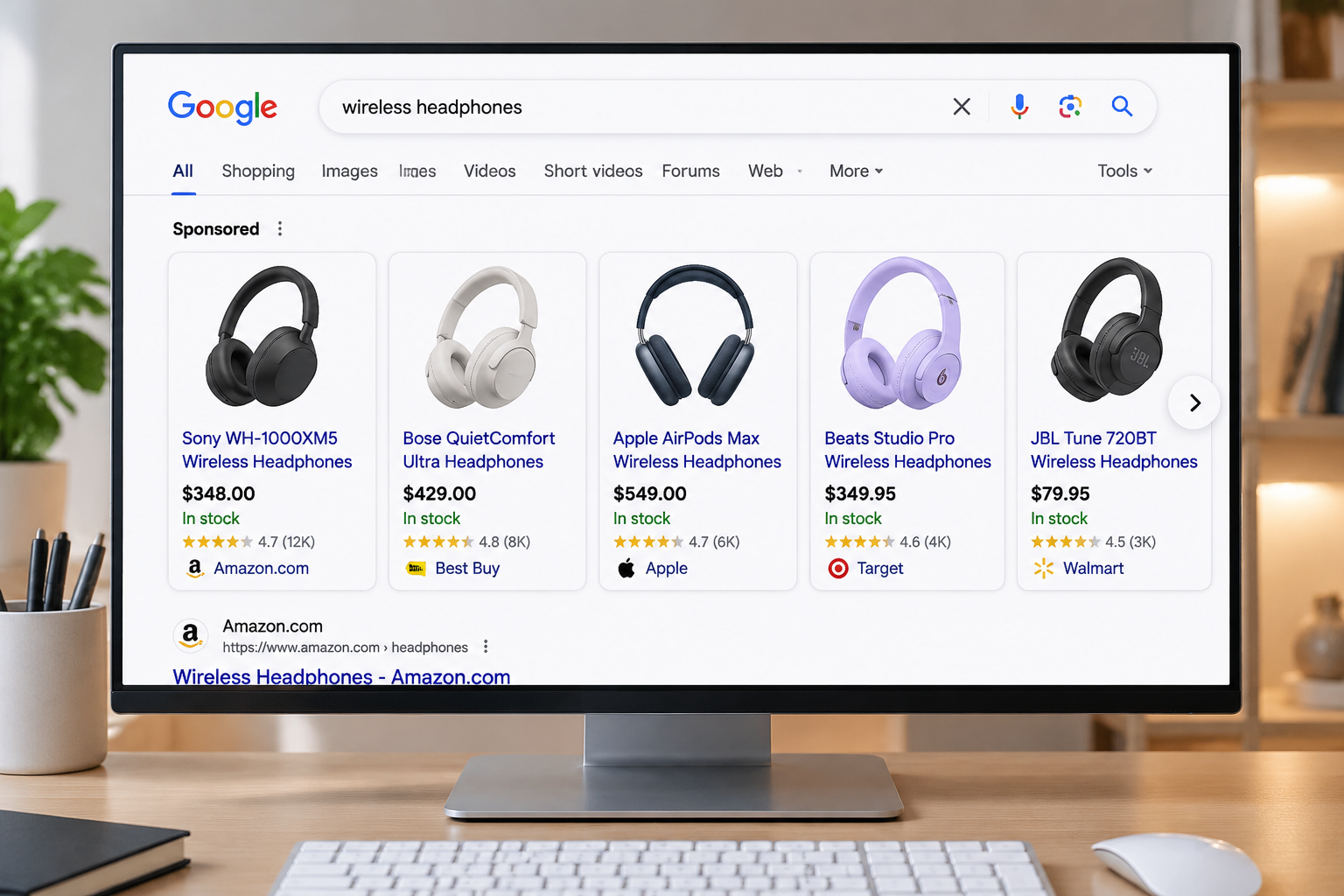
There is also a point easily overlooked: Prices can be displayed directly in Google search results.
This is achieved through product structured data. Only when SKU prices and inventory fields are filled out in a standardized way can Google potentially highlight prices directly in the results, allowing customers to complete price comparisons before clicking in.
Therefore, we pay special attention when handling SKUs: Fill in the price for each specification individually, instead of just writing a line in the body text saying "contact us for pricing."
If you don't want to manually pick out parameters one by one, you can now use AI to convert Excel specification sheets into structured descriptions, and then perform a manual verification for much higher efficiency. However, what AI provides cannot go live directly; field ownership still needs to be confirmed by a human.
A clear table: Which path does your business take?
| Dimension | Foreign Trade B2B Official Website | Cross-border B2C E-commerce Mall |
|---|---|---|
| Conversion Action | Inquiry | Place Order |
| Product Page Focus | Complete parameters + application scenarios + inquiry entry | Price SKUs + inventory + checkout path |
| Search Optimization Focus | Product keywords + industry content | Structured data + price comparison display |
| Post-launch Priority | Confirm indexing first, then create content | Ensure mobile experience first, then organize detail pages |
If you do B2B, take the left column. If you do B2C, take the right column.
Neither path is superior to the other, but mixing them up is the easiest way to run into trouble.
If we build a website, ask yourself which statement first
Don't ask "how much does it cost" first. Ask yourself: What on earth is the exact action this site is supposed to accomplish for me a year from now?
If this question cannot be answered clearly, even the lowest quote is a waste. Once answered clearly, every subsequent step has a basis.
If you still cannot articulate this action by now, don't build the site yet.