
Independent Site Shipping Costs Aren't Just Freight: Split Into 3 Parts, Miss One and Lose Money
Many independent e-commerce sellers treat shipping costs as a single fixed delivery fee when calculating profits, only to find profits shrinking when peak-season order volumes spike. In reality, shipping expenses comprise at least four categories: international transport, last-mile delivery, handling/packaging, and returns/exceptions, and missing any of these will eat into gross margins. Walking through a common path of failure and pairing it with a mandatory pre-pricing cost checklist ensures y

目录
- Let's walk through a common path to failure first
- What are the actual components of independent site shipping costs?
- Are shipping costs just freight charges?
- What's the cost difference between self-fulfillment and overseas warehouses?
- Why are shipping costs more prone to issues on independent sites than on marketplace stores?
- How do you factor shipping costs into pricing to avoid losing money?
- What formula should be used when pricing?
- Is there a simpler method?
In the independent e-commerce site projects I take on, when sellers start calculating gross profit, nine times out of ten they treat shipping costs as a single fixed shipping fee. During peak seasons when orders surge, revenue looks great, but by the end of the month, the profit is noticeably lower. The problem isn't the product, nor is it the traffic—it's that the shipping expenses are being underestimated.

Let's walk through a common path to failure first
A seller was operating in the European market with lightweight, low-average-order-value products. When pricing for their independent site, they only factored in procurement costs and international first-leg shipping, believing every single order would be profitable. The reality? Last-mile delivery fees weren't calculated. Warehouse handling and packaging fees weren't calculated. Secondary shipping fees and losses from returns weren't calculated. Peak-season storage surcharges weren't calculated. As a result, the higher the order volume, the greater the losses. This is the classic mistake of treating shipping costs merely as a fixed delivery fee without breaking them down.
Is this math hard to do? Not really, but many people are too lazy to break it down, and in the end, logistics eats up all the profits.
What are the actual components of independent site shipping costs?
Are shipping costs just freight charges?
No, shipping costs comprise at least four categories: international transport, last-mile delivery, handling & packaging, and returns & exceptions. International transport covers the journey from the origin country to the destination country, last-mile delivery covers the trip from the destination warehouse to the consumer, handling & packaging covers the labor and materials for picking, labeling, and boxing, and returns & exceptions covers the extra costs generated by refused packages, wrong addresses, and redeliveries. If you only understand "shipping" as international freight, you are missing the other three categories.
What's the cost difference between self-fulfillment and overseas warehouses?
Self-fulfillment doesn't necessarily mean lower single-unit operating costs; overseas warehouses have high fixed costs, but their peak-season fluctuations are more controllable. Self-fulfillment eliminates overseas warehouse rent, but the per-unit last-mile delivery price is usually higher, and processing returns is more troublesome. Overseas warehouses entail storage fees and inventory tying up capital, but the last-mile delivery price is lower, and they are less susceptible to temporary price hikes during peak season. When working on independent site projects, we always ask first whether you are using logistics integration or manual processing, as this directly impacts the shipping cost structure.
Why are shipping costs more prone to issues on independent sites than on marketplace stores?
Because marketplaces have unified shipping templates and settlement reminders, whereas independent sites rely entirely on your own configuration and maintenance. Marketplace stores typically attach logistics solutions directly to products so buyers' orders calculate them automatically, but independent sites require you to upload logistics rules in the backend, set weights and dimensions, and connect with carrier APIs. If any single configuration is missed, incoming orders will either have miscalculated costs or fail to be fulfilled. More covertly, many sellers fail to monitor in-site data related to shipping costs. Take Google Search Console: impressions show demand, clicks show intent match, and CTR reflects your titles and rich snippets. If your pages have rankings but a CTR noticeably lower than similar sites, it might be due to shipping fee displays or delivery timeframes making users hesitate. Average positions show approximate placement, coverage reports show crawling and indexing, and crawl stats show what search engines are actually fetching. Don't mistake impressions for traffic, and don't just look at rankings while ignoring conversions.
How do you factor shipping costs into pricing to avoid losing money?
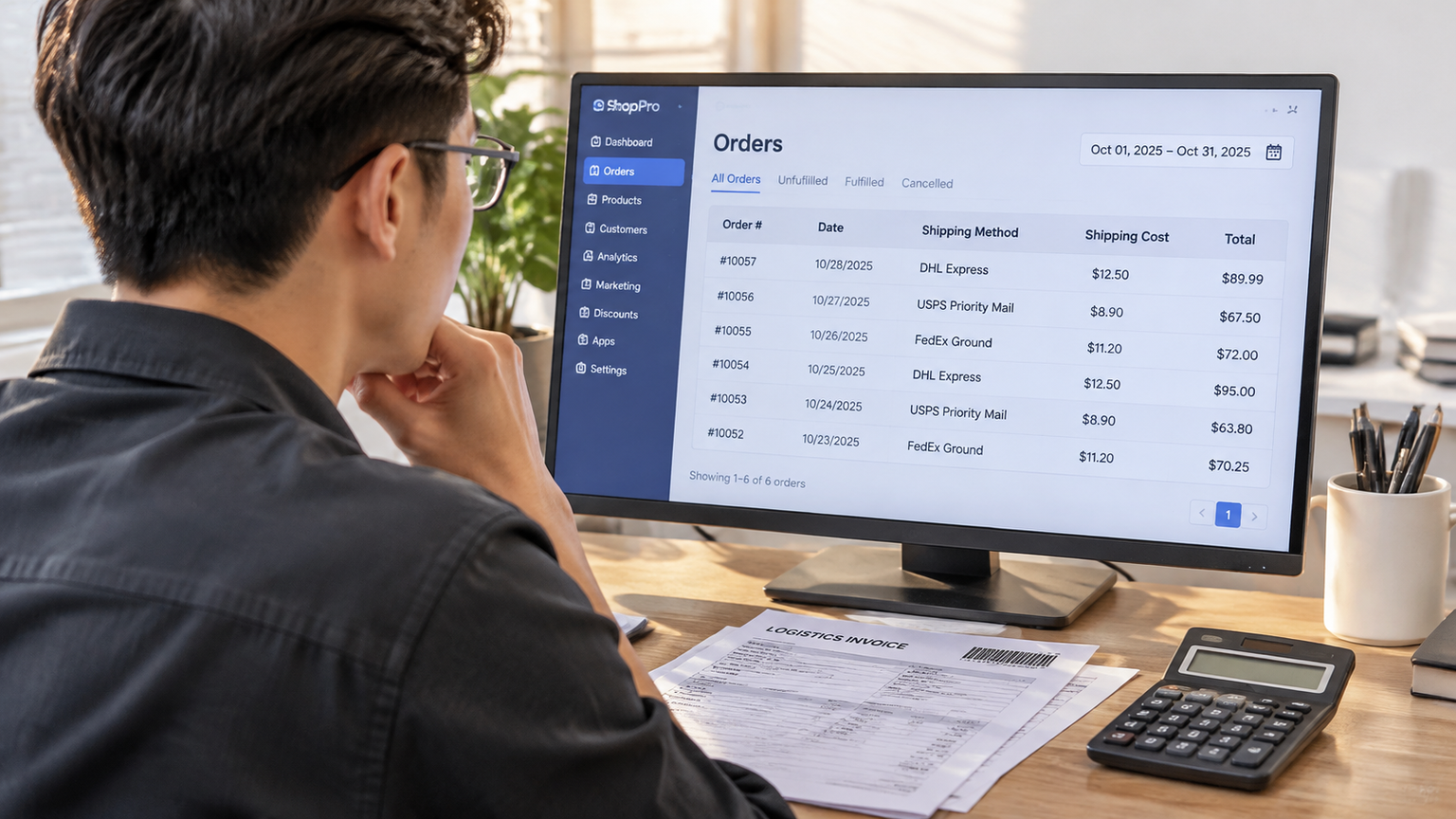
What formula should be used when pricing?
First list every fixed cost, variable cost, and potential loss per order, then work backward to determine the minimum selling price. Fixed costs include monthly rent, staff, and software; variable costs include procurement, international transport, last-mile delivery, and handling/packaging; potential losses include return rates, chargeback rates, and exchange rate fluctuations. Once these are clearly listed, use your target gross profit margin to reverse-engineer the selling price. The advantage of doing this is that no matter how order volumes fluctuate, you always know whether each order is profitable.
- Record international first-leg and last-mile delivery separately; do not lump them together into a single "shipping fee" item
- Track returns and exceptional orders separately every month, maintaining at least a proportional ratio
- Convert overseas warehouse storage fees into per-unit costs based on inventory turnover days rather than just looking at monthly rent
- Re-simulate costs before peak season; do not continue using off-season shipping cost figures
Is there a simpler method?
Pull the detailed shipping cost breakdowns for the past three months and audit them using the three-part method. You don't need to build a complex system all at once; first calculate the total amounts for international transport, last-mile delivery, and returns/exceptions separately to see which category accounts for the highest share. This exercise can be done in half a day and helps you avoid obvious pitfalls. If you need to build an independent site or set up logistics integration later, you can implement systematic configurations then. You can refer to Are independent sites profitable? The completely different financial pictures of the first 3 months and the 12th month, which details early-stage and later-stage cost structures much more thoroughly.
Pull the shipping cost details for your most recent independent site order, audit them separately according to the three categories of international transport, last-mile delivery, and returns/exceptions, and fill in any missing gaps.