
Jiang Jianing Cross-Border E-Commerce Self-Assessment: 3 Questions to Test Where Your Independent Site Should Be
For small and medium sellers doing Jiang Jianing cross-border e-commerce or considering transitioning from marketplaces to independent sites, this article uses 3 frequently asked questions to help you match your situation. Core takeaway: Not everyone needs to build a site immediately, but once you decide to take action, title semantic guidance, minimum page loops, and basic indexing configuration must be in place simultaneously rather than patched up after launch. After reading, you'll know whic
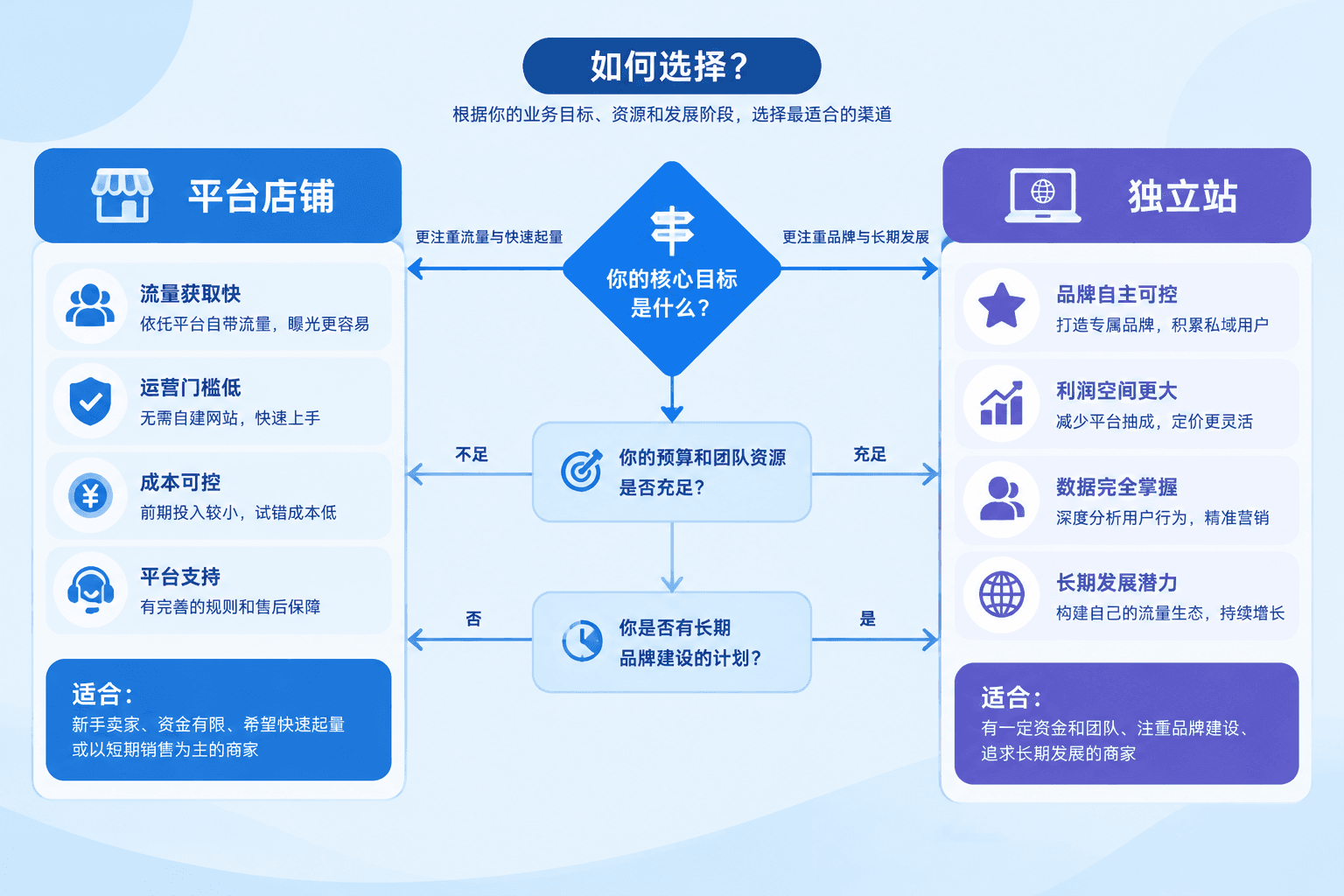
If you are currently working on cross-border e-commerce projects related to Jiang Jianing, or hesitating whether to transition from marketplace stores to an independent direct-to-consumer (DTC) website, this article is for you. Read through the following 3 frequently asked questions and match them to your situation. Once you finish reading, you will know exactly where you stand right now and what specific steps to take next.
Q1: Is building an independent website an absolute must for cross-border e-commerce?
It's not mandatory, but there is a clear dividing line.
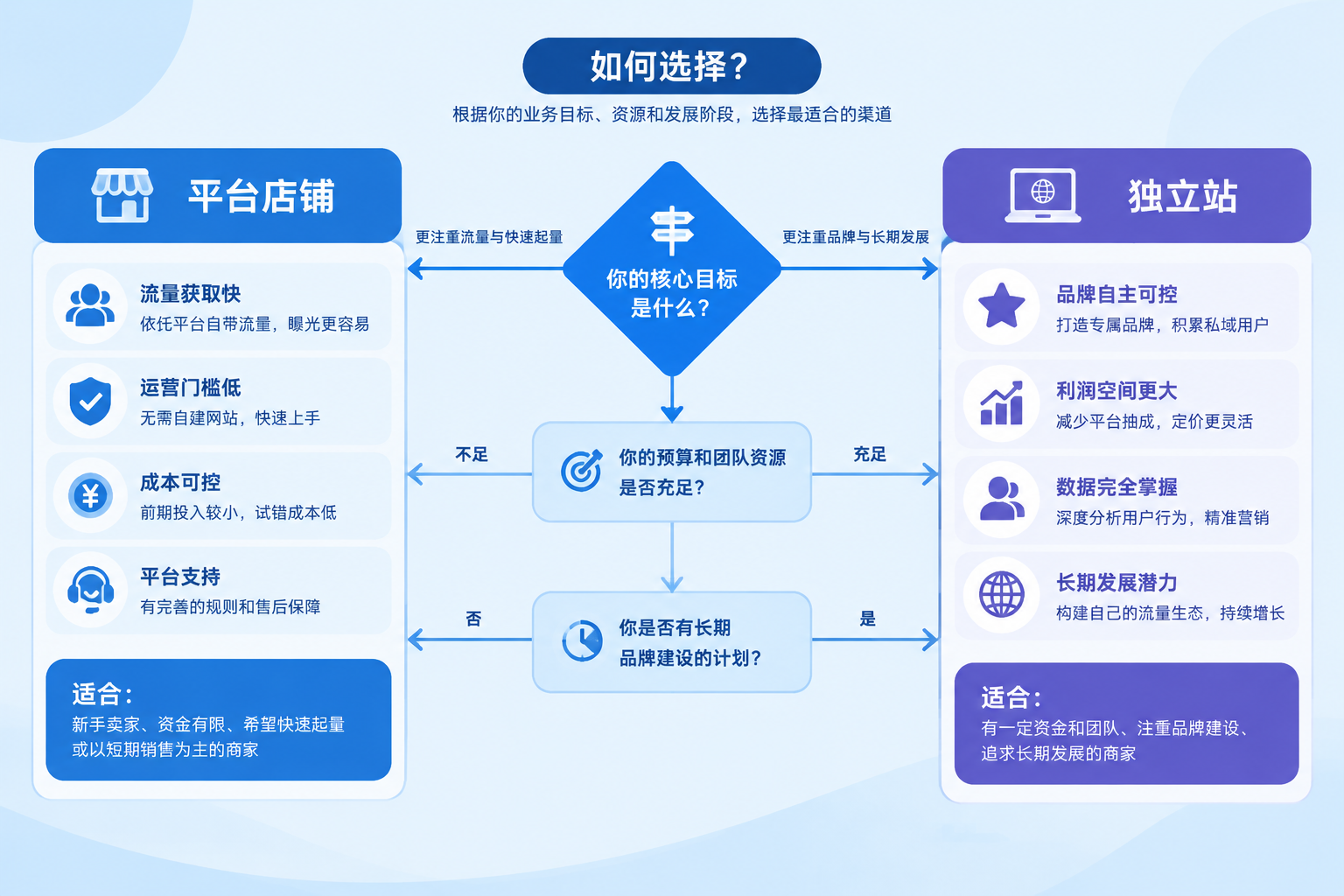
First, if your current phase relies mainly on marketplace traffic to drive sales, your profit margins are still holding up, and your team lacks the bandwidth to maintain another independent channel, then an independent site shouldn't be your top priority. Focus on mastering the marketplace first.
Second, if you are starting to encounter tighter marketplace rules, rising commissions, inability to access customer data, and price wars with competitors, then building an independent site is worth putting on your schedule. The core value of an independent site isn't just having an extra place to sell goods—it's finally owning your traffic pool and customer data, so you are no longer pushed around by marketplace algorithms.
Third, if you deal in B2B, high unit prices, long decision-making chains, or categories that require repeated communication with customers, an independent site is practically standard. Overseas buyers will definitely search for your brand name and product terms before placing an order. If they can't find you, they'll simply turn to a competitor they can find.
I previously wrote an article titled Cross-Border E-Commerce Market Conditions: 3 Scenarios Suitable for Building an Independent Site Now, 2 Scenarios Where You Shouldn't Rush, which breaks down the decision criteria in detail. You can read it as a reference.
Q2: How should you set page titles and keywords for your independent site so your efforts aren't wasted?
Last month, a cross-border e-commerce client came to me for a consultation. Their site had been live for two months, and while Google had indexed it, they had almost zero organic traffic. When I opened the backend, I saw the homepage title was just the full company name plus the words "Welcome", and the product page titles were entirely product SKU numbers. This is a classic case of missing semantic guidance in titles.
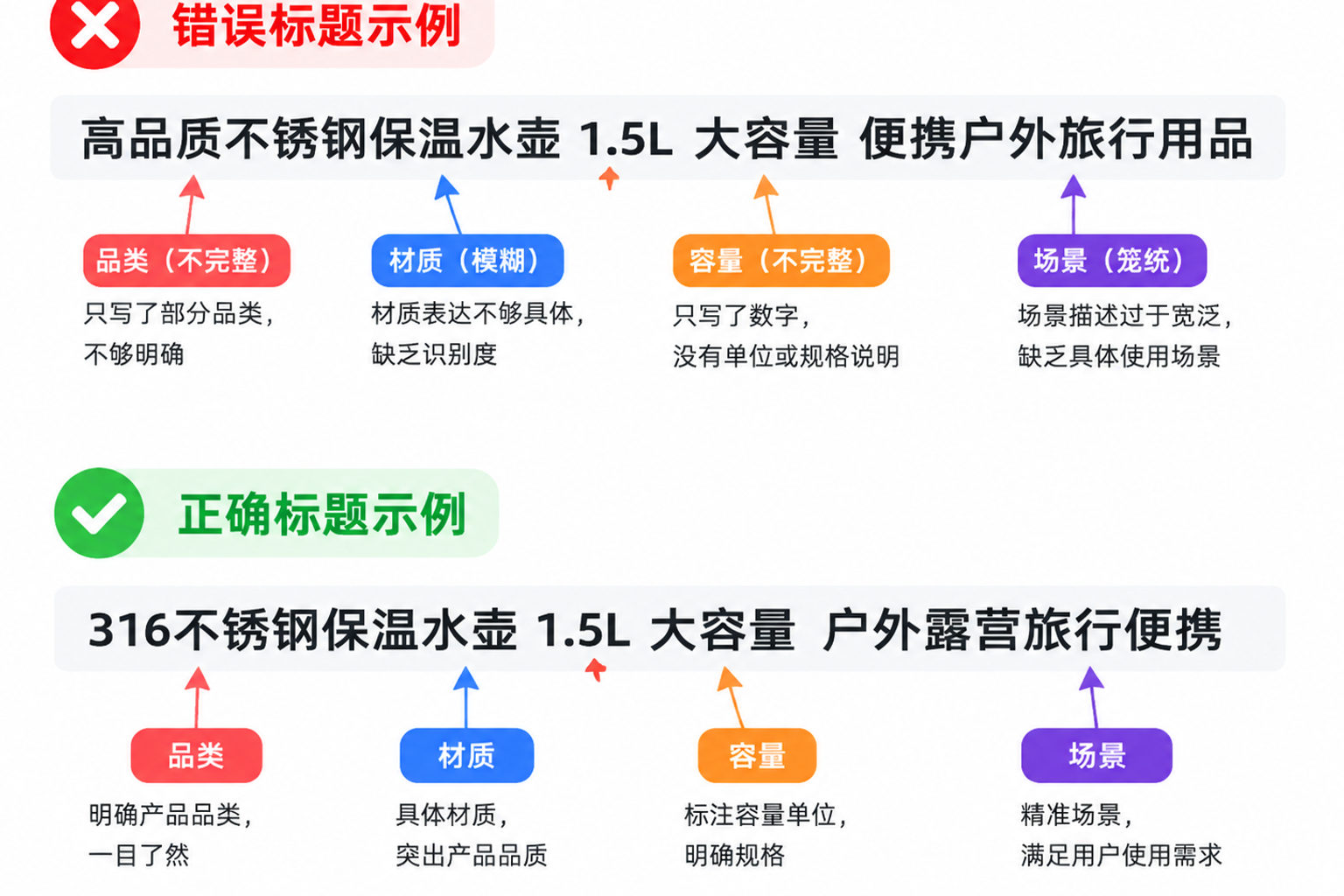
Titles serve as the semantic compass of a page; search engines rely on them to understand what a page is about and which search queries it should rank for. When doing keyword optimization, first, you must match the user's genuine search intent—don't stubbornly force a term with zero search volume, as nobody will search for it anyway. Second, expand based on core terms, such as combining product terms with materials, uses, specifications, and application scenarios. Third, don't just copy a generic term that has traffic but is unrelated to your business; the traffic brought in that way won't convert into inquiries, but will only drag down your conversion rate data.
To give a specific example: if you sell stainless steel insulated water bottles, don't just write "Water Cup" for the page title, nor should you stuff generic phrases like "best water cup 2026". A reasonable title would be "500ml Stainless Steel Insulated Water Bottle for Outdoor", covering the category, material, capacity, and use case. This matching and expansion approach is the fundamental signal Google uses to determine page relevance.
Q3: Once you decide to take action, what should your very first step be?
First, lock down the format of your website. Are you building a showcase-style corporate website to generate inquiries, an online shopping mall with checkout capabilities, or a multi-lingual site cluster to cover multiple markets? Different formats completely change the subsequent navigation structure, functional integrations, and project timelines. A standard showcase website takes 5 to 15 working days, while one with multi-language and e-commerce modules takes 7 to 25 working days. This gap is determined purely by the website format.
Second, list your core pages. The homepage, product pages, about us, contact info, and inquiry form—these 5 pages form the minimum viable loop. Get these 5 running smoothly first before considering content pages like blogs, case studies, and FAQs. Don't chase perfection right out of the gate; establish the conversion pathway first.
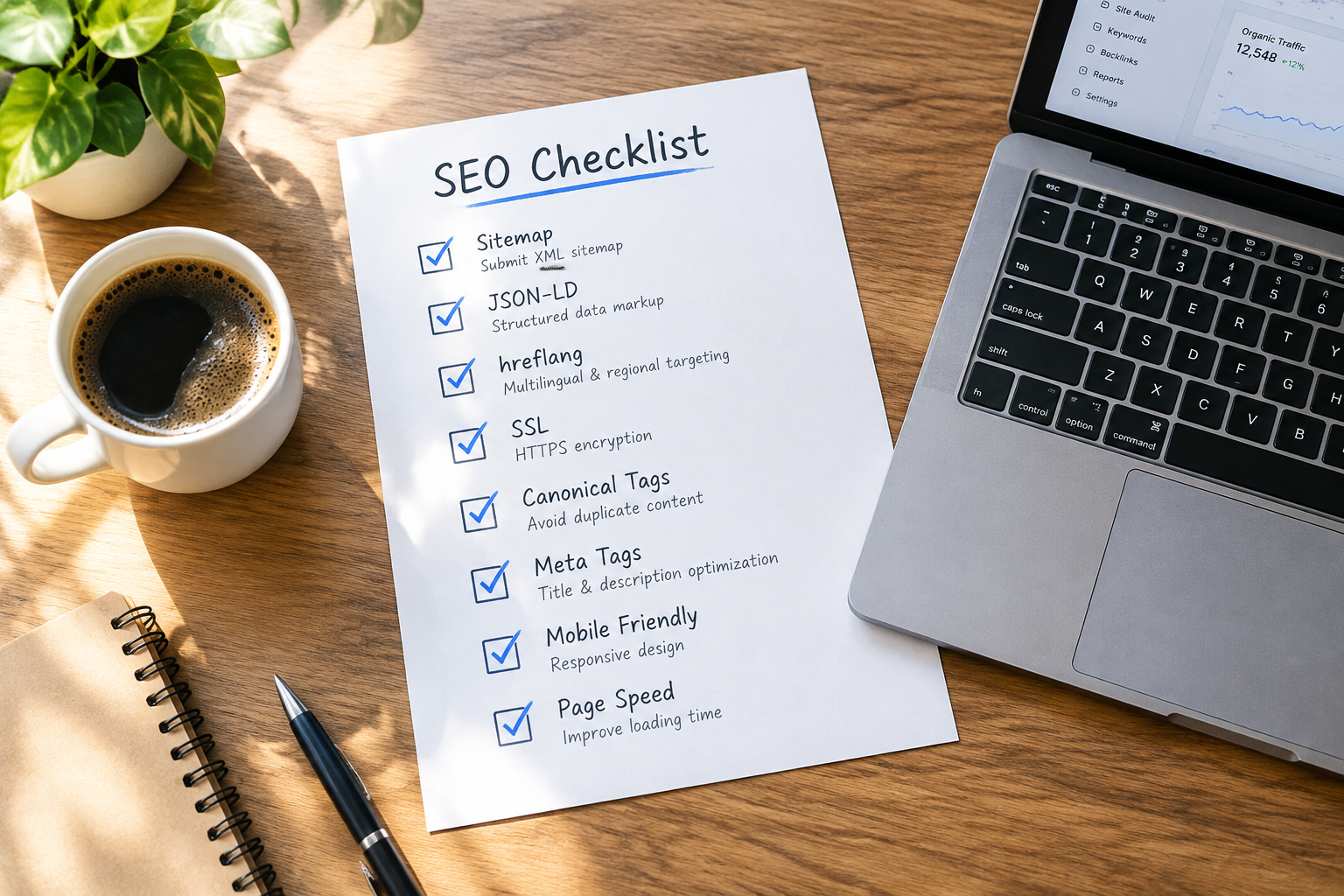
Third, indexing and basic SEO must be set up simultaneously when the site goes live. Sitemap submission, structured data, hreflang multi-lingual cross-linking, and SSL certificates are not things to "leave for later"; they are a checklist of items that must be checked off item by item on launch day. For specific instructions on the proper sequence, you can refer to How to Do Google SEO for Foreign Trade Independent Sites: 6 Steps in Order.
If you haven't figured out your site format and budget range yet, you can check out the Foreign Trade Independent Site Construction Service List to sort out your requirements before taking action, avoiding mid-project changes that drag out the timeline. Within 1 working day after submitting your requirements, you will receive a detailed quote clearly breaking down where every penny goes, with zero hidden fees.
Now that you've matched your situation, do just one thing right now: write down your biggest bottleneck and have a conversation with someone who can actually help you execute.