
How to Calculate Costs for an Overseas Independent Website? 4 Modules and a Complete Checklist
For SMB owners and SOHO professionals comparing costs for overseas sites, quotes can be confusing. We break the total cost into 4 modules—infrastructure, development, integration, and SEO—and provide a checklist to help you spend your budget wisely and monitor indexing within the crucial first 30 days.
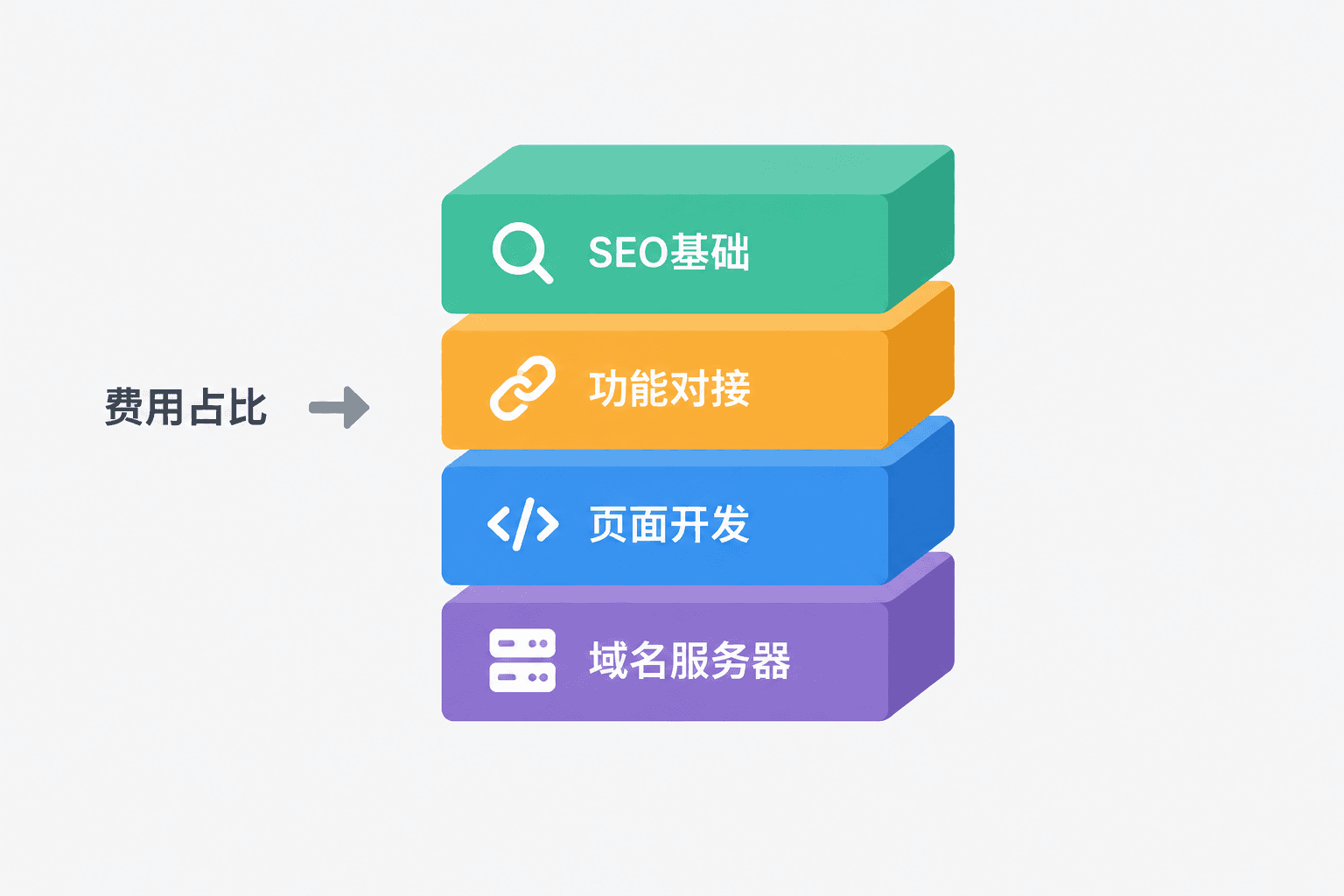
This content is written for SMB owners and foreign trade SOHO professionals who are comparing quotes and preparing to launch their first overseas independent website. If you have already operated multiple sites, this breakdown might seem a bit basic. We are here to solve one problem: what exactly constitutes the cost of an overseas independent website, and how do you determine if each part is worth the investment?
First things first: Only 4 factors affect the cost
At Ju Development, we evaluate quotes based on four dimensions: site type, scale of pages and sections, functional touchpoints, and the number of languages. These four factors determine where your money goes and how much you spend.
Site type: Are you building a showcase website, an e-commerce store with online transaction capabilities, or a multi-language site network? For example, a factory exporting hardware accessories only needs a product catalog and inquiry form, which is a showcase site. However, if you are doing cross-border retail, where customers pay online, you need an e-commerce store, which entails a completely different development workload.
Scale of pages and sections: This refers to how many product pages and content pages you have. The workload for populating 10 product pages versus 100 is vastly different.
Functional touchpoints: These include cross-border payment integration, logistics tracking, multi-currency switching, and internal system connectivity. For example, if you need to integrate PayPal payments and logistics tracking, those are two functional touchpoints. Each addition increases development and testing costs.
Number of languages: Doing English-only versus English, Spanish, French, and Arabic involves a multiplicative increase in translation and hreflang configuration workload.
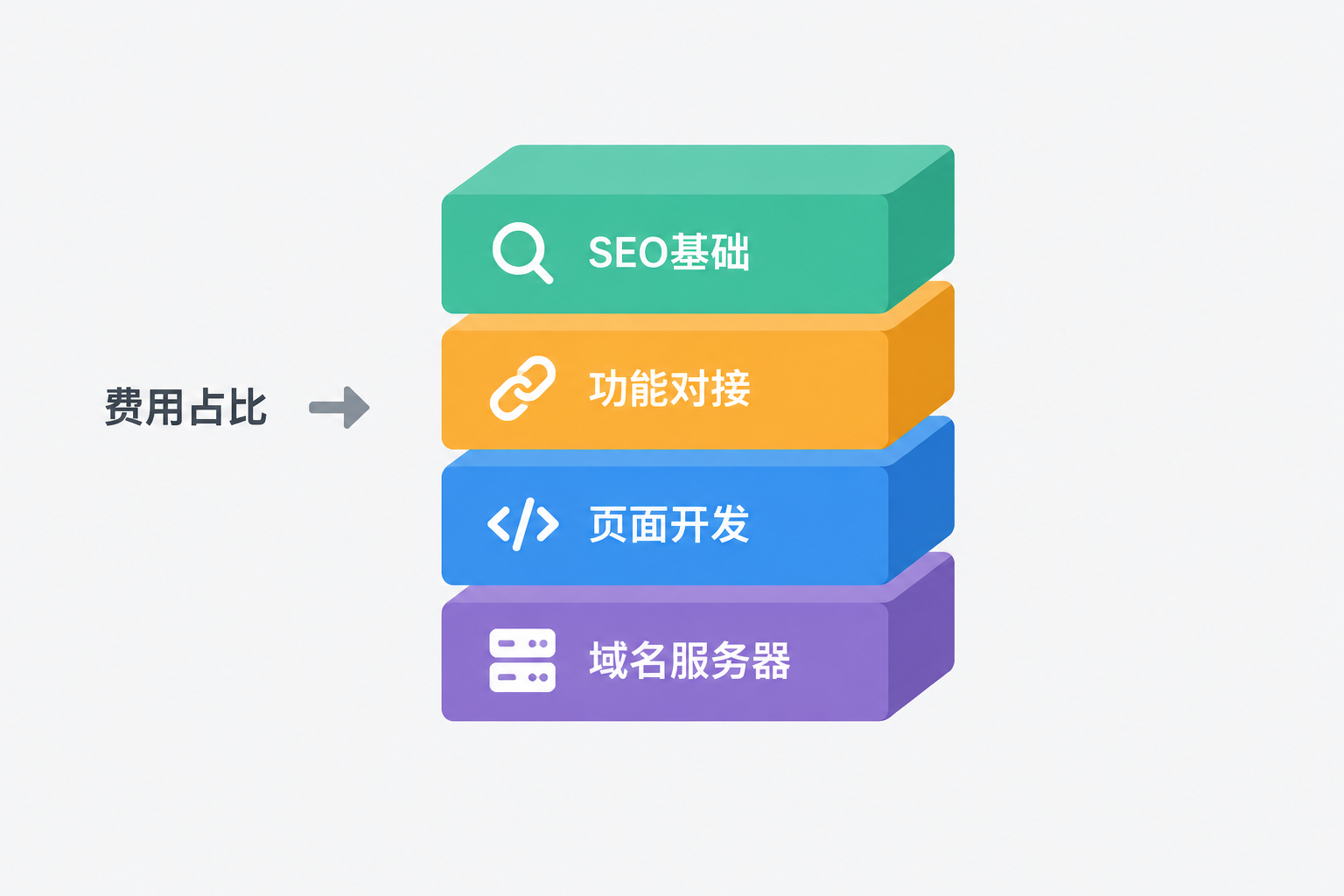
Breaking down costs into 4 modules
Module 1: Infrastructure (Domain + Server + SSL Certificate)
A domain costs between a few dozen to a few hundred yuan per year. Server costs vary from a few hundred to a few thousand depending on configuration. SSL certificates can be free or paid. This part is a fixed annual fee that does not change with site complexity. For example: a SOHO exporter of electronic components using a lightweight cloud server and a .com domain can keep infrastructure costs under 1,000 yuan per year.
Module 2: Website Development and Page Production
This is the bulk of the cost, including homepage design, product page templates, and the setup of 'About Us' and 'Contact' pages. A standard showcase site can go live in 5–15 working days, while one including multi-language and e-commerce modules takes 7–25 working days. For example, within the machinery industry, Factory A might only need 5 pages and 20 products, while Factory B needs 15 pages, 200 products, and video displays. The development time difference is significant.
Module 3: Functional Integration
Payment integration, logistics, multi-language configuration, and inquiry form customization all fall under functional integration. For example, needing only an inquiry form and a WhatsApp button compared to needing PayPal payments, multi-currency support, and logistics tracking—the latter may have 3 to 5 times the development workload.
Module 4: Post-launch SEO Foundation
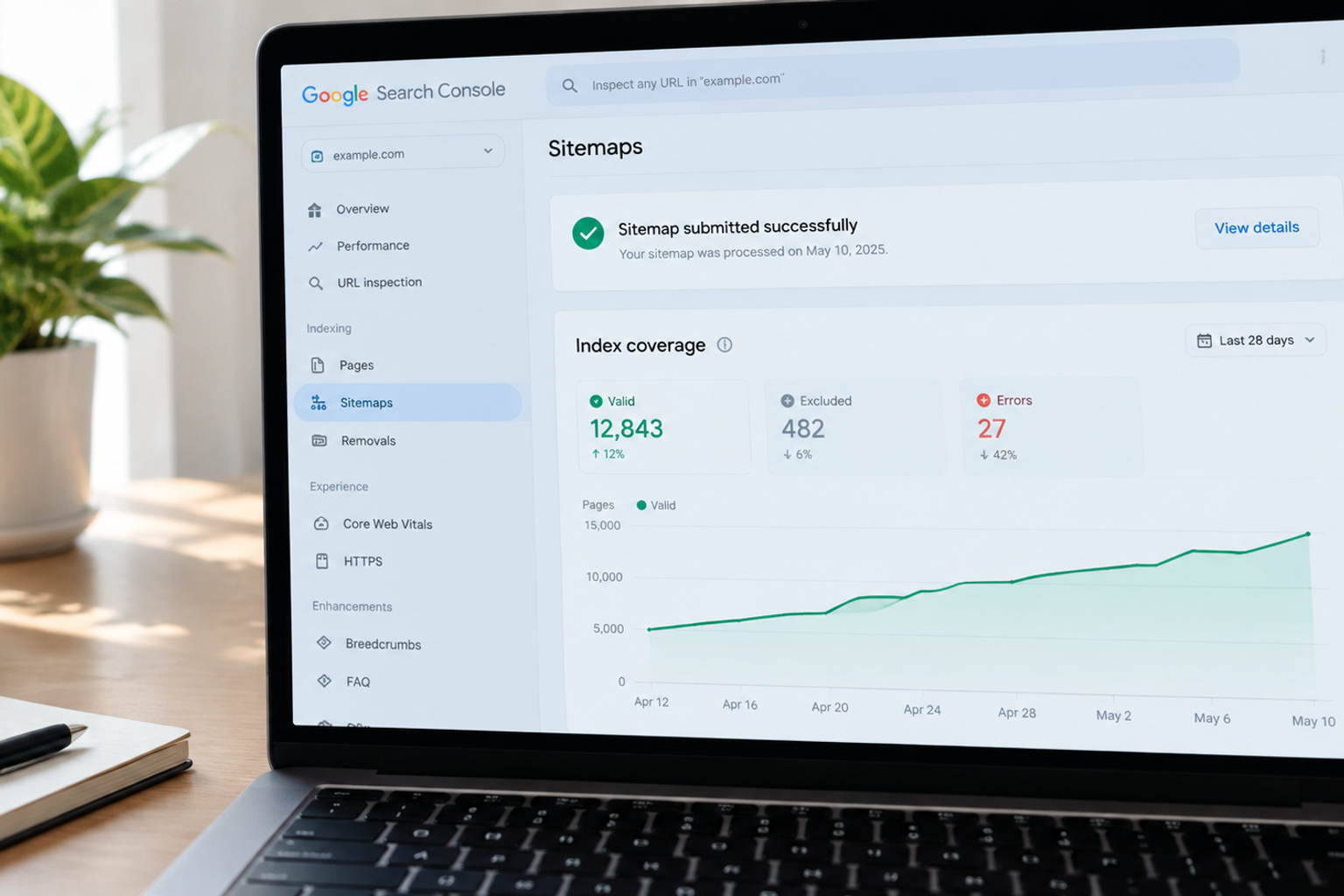
This includes sitemap submission, structured data configuration, robots.txt settings, and Google Search Console binding. While this doesn't directly generate rankings, it determines whether Google can successfully index your pages. We previously published a Foreign Trade Website Case Teardown that explains where the money goes from the perspective of three types of sites; you can refer to it for comparison.
Indexing: Don't miscalculate the timeline
Many business owners assume that once a site is live, it can be found. That is not the case.
Google indexing refers to the search engine crawling your pages and saving them in its index database. After a new site goes live, even if you submit a sitemap, it usually takes several days to a few weeks for the first indexing to be completed. If content quality is poor or page structure is messy, this process takes even longer.
For example: A newly launched foreign trade site using IndexNow and a compliant sitemap might get pages indexed in 3 to 7 days; without any submission, waiting for Googlebot to crawl naturally might take one or two months.
Common reasons for slow indexing include: slow page loading speed, incorrect sitemap format, lack of backlinks, and excessive content duplication. Solutions: optimize image and code size, check the XML format of your sitemap, build basic backlinks, and ensure every page has a unique title and body content.
Therefore, when evaluating costs, you must include post-launch SEO configuration. This is not an optional extra; it is a prerequisite for your site to be truly visible.
Check these 5 items before signing the contract
After receiving a quote, check it against these five points:
First, are the domain and server included in the quote, or are they separate annual fees? Criterion: Ask about the renewal price for the second year to avoid low initial pricing followed by price hikes.
Second, is the page count specified in the contract, and how are extras billed? Criterion: Confirm how many page templates and how much content population is included.
Third, how many functional integrations are listed, and are the delivery standards for each clearly defined? Criterion: For payment integration, for example, specify which gateways are included and whether the test environment is covered.
Fourth, is multi-language support included, and how many languages? Criterion: Confirm whether the translation is human or machine-assisted, and whether hreflang cross-linking is configured correctly.
Fifth, is post-launch SEO foundation included? Criterion: It should at least include sitemap submission, Search Console binding, and basic structured data.
Specific quotes must be evaluated based on your requirements. We provide a breakdown within 1 working day of submission, clarifying where every item is spent. You can first check our Foreign Trade Website Construction Service List to understand the scope of services at different price tiers.

A critical milestone: The first 30 days after launch
Finally, a reminder about a time frame that is easily overlooked: the first 30 days after the site goes live.
This period is Google's observation phase for a new site. You need to confirm: has the sitemap been submitted? Are there any errors in Search Console? Are core pages indexed? If you find no pages indexed two weeks after launch, investigate if there is a technical configuration issue.
We previously wrote an article on How much does it cost to build a website, which adds perspective from a cost-range angle, so feel free to compare.
Don't wait until three months later to realize the site hasn't been indexed at all. Check the index status in Search Console in the first week—it's the single most important thing you should monitor as a site owner.