
European Payment Channels for Independent Sites: Don't Conflate Local Payments and Cross-Border Acquiring—Settlement Risks Lurk at the Final Step
Running an independent site in the European market doesn't end with integrating PayPal. By looking at "local payment methods" and "cross-border acquiring channels" separately, you'll realize many stores fail not because they can't collect money, but because customers in the Netherlands and Germany can't find a familiar payment option at checkout. Fully integrating your target countries' mainstream payment methods while confirming settlement, chargeback, and refund rules on the acquiring side wil
目录
- Step 1: Determine Whether You Are Running an Inquiry Site or an Online Checkout Store
- Step 2: List Payment Methods by Target Country Instead of Using a One-Size-Fits-All Button
- Step 3: Configure Payment Methods and Acquiring Channels Separately
- Step 4: Avoid Vague and Generic TDKs for Your Payment Methods List Page
- Step 5: Monitor the Payment Funnel Post-Launch Rather Than Focusing Solely on Final Order Volume
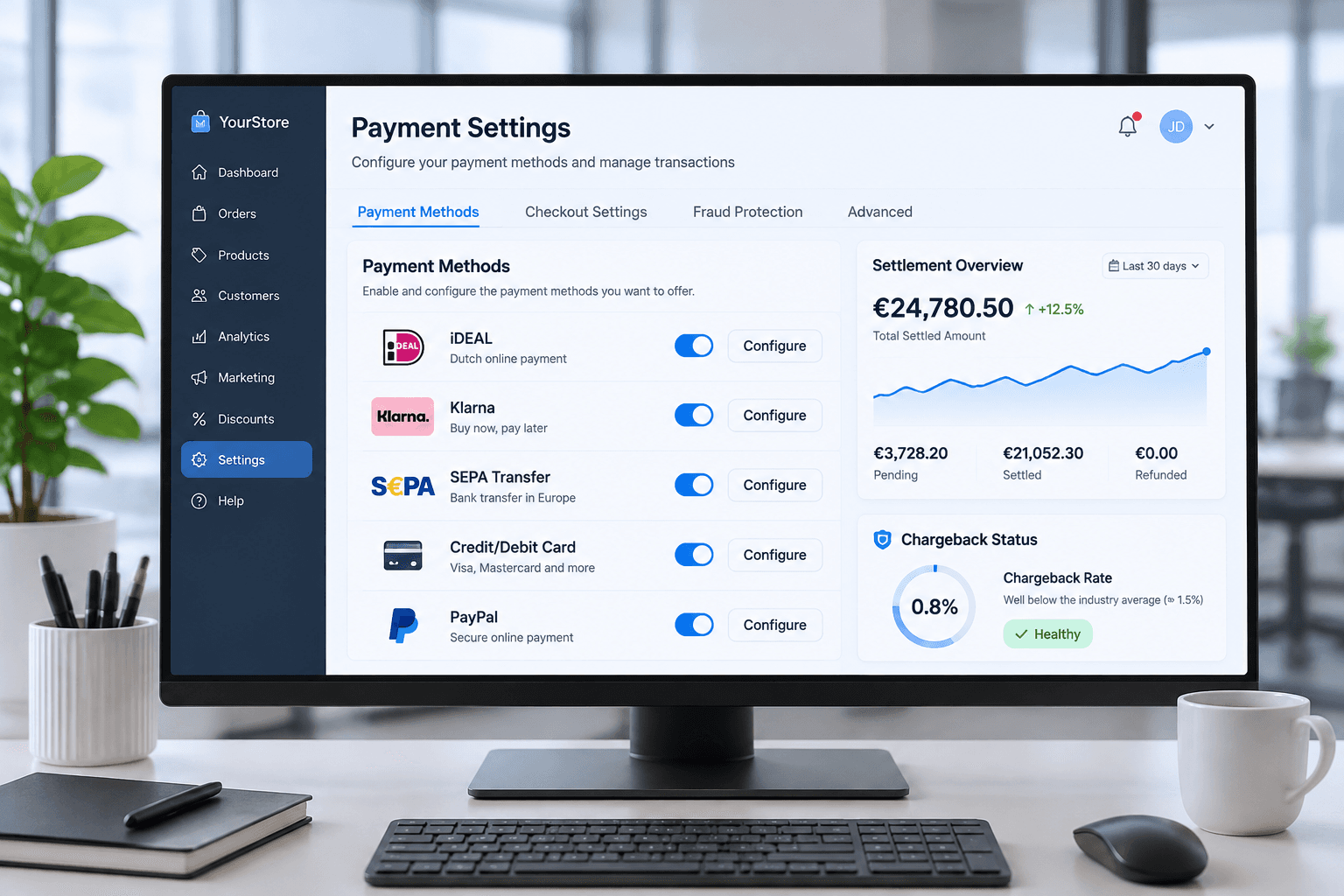
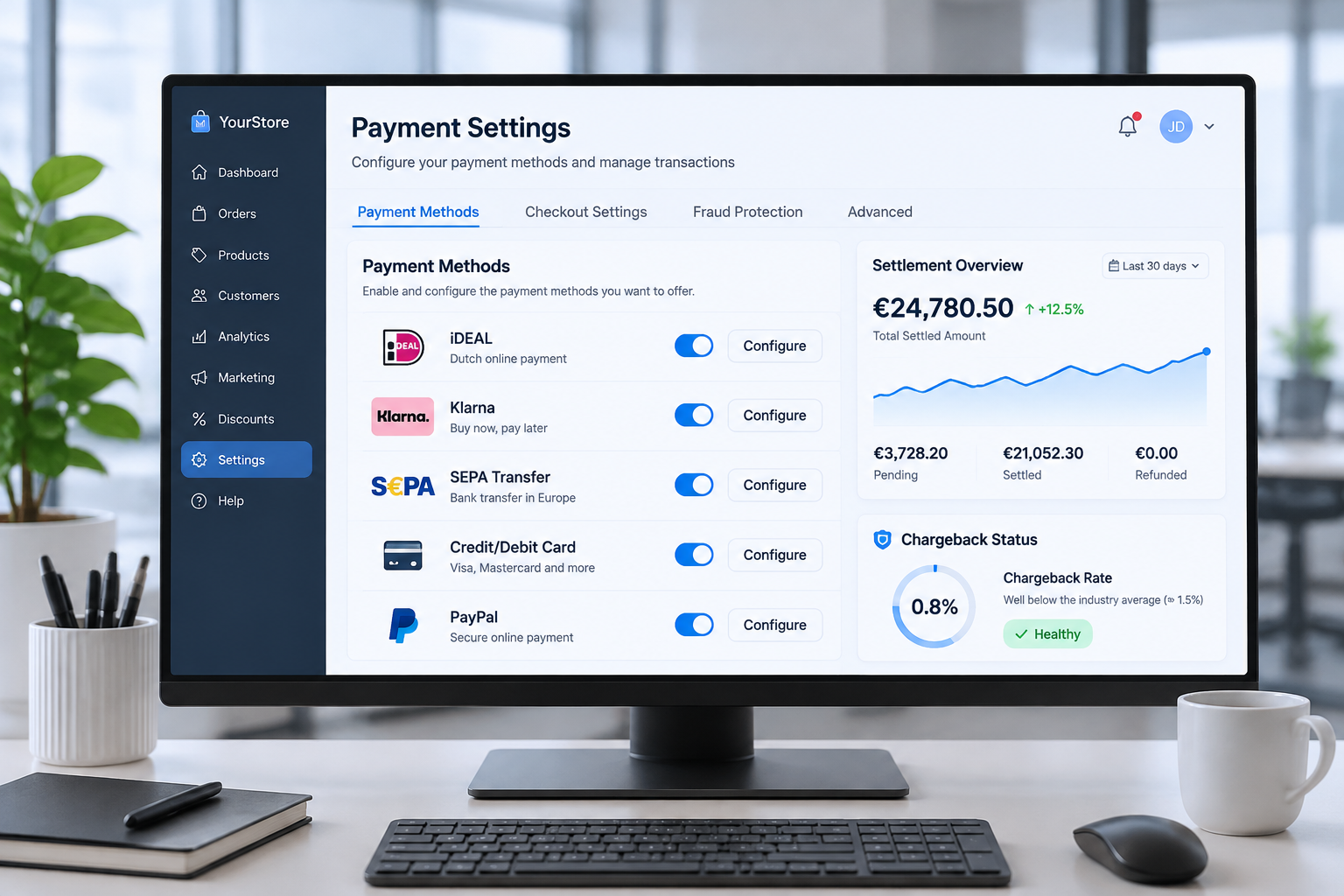
When building independent e-commerce sites for the European market, the most common mistake I see is confusing "local payment methods" with "cross-border acquiring channels." Merchants often tell me, "We've integrated PayPal, so why aren't customers in Germany and the Netherlands placing orders?" The problem is usually not PayPal itself, but the lack of familiar local payment buttons at checkout. We should think of payment methods as the front-end entry points customers see at checkout—such as iDEAL, Klarna, SEPA transfers, and Visa/Mastercard—while acquiring channels are the backend processing systems that move funds from the customer's account to your settlement account. If you don't separate these two concepts, you'll end up with high cart abandonment rates or frozen settlement funds. In our past projects, the most frequent bottleneck has been relying solely on an international card acquirer without setting up any local European payment options. The checkout page looks functional on the surface, but it actually leaks a lot of sales.
Step 1: Determine Whether You Are Running an Inquiry Site or an Online Checkout Store
This decision comes even before choosing which payment buttons to add. If you are running a B2B independent site where European customers primarily submit inquiries rather than pay directly, your payment channels can be simplified to bank transfers and proforma invoices; you don't need to clutter the page with payment buttons. When building foreign trade websites for factories, we usually leave only a "Request a quote" entry point, leaving payment processing for the subsequent contract phase. Conversely, if you are running a B2C independent e-commerce store, European customers will pay directly at checkout, making local payment methods a must-have.
Evaluation Criteria: Is your conversion goal an inquiry or direct online collection? Different goals mean completely different configuration costs for your payment channels.
Step 2: List Payment Methods by Target Country Instead of Using a One-Size-Fits-All Button
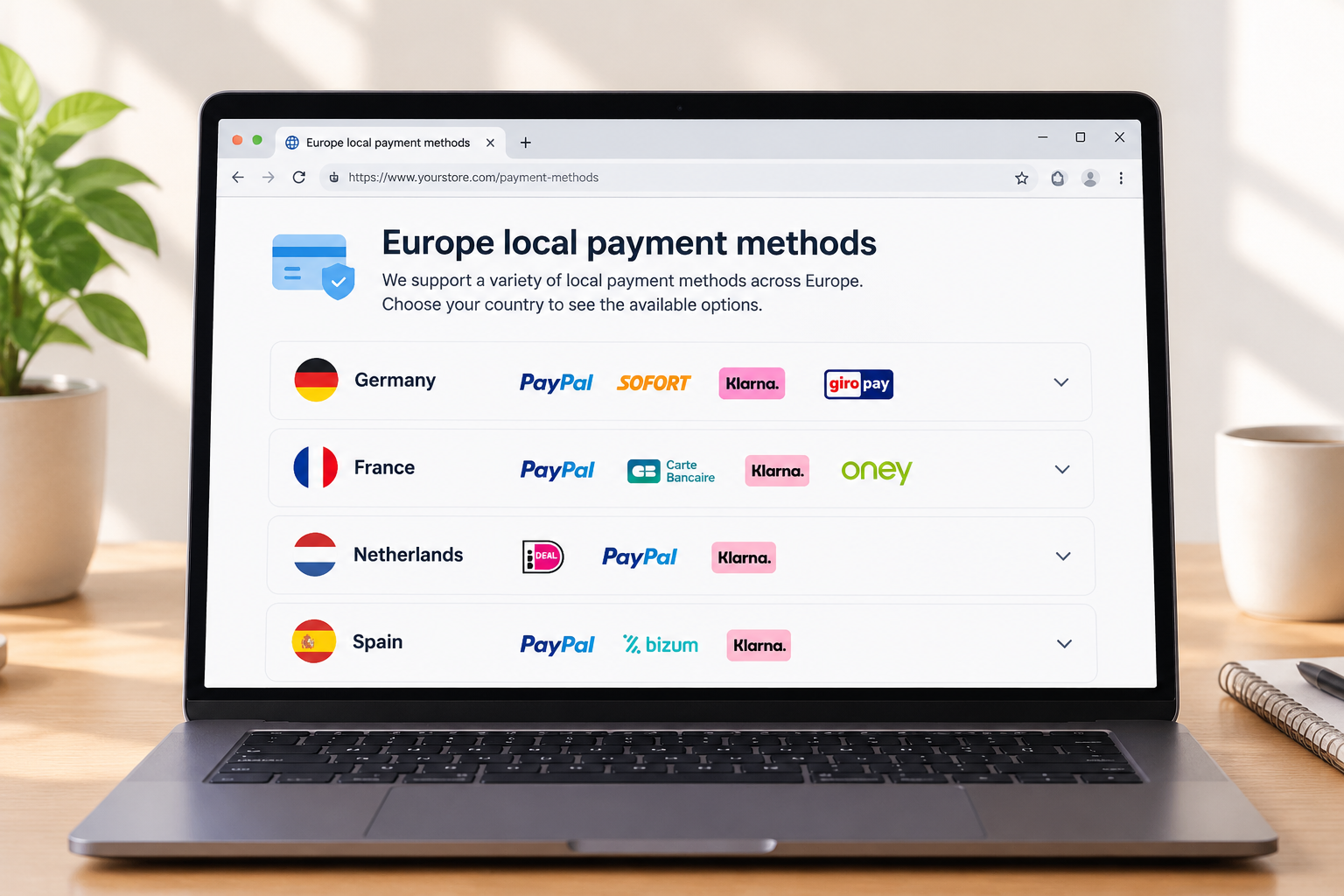
Europe is not a market with uniform payment habits. When building European independent sites for clients, our first question is always: Which specific countries are you primarily selling to? Mainstream habits vary significantly across countries, and the same button can yield drastically different conversion rates depending on the region. Below is my go-to reference table, though actual availability depends on real-time support from your acquiring provider.
| Country | Local Payment Method | Applicable Scenario |
|---|---|---|
| Netherlands | iDEAL | Direct bank redirection, priority for B2C stores |
| Germany | Giropay, SOFORT, Klarna | Bank transfers and deferred payment, effective for higher average order values |
| Belgium | Bancontact | Co-branded local cards and bank payments, reaching local users |
| Poland | BLIK | Mobile bank authorization, popular among younger users |
| Sweden | Swish | Mobile payments, good conversion for small orders |
| Cross-Border General | SEPA Transfer | Supplementary method for large or B2B orders |
The key to this step is breaking it down by country rather than just providing an international card button. Missing out on the mainstream methods of your target market renders even the fastest checkout page useless.
Step 3: Configure Payment Methods and Acquiring Channels Separately
Once you've selected your payment methods, you need to evaluate whether your acquiring channel can settle funds, how long settlement takes, and how chargebacks are handled. When assessing an acquiring channel, I first look at chargeback policies, settlement cycles, and refund rules. As I outlined previously in What Independent Site Acquiring Means: When Chargeback Rates Exceed 1%, Acquirers Freeze Your Settlement Funds First, the core takeaway is that acquiring channels and payment methods are not the same thing. For instance, if a customer selects Klarna as their payment button, Klarna's settlement cycle isn't instant; after you ship the goods, the funds remain with the channel provider, which can cause severe cash flow crunches.
When configuring European B2C independent sites for clients, we require three parameters to be confirmed simultaneously: payment methods, settlement currencies, and chargeback handling—rather than just checking whether the button can be displayed.
Step 4: Avoid Vague and Generic TDKs for Your Payment Methods List Page
If your site includes a payment methods guide or help center, avoid using a generic title and description like simply "Payment methods." Google checks whether titles, descriptions, and on-page items align for these kinds of listing pages. Using a title like "Europe local payment methods for Netherlands, Germany, and France orders" along with a description specifying supported countries and scenarios is far more useful than a generic phrase. This isn't about keyword stuffing; it's about ensuring your payment page can successfully convert customers who are hesitating right before checkout.
Parameters: Clearly state the region in the title, outline applicable countries and regions in the description, group lists by country, and avoid dumping all buttons onto a single unstructured page.
Step 5: Monitor the Payment Funnel Post-Launch Rather Than Focusing Solely on Final Order Volume
To determine if your payment channel configuration is effective, you must analyze several layers: checkout initiation, payment initiation, payment completion, and failure reasons. In one of our past projects, an independent site had steady traffic from the Netherlands, but its checkout completion rate was far lower than Germany's. Upon checking the payment funnel, we realized they hadn't integrated iDEAL; Dutch customers were forced to switch to card payments and type in a bunch of details, causing most of them to abandon the cart.
Actionable Approach: Review payment initiation and completion counts weekly, categorizing failure reasons separately. If it's customer abandonment, check your payment method coverage; if it's processor declines, check your risk control and acquiring rules.
Conclusion: The real challenge with European payment channels for independent sites isn't just hooking up a payment account—it's separating payment methods from acquiring channels and setting up local entry points tailored to each country. A quick action you can take today is to list the mainstream local payment methods for your target countries, then visit the checkout pages of several peer independent sites to compare buttons. Doing this will at least reveal what you've been missing.