
How Many Types of Independent Websites Are There? Broken Down into 3 Categories by Purpose, Technical Route, and Operation Method
Many foreign trade factories and SOHOs think of an independent website as a single type of site, only to find out during actual implementation that their purposes, technical routes, and operational methods differ, leading to vastly different quotes and timelines. Based on my project intake standards, I first divide them into three categories: display official websites, online transaction e-commerce stores, and multi-language website clusters, and then layer on the building methods. This way, you
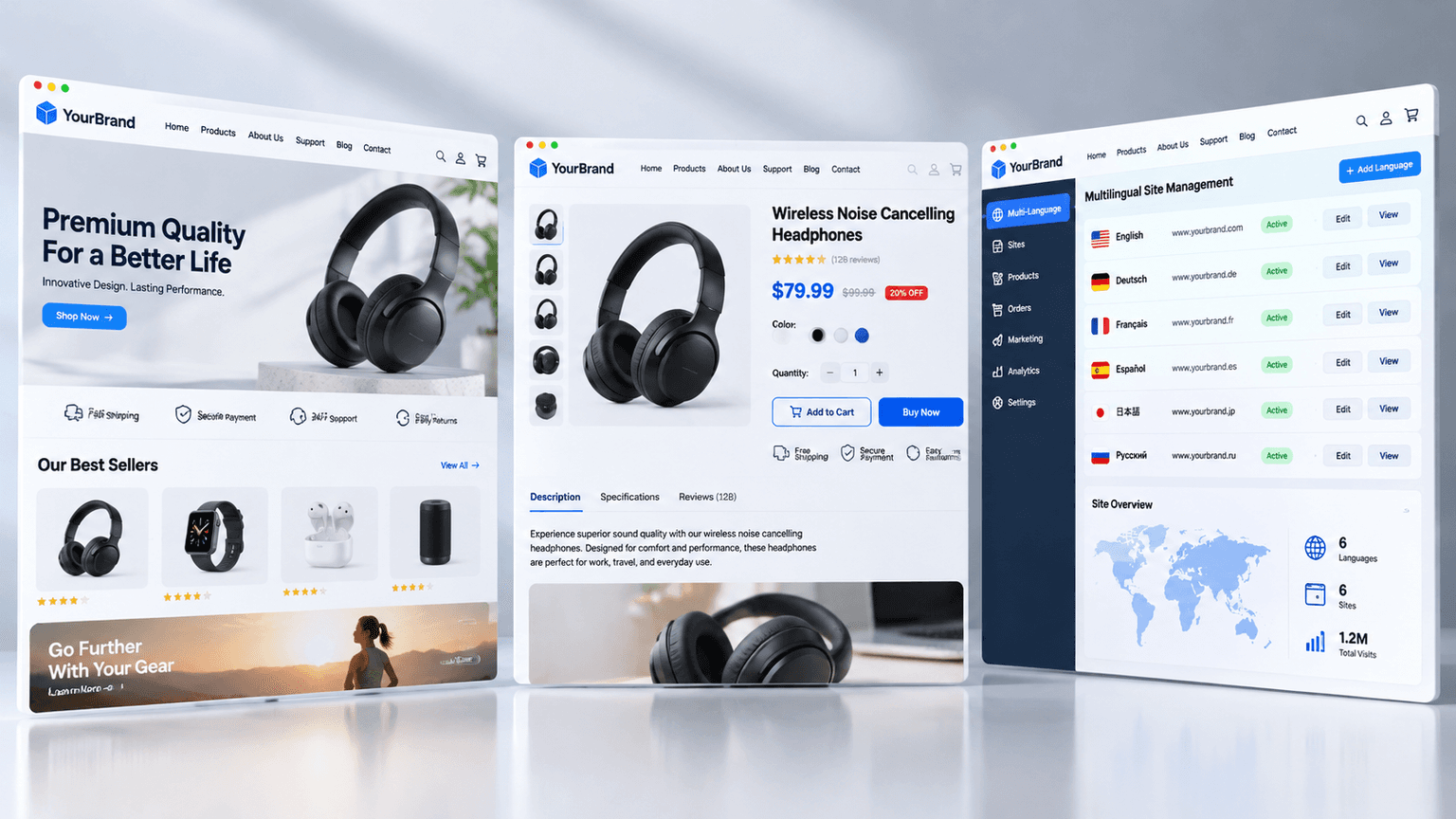
Not long ago, a head of a factory's foreign trade department asked me: he noticed that some peers' independent websites only allowed users to publish products and fill out forms, while others enabled online payments, and some even supported five or six languages all at once. He asked directly: how many types of independent websites are there? I answer questions like this quite a bit every year. Let's make the premise clear first: when I talk about an independent website below, I mean an independent official website where you own the domain name and data yourself, rather than a store opened on Amazon or Alibaba International. If this boundary isn't drawn clearly, both your backlinks and customer data might end up building value for the platform instead.
If you are still unsure about the boundary between platform stores and independent websites, you can first check the breakdown in Why a Seller's Independent Website Isn't Just Opening a Store on a Platform. Below, based on my usual project workflow, I will thoroughly explain the classification.
First, align a few easily confused terms
"How many types of independent websites are there?" cannot be answered in a single sentence, because the classification criteria on the market vary. In the foreign trade independent website industry, I am used to solidifying these terms first:
- Independent Website: An international trade official website with its own registered domain name, backend, and data under your control.
- Display Official Website: Focused primarily on product catalogs, company strength, and contact information, where the conversion action is an inquiry.
- E-commerce Independent Website: A site where users can select products, make payments, and place orders directly on-site, where the conversion action is an order.
- Multi-language Website Cluster: The same set of content split into multiple versions by language and linked to each other via hreflang tags.
- SaaS Website Building: Building a site using a third-party platform backend; it goes live quickly, but you may not be able to freely migrate your data later.
- Open-source Website Building: Building a site using open-source programs like WordPress; you can modify the code, but you have to manage the server and security yourself.
- Custom Development: Built from design to code according to your exact requirements; it is flexible, but costs and timelines will be higher.
Once these terms are aligned, when others talk about how many types of independent websites there are, you won't get confused by a bunch of different naming conventions.
Looking at independent websites by business format
The first type is the display official website. In our foreign trade B2B projects, this category accounts for a high proportion. Pages are mainly composed of product categories, product details, factory introductions, teams, and certificates, and customers send inquiries after reading through them. The schedule for a standard display official website is 5 to 15 working days, and the page scale is usually relatively clear.
The second type is the online transaction e-commerce store. This kind of site isn't just for display; it also integrates payment, logistics tracking, multi-currency support, and sometimes even connects with your internal systems. Cross-border B2C sellers usually build these more often. When multi-language and e-commerce modules are included, the timeline extends to 7 to 25 working days. Once an e-commerce site starts development, both the page hierarchy and product data will be more complex than a display site.
The third type is the multi-language website cluster. This isn't just a simple machine translation of Chinese; instead, different languages have independent URLs, are cross-referenced using hreflang tags, and are supported by local server nodes and customer service. When dealing with multi-country European, Middle Eastern, and Southeast Asian markets, we often single out this category because it simultaneously impacts domain structure, content strategy, and Google rankings.
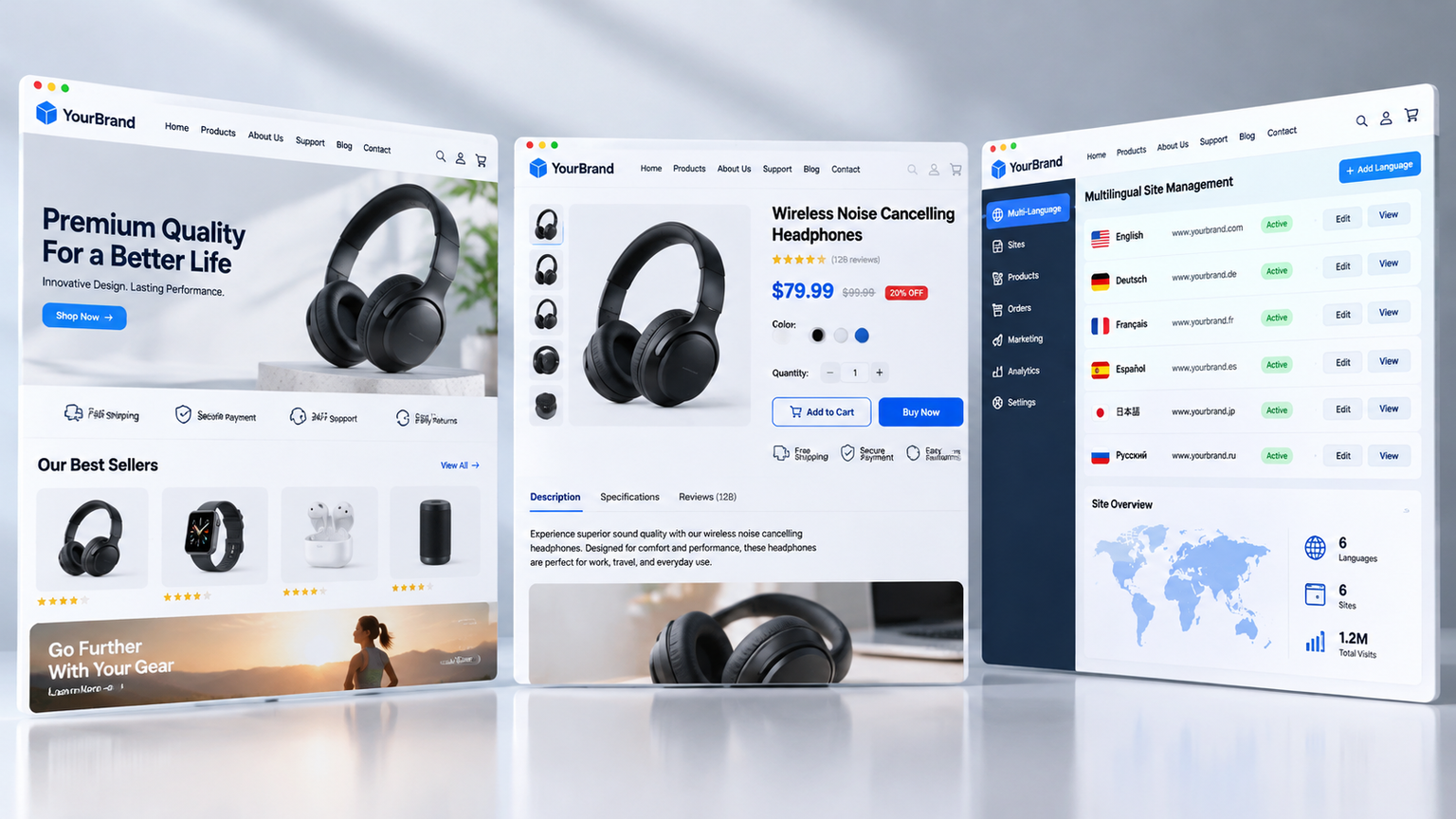
Why categorize these three first? Because subsequent quotes, column titles, and conversion paths are all different. Once you figure out whether you want inquiries or online transactions, many subsequent choices will fall into place.
Looking at independent websites by building method, there are three approaches
- SaaS Website Building: Quickly launch a site using platforms like Shopify. Suitable for teams looking to validate product pages and ad placements first, though data ownership and future migration need to be confirmed in advance.
- Open-source Website Building: Using WordPress or similar open-source software. Offers high flexibility and content marketing room, ideal for foreign trade sites focusing on Google SEO and content building, though hosting, security, and backups must be managed by you or a managed service provider.
- Custom Development: Chosen when you need to integrate existing systems, have special column structures, or specific front-end branding requirements. Most flexible, but has a wide cost range and the longest development period.
Here is an often-overlooked point: the types of independent websites depend on both business format and building method. For the exact same display official website, building it with open-source vs. custom development leads to completely different ongoing maintenance costs. To figure out how to choose between different methods, you can refer to the path evaluation in How to Get Started with Independent Websites.
What is the impact on Google rankings if you confuse the types?
This is not just a conceptual question. I once encountered a site whose business was clearly a B2B factory, yet it used an e-commerce site structure, piling a lot of SKUs and shopping cart entry points onto the homepage. After crawling it, Google couldn't figure out whether this page served procurement or retail, and long-tail keywords consistently failed to break into the top few pages.
There are three common reasons:
- Page type and user intent mismatch. A display official website should build content around industry terms, product terms, and company strength, while an e-commerce site should break things down into specific product and transaction terms. If you do it the other way around, even if Google indexes it, the rankings will struggle to stabilize.
- Column hierarchy does not match the type. A display site's columns should focus on product categories and industry applications; an e-commerce site needs clear categories, SKU pages, shopping flows, and structured data. If the columns are wrong, submitting the sitemap later just passes a flawed structure to Google.
- Misaligned expectations for results. When we do foreign trade SEO, we usually check the site type and column structure first before discussing keywords. A display site with a correct structure gets relatively fast feedback on long-tail keywords; a chaotic e-commerce site requires spending time fixing product information quality first. The gap here is often not an algorithmic issue, but rather that the site type wasn't clearly defined.
When you confuse site types, the easiest thing to waste isn't the website building fee, but rather the wrong structure already indexed by Google that you will have to go back and fix later.
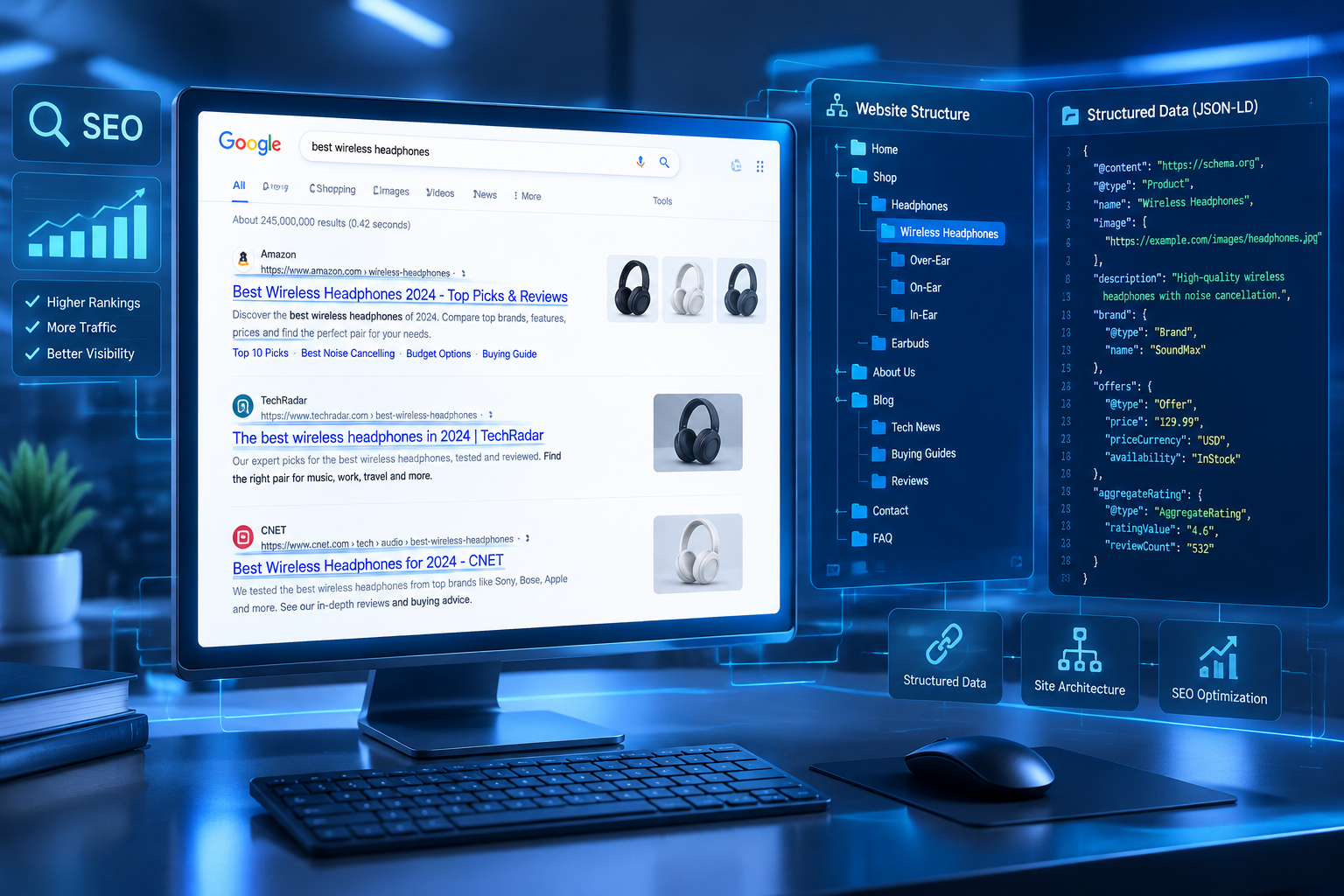
The solution isn't all that mysterious: first, determine the business format, and then design the columns, content templates, and structured data accordingly. Once the structure is right, then consider backlinks and ad coordination to give your Google rankings a solid foundation.
Determine the type first, then answer common follow-up questions
When I evaluate requirements for my clients, I typically ask questions in the following order:
- Look at the conversion action first. Do you want customers to send inquiries, or to pay directly on the site? If the former, look at display sites; if the latter, look at e-commerce sites.
- Look at the target market next. If you only target the English-speaking market, you can focus on building a solid single-language site; if you target German, Arabic, and Spanish markets simultaneously, plan for a multi-language website cluster.
- Finally, look at your in-house maintenance capabilities. If you don't have technical staff, prioritize hassle-free SaaS or managed open-source solutions; if you have a development budget and special system requirements, then discuss custom development.
Don't just ask "how much does it cost" and "how soon can it go live" right out of the gate. Answer these three questions first, and the solutions people give you will actually hit the mark. Otherwise, you will just end up with a generic template applicable to any industry.
Many people ask: can I build a display official website first and add online transactions later? Yes, but you must reserve the correct structure in advance. If a display site doesn't plan for product categories and payment paths from the start, adding an e-commerce feature later isn't just adding a module—it involves redoing columns, migrating content, and re-submitting for indexing.
Others ask: Is a multi-language website cluster strictly necessary right from the start? My suggestion is to first evaluate your inquiries and product-market fit in your target markets. If a certain language market already has some organic traffic, it's worth creating the corresponding language version; if there is none at all, focusing heavily on a single language first is much steadier than rolling out five languages all at once.
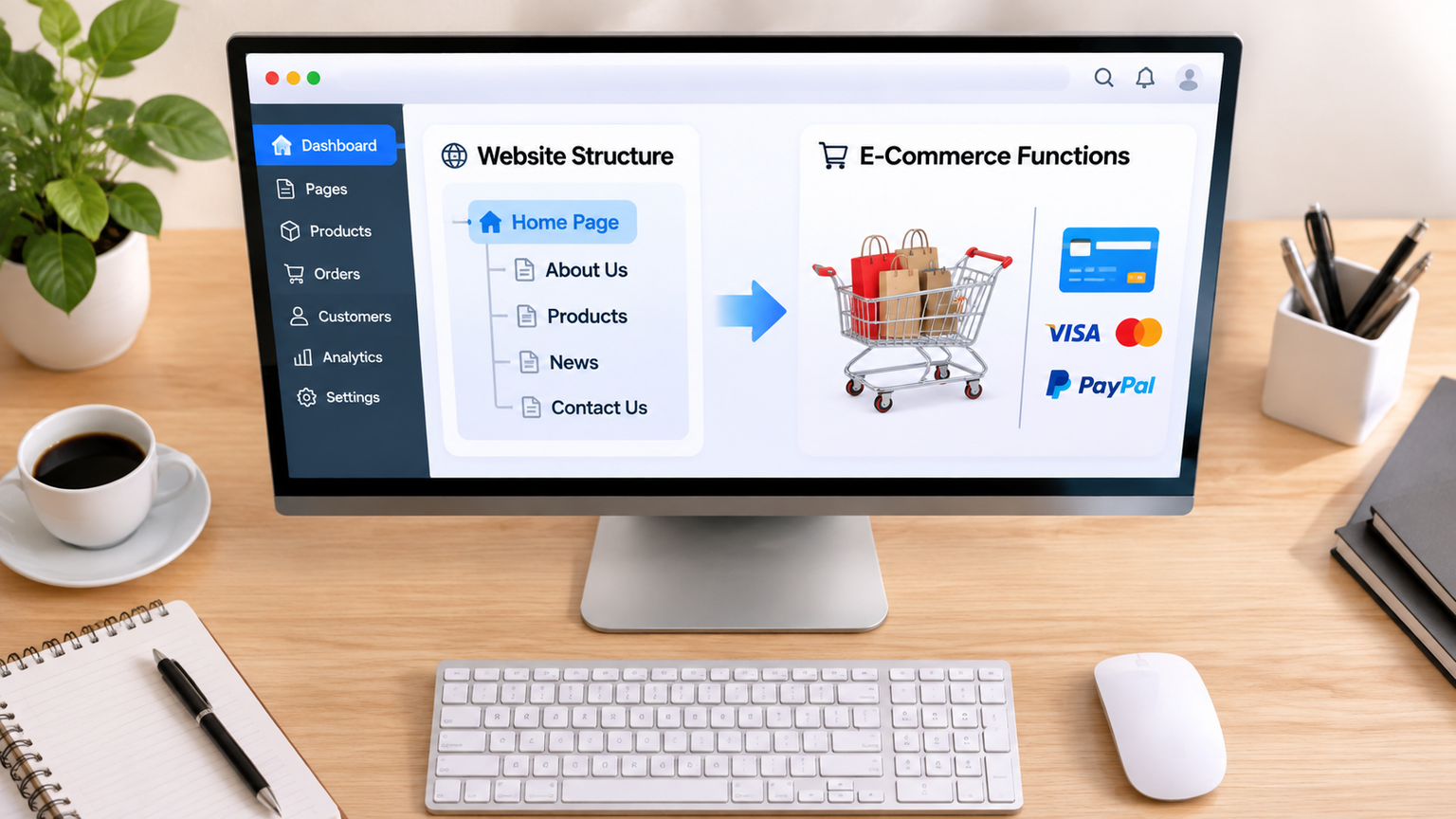
If you are still stuck at the "how many types of independent websites are there" stage, you don't need to rush into choosing a website-building tool yet. First, determine whether you belong to the display, e-commerce, or multi-language website cluster category. The next layer of questions will become: how should my columns, budget, and timeline be arranged? Once you reach that point, asking a service provider for a detailed proposal will be far more useful than blindly asking about price.