
How Much Does Cross-border E-commerce Cost: Break Down 4 Accounts, Then Spend Across 3 Stages
Cross-border e-commerce pricing is not a single number—it depends on site format, page scale, functional integration, and your reserved maintenance budget. Having built foreign trade independent sites for 8 years, the most common mistake I've seen in projects is asking for a flat price without breaking down costs. This article deconstructs website building costs using 4 accounts, 3 stages, and 3 scenarios, helping you understand where to spend in Week 1 and how to control budgets for the first 3

目录
- Break down 4 accounts first: The price of cross-border e-commerce is never just a single number
- Spending money across 3 stages: Where to invest in Week 1, Weeks 2~4, and the first 3 months
- Why prices vary so much across 3 scenarios: First figure out which one you belong to
- Calibrating your budget using search result pages: Check SERP difficulty before talking price
Last month, a home organization business owner came to me and immediately asked how much a cross-border e-commerce independent website costs. He threw in factory sample photos, B2B wholesale prices, TikTok traffic acquisition, and Google order placement plans, ending with a request for a flat price. I asked him to hold on for a second and break his needs down into three parts, at which point he realized that the "price" he was asking about actually mixed up at least three different accounts.
This is the most common pitfall in going global: asking for a flat price instead of breaking down the costs first.
Break down 4 accounts first: The price of cross-border e-commerce is never just a single number
Having built foreign trade independent websites for 8 years, I've found that only four factors affect the quote for a cross-border e-commerce site: site format, page and section scale, functional integration touchpoints, and whether you reserve your own maintenance budget.
Site format is the biggest variable. Showcase official websites mainly generate inquiries, e-commerce stores require shopping carts, checkout, and order management, and multilingual station networks need to expand their structure by language. The development and maintenance costs of these three are not in the same league.
Page and section scale determine the content volume. A showcase site with 20 product pages and a mall with 500 SKUs have completely different backend structures and frontend loading logic.
Functional integration touchpoints are the easiest to miss. Once cross-border payments, logistics tracking, multi-currency support, and ERP integration are added, it's no longer a matter of simply applying a template.
So when you ask me how much a cross-border e-commerce site costs, I never give just one number. I first break down the four accounts mentioned above and then determine which tier the price falls into. Our specific quotation criteria are always listed in the Foreign Trade Independent Website Construction Service List. The four factors above are what influence the quote, and the price follows the requirements. Specific quotes are evaluated based on requirements and details are provided within 1 working day.
Spending money across 3 stages: Where to invest in Week 1, Weeks 2~4, and the first 3 months
The money for cross-border e-commerce website construction is not spent all at once. In our projects, we are used to breaking the budget down into three time nodes so you know what to invest in at each stage.
Week 1: Invest only in requirement confirmation and prototyping. Don't rush to buy traffic, plugins, or create content right away. Among the projects we've done, the most common bottleneck is that initial requirements weren't sorted out, and halfway through, the section structure needs to be changed; the rework cost for development is higher than replanning. Do the design and prototype first, confirm the effect, and then start construction. This upfront investment can save you multiples of rework costs later.
Weeks 2~4: Spend the website construction and launch fees. Standard official website types go live in 5~15 working days, while those with multilingual and e-commerce modules take 8~25 working days. The money in this stage is spent on development, content population, language localization, and backend configuration.
First 3 months: Reserve only basic maintenance and a small promotion budget. Don't heavily invest in Google Ads in the first month. Let the website run stably first, and get the basics right such as indexing, sitemap, structured data, and active pinging. The rhythm of Google SEO is completely different from advertising; getting indexing optimization and basic ranking monitoring done in the first 3 months already puts you ahead of most competitors.

This section shares the same logic as 6 Breakdown Items of Foreign Trade Website Cost Differences: the price difference doesn't lie in the total price figure, but in which link the cost is spent on.
Why prices vary so much across 3 scenarios: First figure out which one you belong to
Price gaps cannot be judged simply by how low someone else's quote is. You need to first look at which scenario your site belongs to, as the price benchmarks themselves differ across scenarios.
- Showcase B2B Official Website: Primarily targeted at generating inquiries as conversions. With a clear page structure, reasonable section planning, and equipped forms and online customer service, the price falls into a relatively contained range. Suitable for factory foreign trade departments and starting foreign trade SOHO entrepreneurs.
- Cross-border Online Store: Requires SKU management, shopping carts, cross-border payments, logistics tracking, and multi-currency support. Once these functions are integrated, development and testing costs will widen significantly. Suitable for retail sellers with a high volume of products.
- Multilingual Station Network: Not just a matter of running a translation plugin. Each language version requires an independent URL structure, hreflang cross-linking, and handling Google's indexing of localized content. This scenario is the most complex of the three, and prices must be evaluated separately by language and volume of sections.
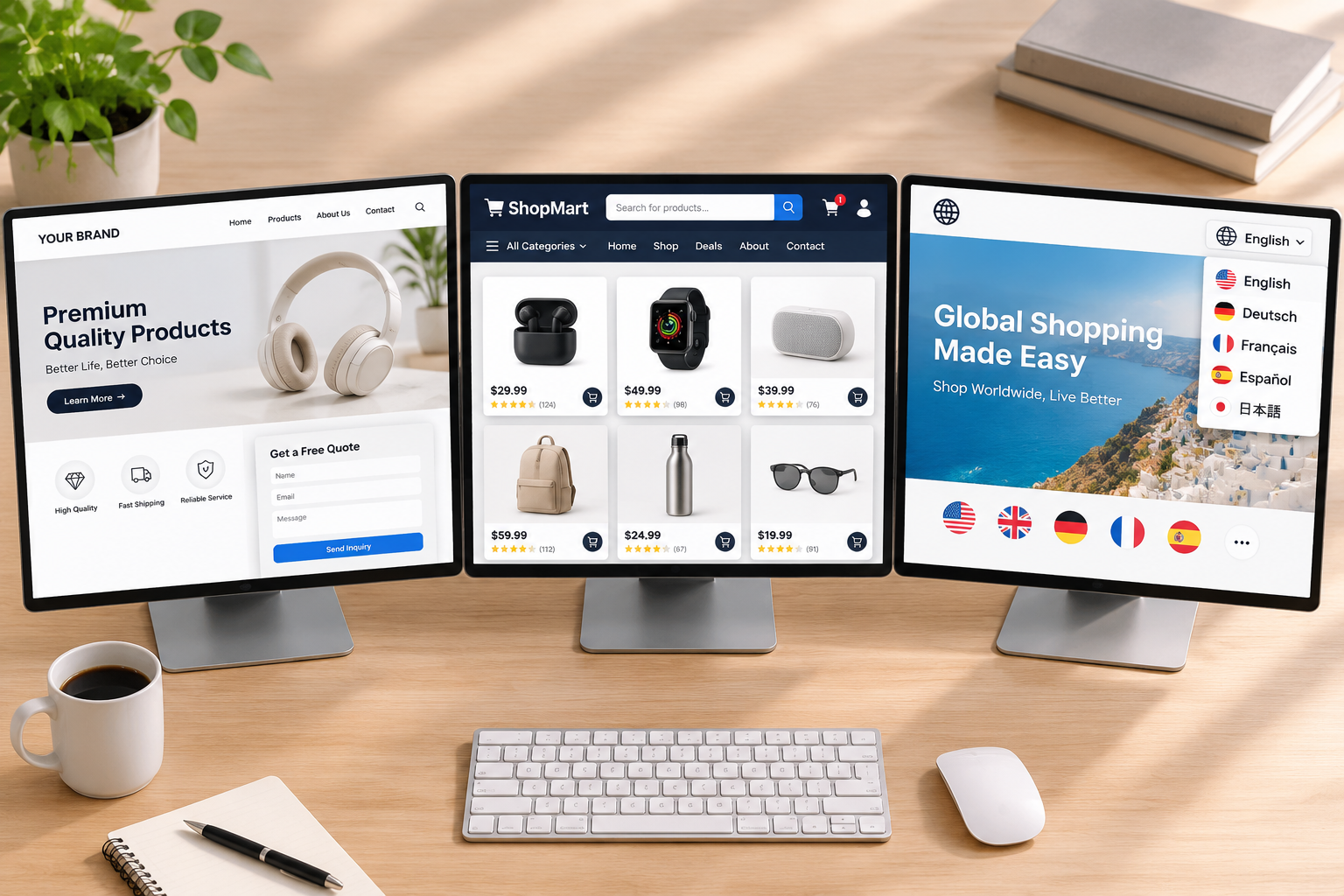
The quotation gap among these three scenarios isn't because web-building companies are unscrupulous, but because the functional depth is different. Figure out which one you want to build first, and then comparing quotes will actually make sense.
Calibrating your budget using search result pages: Check SERP difficulty before talking price
When many business owners come asking about cross-border e-commerce prices, they don't have an anchor in their minds. At this point, I suggest doing one thing: look at the structure of the search results page first.
For example, when you search for your core category keywords, check how many ad slots occupy the Google home page, whether featured snippets exist, how much space video and local packs take up, and how many organic positions are left. Next, look at how competitors write their titles, how deep their content goes, and how their H tags are structured. You can use tools like Ahrefs or Semrush combined with manual searching. The rule is—you can copy the structure and perspective, but not the content and data.
Why is this related to price? Because the difficulty of the search results page directly determines how much effort you will need to spend on SEO later. If the organic positions on the home page are almost completely occupied by large sites and platforms, you need to reserve a longer content marketing cycle. If there is still room, the budget pressure will be much smaller.
This is the layer of price judgment most easily overlooked: it's not about how much building the website costs, but how much you need to spend after launch to get search exposure.
Check SERP difficulty before discussing budget, otherwise you'll use website building prices to buy a site that can never enter the home page.
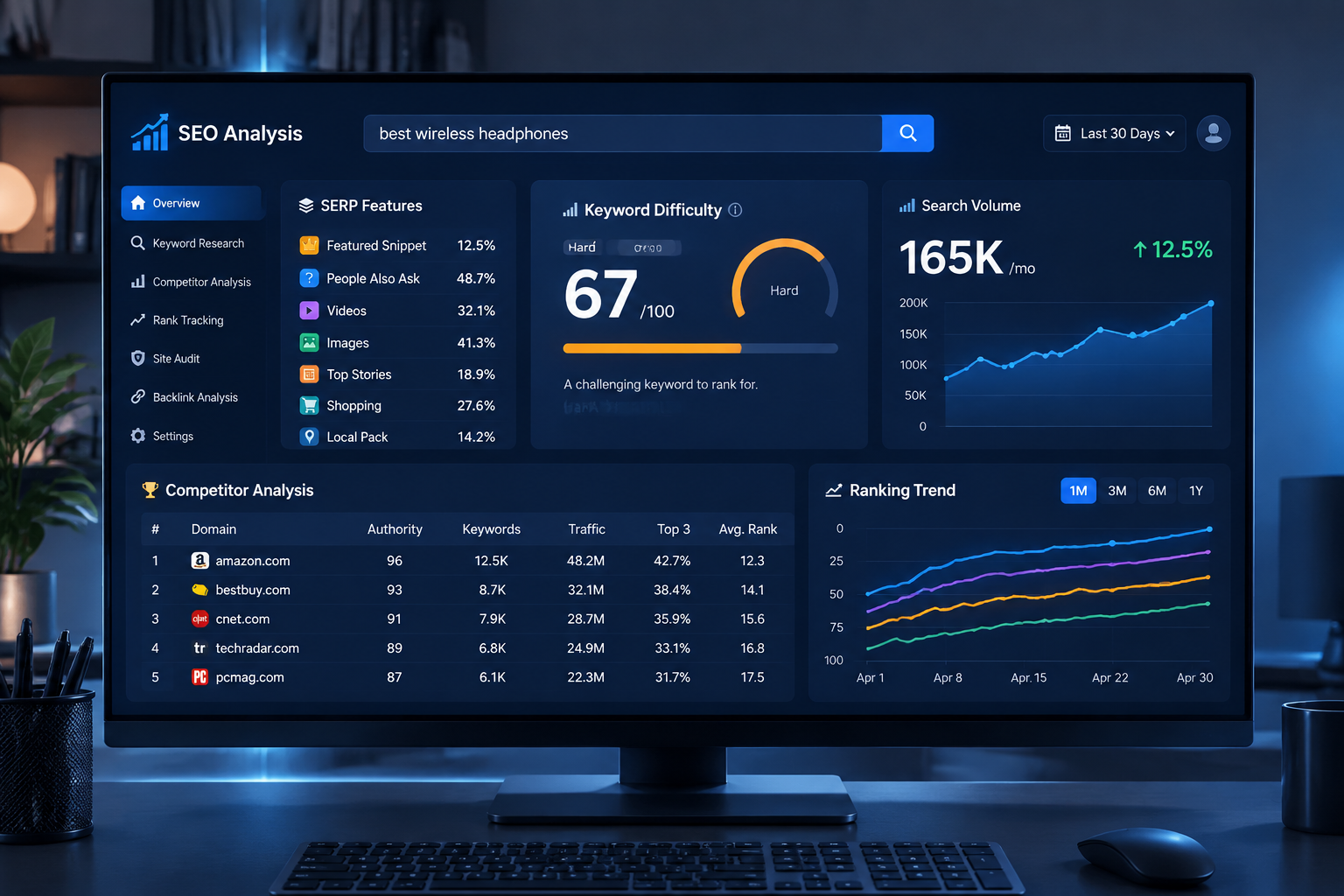
The long-term cost of a cross-border e-commerce independent website is never calculated on the day it goes live. Whether it can be indexed by Google after launch, whether its rankings rise, and whether content needs to be continuously created will all affect how much you ultimately spend. When I lead project teams, I never promise guaranteed home page rankings in quotes; I just lay a solid foundation and let data and manual effort handle the rest.
Just like what is discussed in Get 6 Google SEO Basics Right Before Talking Content, many people rush into article quantity right after their independent website launches, when in fact getting the 6 basic steps right in order is much more effective than frantically publishing content. The same holds true for pricing: plan the basic costs first, and then talk about growth.
One-sentence principle: The price of cross-border e-commerce is not a single number, but a timeline—break down the scenario, stage, and SERP difficulty, and the price will naturally reveal the answer.