
How Much Is Typical for Cross-Border E-Commerce Registered Capital: 3 Criteria to Help You Decide
You might think registering a cross-border e-commerce company requires preparing a large sum of capital. In reality, registered capital is not paid-in capital, nor is higher always better. Having built independent sites for 8 years, I've seen many bosses stumble over registered capital: setting it too high out of fear of risk, or too low out of fear of lacking trust. This article gives you 3 evaluation criteria based on payment recipients, tax liabilities, and partner trust, followed by 4 steps

Having built independent e-commerce websites for 8 years, I am frequently asked: How much registered capital should a cross-border e-commerce company have? Let me give you a counterintuitive fact first: registered capital is not the same as paid-in capital, nor is higher always better. The answer to "what is the usual amount?" depends entirely on what you plan to do next.
Many clients ask about registered capital during their very first consultation, assuming it is a fixed number like some kind of industry standard. In reality, most regions now implement a subscribed capital registration system, meaning the amount of registered capital is up to you to decide, and the money does not need to be paid in immediately.

Registered Capital vs. Paid-in Capital Are Not the Same Thing
When we build independent websites, we often come across our clients' business licenses. Many foreign trade SOHOs and factory export department staff confuse the two concepts: registered capital is the amount you promise to invest in the articles of incorporation, while paid-in capital is the money actually deposited into the company account. The two do not have to match.
If your business license states subscribed, it means you don't have to pay this amount right away; you only need to contribute it within an agreed timeframe. This timeframe can be long and can also be adjusted based on your business conditions.
A quick reminder: not paying in capital doesn't mean zero risk. Registered capital is the maximum limit of your external liability. If you set it too high, future debts will be pursued up to this amount.
3 Evaluation Criteria: Working Backwards from Purpose to Determine Registered Capital
My own evaluation order is reversed: instead of looking at what others write, I look at what you are going to use this company for.
- Criterion 1: Look at the payment recipient entity. If you only run marketplace shops, such as on Amazon or TikTok Shop, the platforms have their own onboarding requirements. Some categories or sites may check the parent company's registered capital, but most only require the company to be legally active. Your requirements will differ depending on whether you choose a marketplace or an independent website.
- Criterion 2: Look at tax and legal liabilities. Registered capital is the upper limit of a company's external liability. If you only deal with small-batch, low-risk products, setting it too high will only increase your psychological burden and potential debt exposure.
- Criterion 3: Look at partner and client trust. If you need to sign overseas distribution agreements, obtain agency qualifications, or integrate with certain payment companies, the other party may look at your registered capital.
Putting these three points together makes it easy to conclude: there is no absolute standard for registered capital, only a range that suits your current business. To make this clearer, I have put together a table combining considerations for three common business models.
| Business Model | Payment Recipient | Registered Capital Considerations |
|---|---|---|
| Marketplace Shop | Platform collects on your behalf, payouts sent to company account | Keep it low to meet minimum onboarding requirements; high amounts are unnecessary |
| Independent E-commerce Website | Self-built site integrated with payment gateways, company collects directly | Must consider payment gateway reviews; some check registered capital, but most focus more on site quality and compliance |
| B2B Foreign Trade Orders | Offline contracts, T/T or L/C payments | Clients or banks may require a certain scale, but they place more value on transaction history and qualifications |
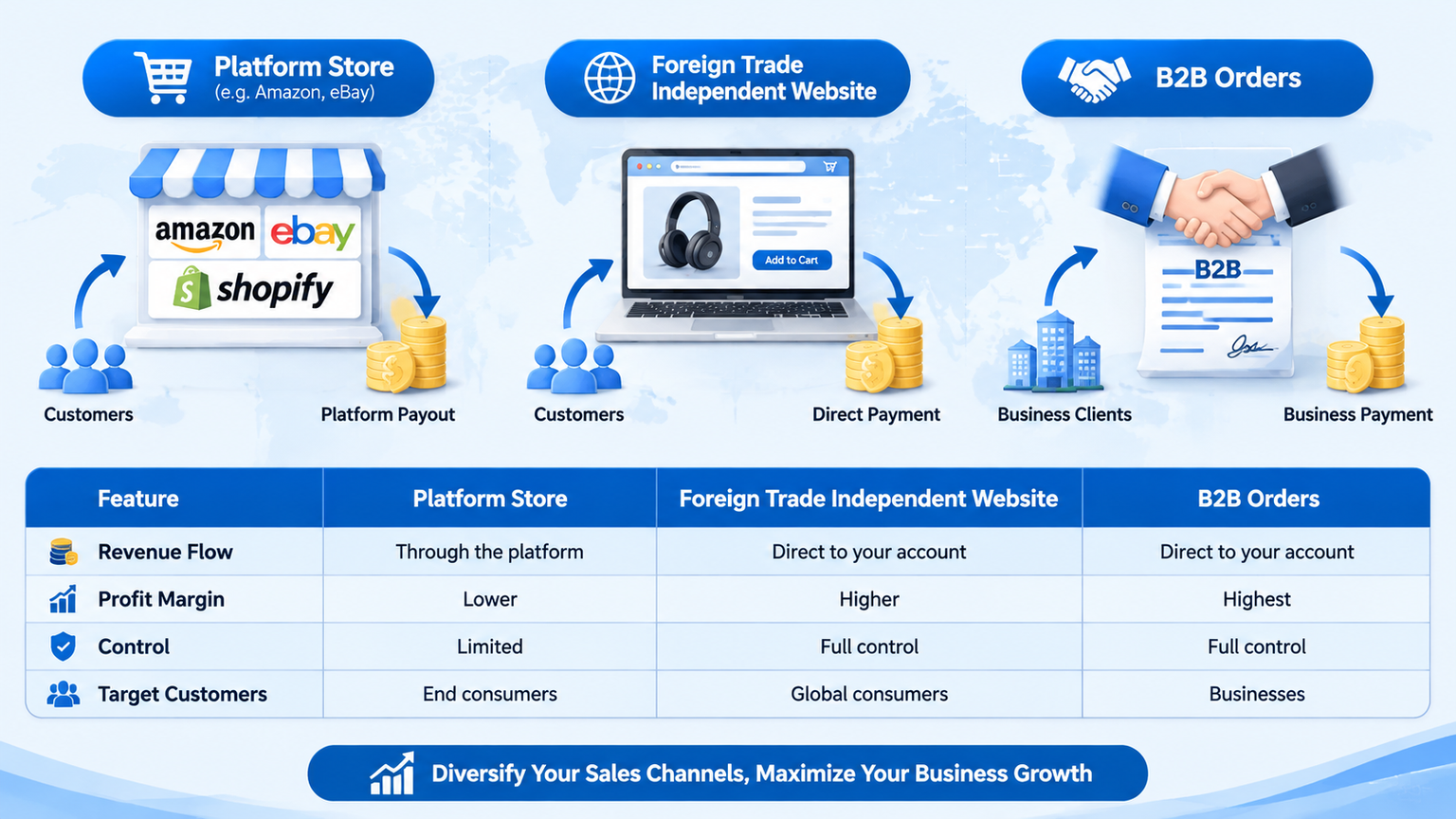
As you can see from this table, registered capital is neither higher is better nor lower is better; it needs to match your collection and liability needs.
4 Steps to Determine Your Registered Capital
If you are ready to register today, you can follow these steps. I have outlined the deliverables for each step.
- Check platform or payment gateway requirements. Go to the help center of your target platform or payment company, check the onboarding qualification terms, and see if there is a registered capital threshold. Deliverable: A screenshot or note.
- Consult a bookkeeping agency or tax advisor. Clearly explain your intended business model and let them help you assess the risks. Deliverable: A clear recommended range for registered capital.
- Leave a little buffer. Consider whether you will add partners or apply for qualifications over the next six to twelve months. Deliverable: An upper limit that you are comfortable with.
- Write it into the articles of incorporation and set a paid-in deadline. Don't just write down a random number and forget it; clearly state the subscription deadline in the articles of incorporation. Deliverable: Articles of incorporation with a clear subscription deadline.
Once these 4 steps are complete, you won't need to worry about "what the usual amount is" anymore.
The Relationship Between Registered Capital and Independent E-commerce Sites
I often see a common misconception: thinking that running an independent site requires setting registered capital very high, otherwise payment companies won't open an account for you. In reality, payment gateway reviews focus less on registered capital and more on website quality, product compliance, refund policies, and risk control. If you want to build an independent site, the first step isn't studying registered capital, but figuring out your website path clearly. You can first check out How to Get Started with an Independent Website, which discusses the difference between building a site first versus thinking through the path first.
Of course, the cost of website building itself is a different matter from registered capital. If you want to know how much independent site development costs, you can read How Much Does Cross-Border E-Commerce Development Cost.
When we build independent websites for clients, we frequently remind them: registered capital is a parameter of the company entity, while an independent site is a channel for customer acquisition and conversion. Do not mix the two decisions together.

What should you learn next? I suggest looking into two things first: your local registration policies and tax requirements, and the startup cost breakdown of an independent site. Once you figure these two areas out, you can determine whether you are ready to take action immediately.
If you are ready to start with an independent website, you can head over to the Website Building Basics & Preparation section to review the prerequisites ranging from company registration to website launch.