
Take These 5 Steps Before Building a European Independent Site Instead of Rushing Into Google Ads
You take over the foreign trade department, and the boss asks you to build an independent site for the European market. Opening the old site reveals that the language, currency, and payment setups are all wrong. A European independent site is not just an English site with a German translation page; you need to figure out your target countries, B2B vs. B2C model, cost breakdown, and localization first. This article outlines the self-check steps for building a European independent site, explains w
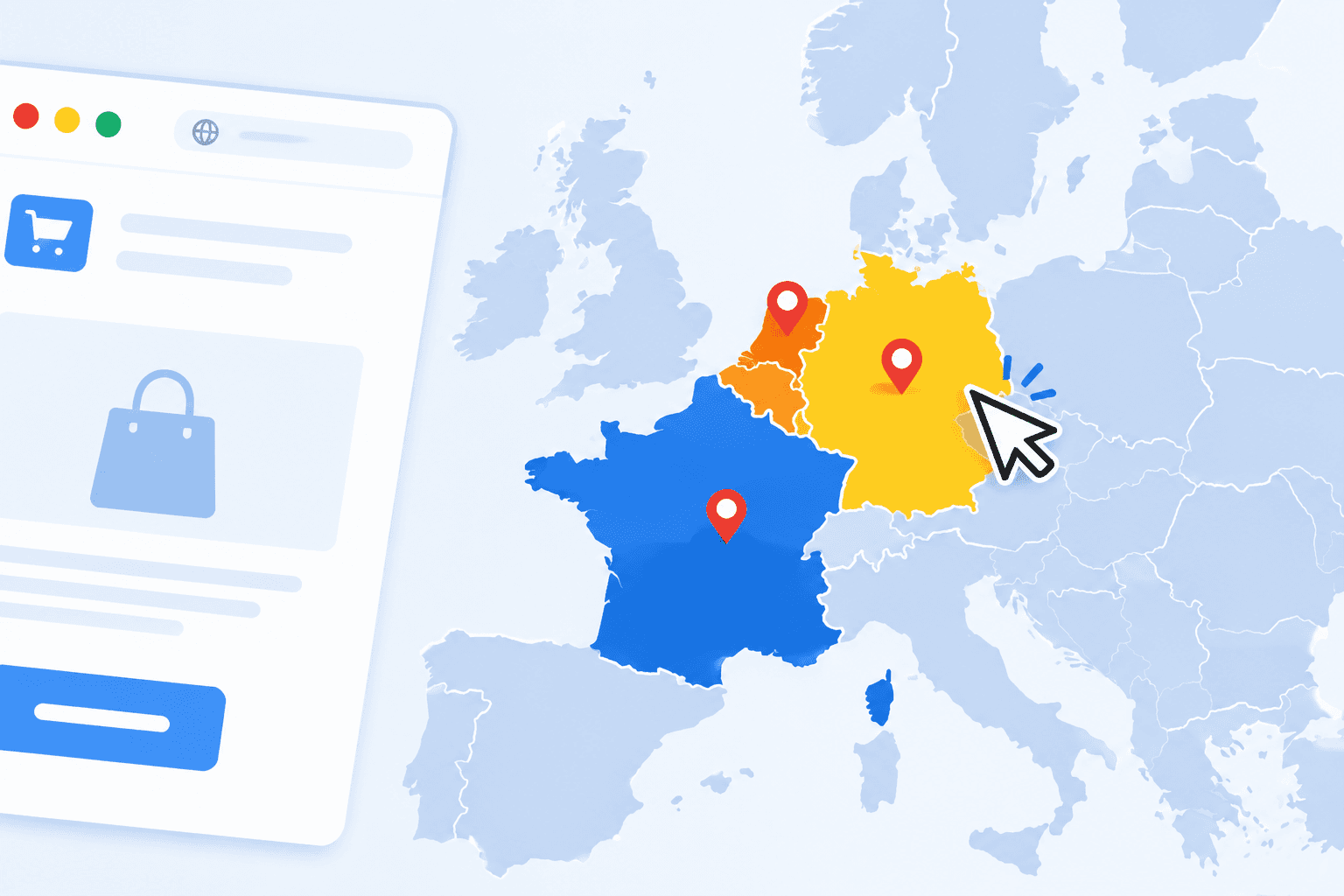
During the afternoon meeting, the boss said the focus this year is on Europe, and asked the foreign trade department to first transform the independent website into a European edition. You opened the website backend to find only Chinese available, product descriptions directly translated from domestic sales materials, and the homepage hero banner featuring photos from a domestic exhibition. At that moment you knew this wasn't a redesign; it was a rebuild.
Building a European Independent Site: Answer Who You're Selling To First
Before building a European independent site, the very first thing to confirm isn't the website builder, but whether you are doing B2B or B2C, and which country you plan to enter first.
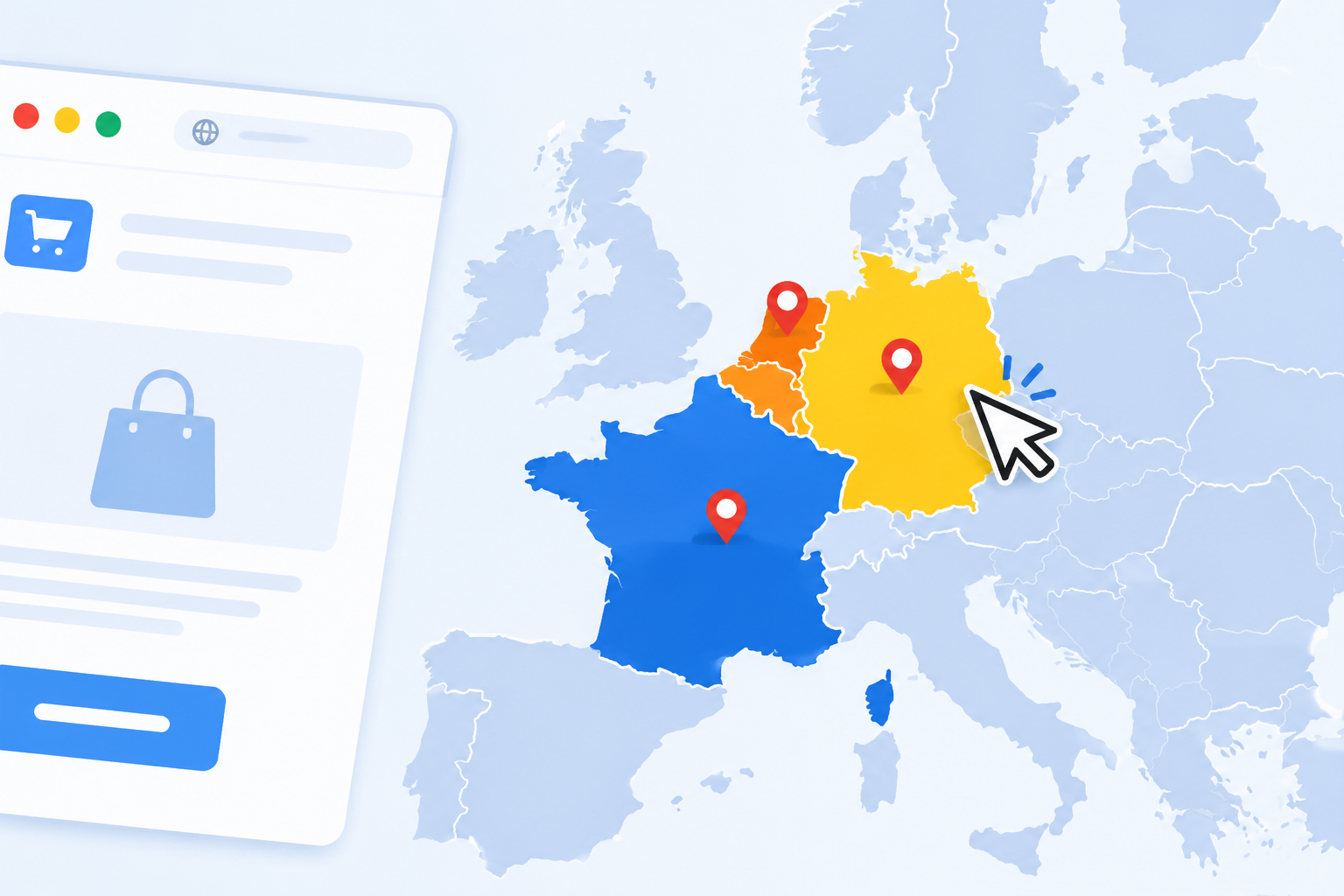
This statement has conditions: If your products are industrial parts, equipment, or raw materials focused on inquiry-based B2B, the focus of your European independent site should be English and German sites, with inquiries as the conversion action; if you sell retail products and need online payment and shipping, starting from the German and Netherlands sites is much steadier than trying to cover all of Europe at once.
In the projects I've handled, many bosses say the European market is huge, so let's just make an English site for all of Europe. This assumption directly stalls when it comes to B2C. German buyers are used to reading German, using Euros, and using local payment methods; French buyers simply have higher trust in French-language websites than English ones. Europe is not a single market, but dozens of markets pieced together. An independent site inherently has its own domain name and data. I previously wrote an article called An Independent Site Is Not a Platform, breaking down independence into domain ownership and data ownership. This is especially vital to realize when building a European independent site, because you face local platforms and habits across multiple countries.
Don't Quote Costs Flatly; Break Them Down Into These Three Parts
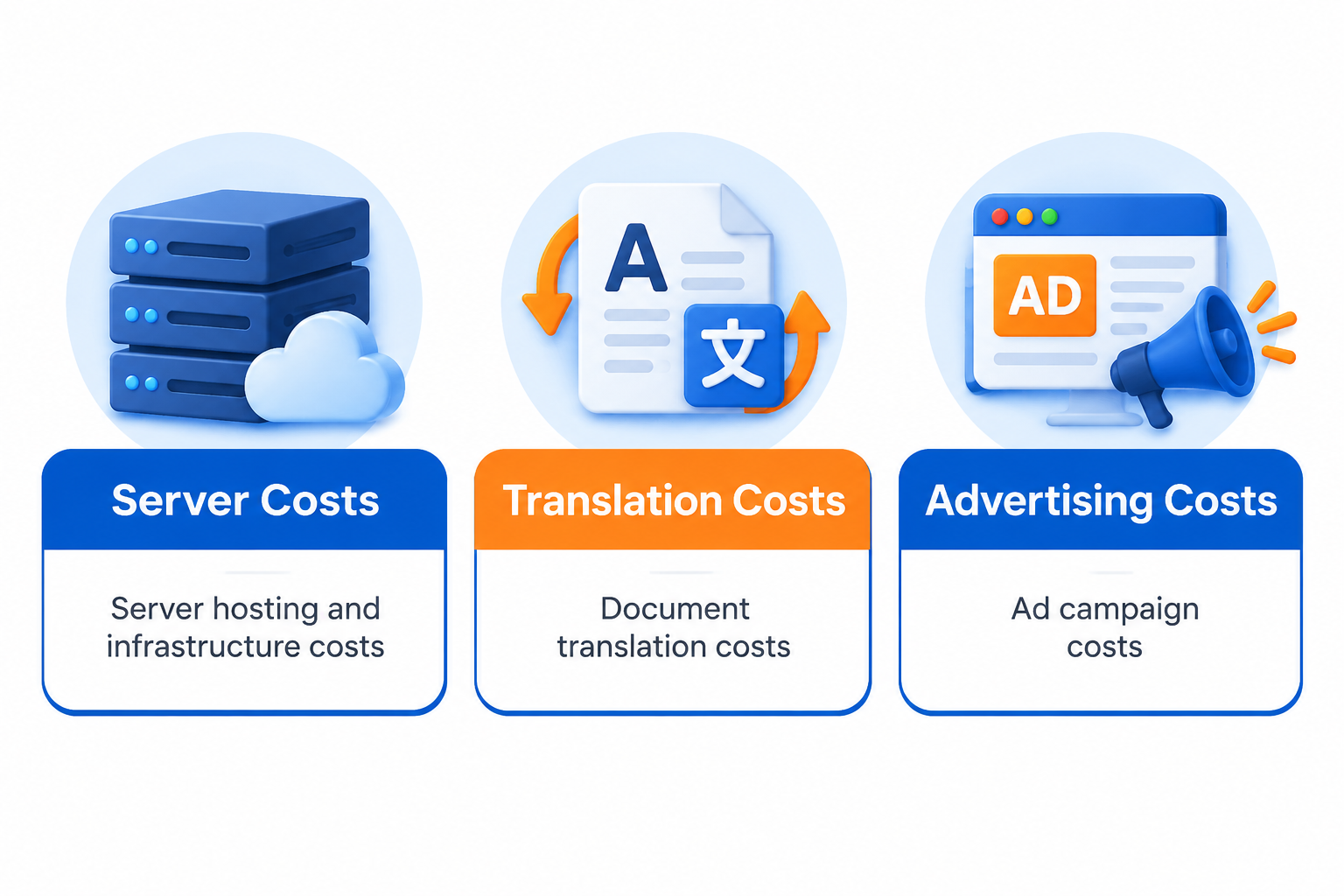
We never quote a single lump-sum figure for the cost of a European independent site. The reason is simple: for the exact same European independent site, one person might just add a German page to an English site, while another needs three languages combined with local payment integration and tax ID displays, making the workload several times different.
In terms of cost structure, we usually break it down into three parts: Site Foundation, Localization, and Promotion.
Site Foundation: Includes domain name, servers, and the website building itself. Pay attention to European access speeds; choosing servers located in Frankfurt or Amsterdam data centers is much faster for local German access than choosing North American data centers. Unless your budget is stretched to the absolute limit, hosting servers on European nodes should be your default option.
Localization: This part is frequently miscalculated or omitted. Multilingualism isn't just translation; it includes currency display, local payments, tax ID fields, privacy policy adaptation for GDPR, and hreflang setup for German and French sites. We worked on a project where the client thought adding three language packs made it a multilingual site, only to have Google treat the German and English pages as duplicate content, resulting in messy indexing. It took them much longer later to reconfigure hreflang. I previously wrote a ready-to-copy configuration guide on How to Write Multilingual Hreflang Correctly.
Promotion: Google SEO and advertising are long-term plays. If you are doing B2B inquiries, I actually suggest getting your content and structure right first before considering ads. Content and keyword research are not tasks to be done only after the website goes live.
Keyword Research: Don't Start With Direct Chinese Translations
One of the easiest mistakes to make when building a European independent site is directly translating domestic product terms into English and searching for them.
In the outdoor gear category we handled, there is an example: the product is a raincoat. While people certainly search for the direct Chinese translation 'raincoat', users in several European markets more commonly search for 'poncho' or 'rain poncho', and even German-speaking regions search for 'Regenponcho'. If you only stare at 'raincoat' for your page titles and H1s, your traffic will be severely limited.
The reason behind this is that different regions have different names for the same product and different search habits. For keyword research, our go-to tools are Ahrefs and Semrush. We use these tools to pull search terms from target European countries and rebuild the keyword list according to local languages and habits. Direct translations of Chinese product terms can only serve as a first-step reference, never as the final keyword database.
Here's another condition: for B2B independent sites, keywords can lean towards industry terminology and procurement terms, such as adding 'wholesale' to the product name; for B2C, they must drill down into specific specifications, use cases, and audience terms. Using the same set of keywords for both B2B and B2C is basically wasted effort.
Self-Test These 6 Items Before Launching
These 6 items aren't written for developers; they are checkpoints for you, as the project lead, to verify directly.
- Are languages localized for target countries? The German site should be written by a native German speaker, not launched straight from machine translation.
- Are currencies and prices localized? German visitors should see Euros, not US Dollars; European users should see tax-inclusive pricing.
- Are payments adapted to local habits? Beyond just PayPal, the German site should consider SEPA and local bank transfers, while the Dutch site should look at iDEAL.
- Servers and loading speed? Tested locally from Germany, homepage loading should be kept under 3 seconds.
- Privacy and compliance notices? Cookie consent, GDPR-related disclosures, contact details, and company information must be complete—do not just modify a domestic privacy policy version.
- Is the inquiry path short? Every product page on a B2B site should have an inquiry button or form; don't make customers register before they can leave a message.

If any of these 6 items are missed, your European independent site will leak conversions after launch. Sorting these issues out before launch saves much more time than chasing developers to fix them afterwards.
A European independent site isn't just about making an English site and slapping on a German translation; it requires figuring out your target countries, localization, and conversion paths clearly before you start building.