
Why You Shouldn't Just Look at Clicks for Facebook Independent Station Ads: Break Down Three Conversion Layers Before Changing Budgets
Many foreign trade independent stations run Facebook ads, burning money on clicks while inquiries fail to rise. The problem is usually not the ads themselves, but the conversion path. What really needs to be broken down into three layers: pixel events must be fully installed, product list page TDKs and categories must align with the ad audience, and audience testing must scale budgets in stages. I use a practical project sequence to explain each key action so you can immediately audit your ad ac
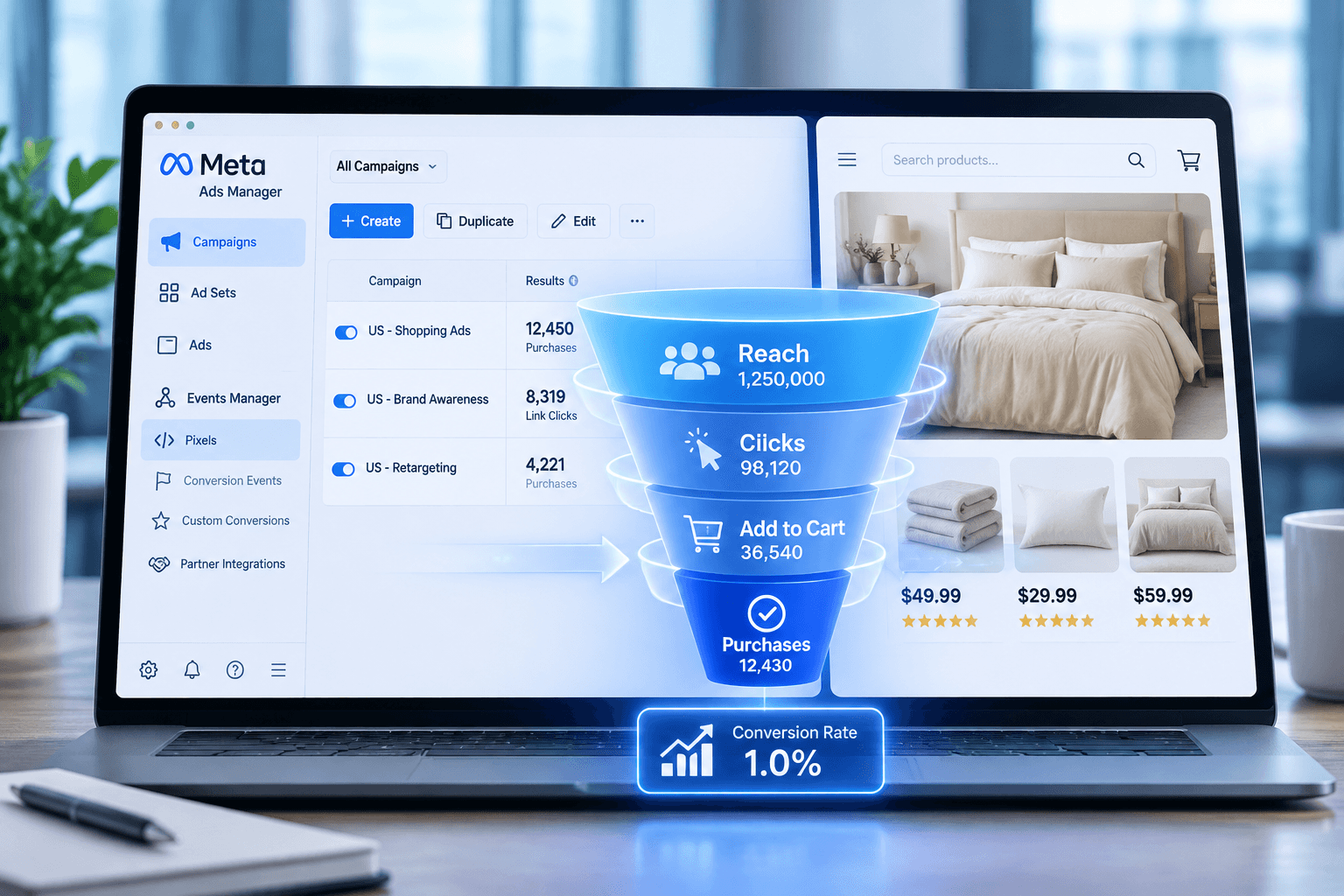
First, let's talk about the scope of application: you already run a foreign trade independent station, the website opens normally, and the product pages and inquiry forms are not just for show—only then does it make sense to talk about Facebook ad traffic. If your homepage is so slow that visitors close it immediately, or your product categories are all mixed up, fix your site first. Otherwise, the faster you spend on ads, the more obvious your problems will become.
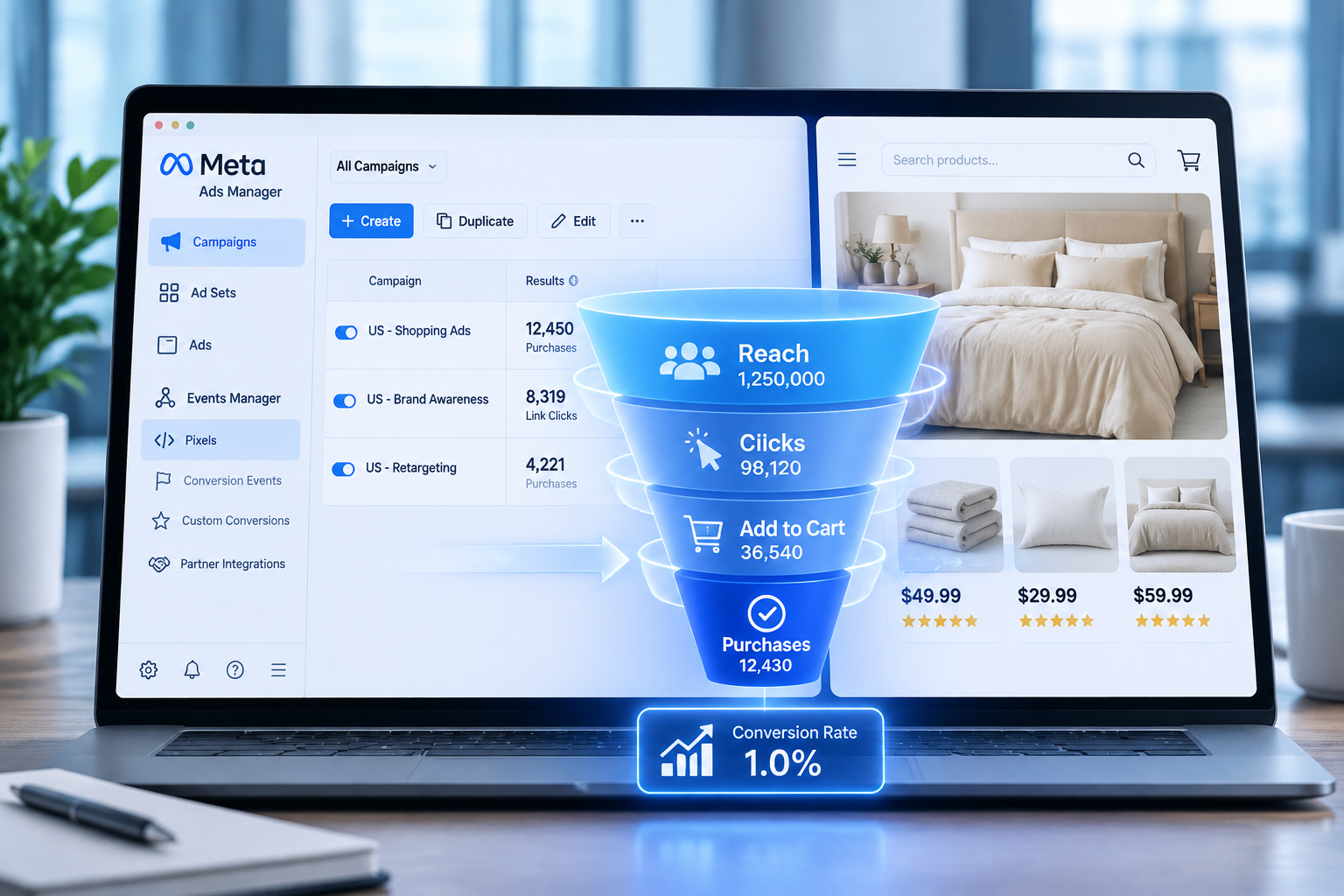
People experienced in overseas marketing are used to calling Facebook traffic acquisition "buying traffic," but I prefer to look at it as a three-layer screening process. The first layer is exposure, where the advertising system pushes creatives to potentially interested audiences; the second layer is clicks, measuring whether users are willing to click in; and the third layer is conversion/retention, measuring whether visitors are willing to submit inquiries or add items to their cart after landing on the independent station. The problem with many accounts is that their budget gets stuck in the first two layers, while the third layer is never checked separately.
One thing to check is whether your creatives match your target audience; another is whether your landing page can successfully catch this traffic. If either side is weak, no matter how good your ad's click-through rate is in the backend, it won't translate into inquiries.
Don't use Facebook ads like search ads. Search is proactive user intent, while Facebook relies on the system to find people. Traffic intent is weak here, so your landing page must be much more direct.
Step 1: Install pixels and events correctly first, so your ad data is trustworthy
The first roadblock I encounter isn't a lack of filming skills for creatives, but incomplete pixel installation. The Meta Pixel acts as a recorder between your independent station and your Facebook ad account. It reports visitor behavior back to the ad system, letting the system know who clicked in and what they did. Without it, all you see are clicks, not conversions.
- Install the Meta Pixel base code across your entire independent station: Place it in the unified header of the whole site, not just the homepage.
- Configure events separately for B2B or B2C: B2B sites should focus on Lead and Contact events; B2C sites should focus on ViewContent, AddToCart, and Purchase.
- Test using Meta Events Manager: Trigger every configured event at least once to confirm the backend receives it.
- Add a Conversions API: Browser pixels can be blocked, so the Conversions API sends key events again from the server side.
Once these four steps are completed, the Facebook backend will be able to tell which clicks are valid and which are just accidental taps. Otherwise, the ad will receive dirty data during its learning phase, and the optimization direction will skew.
Step 2: Align your product list page TDK and layout with your ad audience
When running Facebook traffic to an independent station, most landing pages aren't the homepage—they are product list pages or category pages. Those of us in this industry monitor these pages closely because search engines like Bing have dedicated algorithms for product lists. Google also checks whether page titles, descriptions, and the products themselves match search intent. If a category page crams in three unrelated products, with a title that just states a generic product classification and prices slapped on, people who click through from ads will leave very quickly.
For example, when building landing pages for clients, we don't send Facebook traffic directly to the homepage. Instead, we send it to a list page with clear categories and direct selling points. For details on how to build landing pages, you can check out landing page practices.
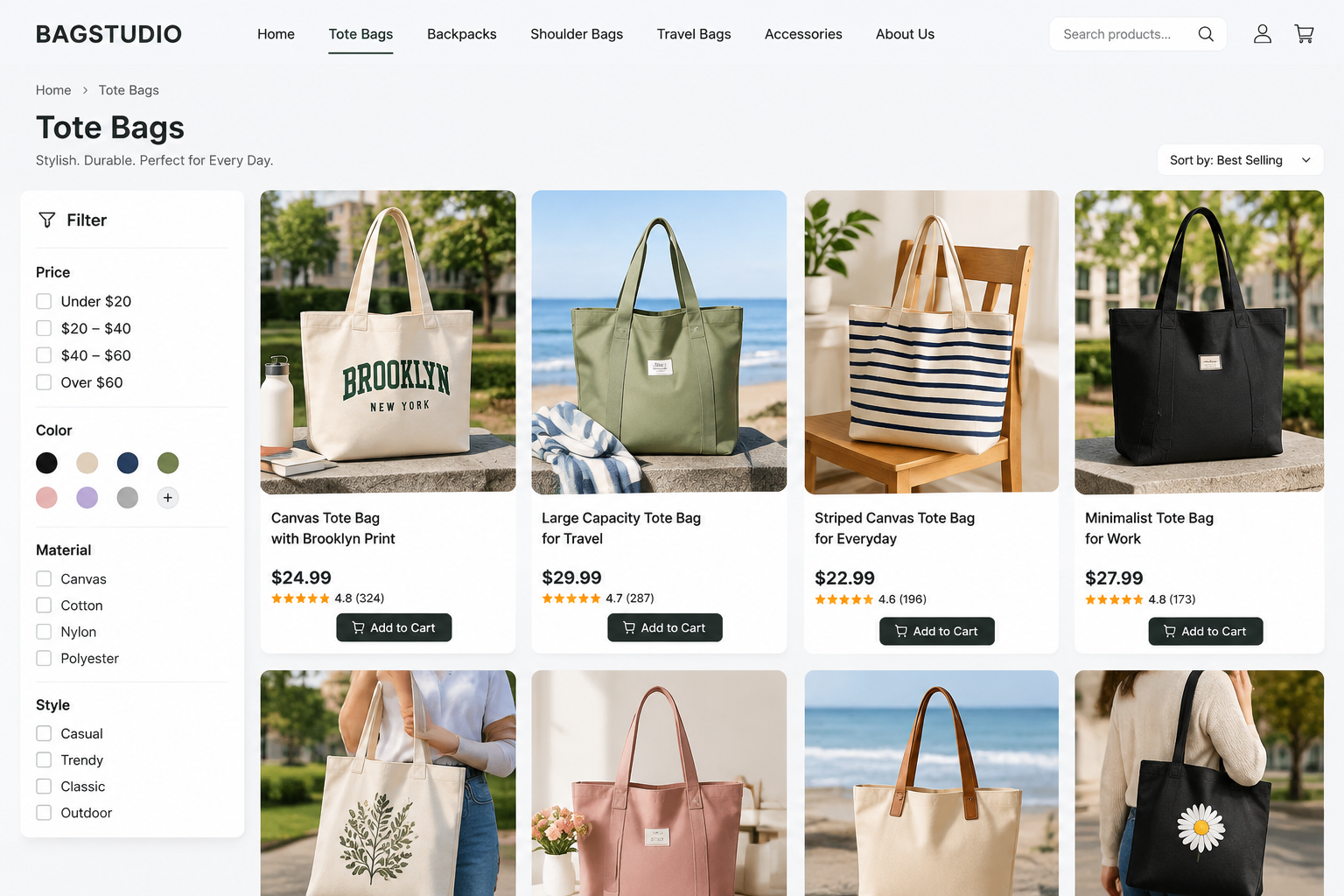
- Break down into vertical categories by product type: A single list page should serve only one type of audience. For example, even within clothing, separate menswear from womenswear, and outdoor wear from commute wear.
- Write TDKs clearly targeting audience, scenario, and category: Don't just put the product name in the title; write it as scenario plus audience plus category, such as Summer Outdoor Men's Quick-Dry T-Shirts.
- Provide filters and specifications above the fold: Let visitors narrow down their options at a glance without forcing them to flip pages.
- Put selling points in the first few words of the product title: Such as material, function, or delivery time, and don't put internal model numbers at the very front.
Step 3: Test audiences in stages, and check your cost per result before increasing budgets
A common mistake people make when running Facebook ads is setting up a large audience right away, pumping up the budget, and then looking at decent click counts. But decent clicks don't mean decent conversions. What you need to solve first is helping the ad system find people who will actually submit inquiries or place orders. This process must be done in stages, rather than splitting your budget evenly across multiple audience groups.
- Phase 1: Small budget for testing audiences and creatives: Use combinations of different interests, behaviors, and custom audiences, allocating a small budget to each group to get the data flowing.
- Phase 2: Turn off non-converting groups: Judge by cost per result, not just cost per click. Keep audiences that actually bring in inquiries or add-to-carts.
- Phase 3: Gradually increase the budget for remaining groups: Don't make the increments too drastic each time. Once the ad system enters a new learning cycle, data fluctuations are normal.
- Phase 4: Weekly review of frequency and creative fatigue: If the same group of people sees your ads too many times, the click-through rate will drop, and you'll need to swap in new creatives to test again.
Facebook ads solve short-term traffic, while Google SEO solves long-term organic traffic. In foreign trade marketing, the two are not an either-or choice. For this coordination mindset, check out foreign trade marketing.
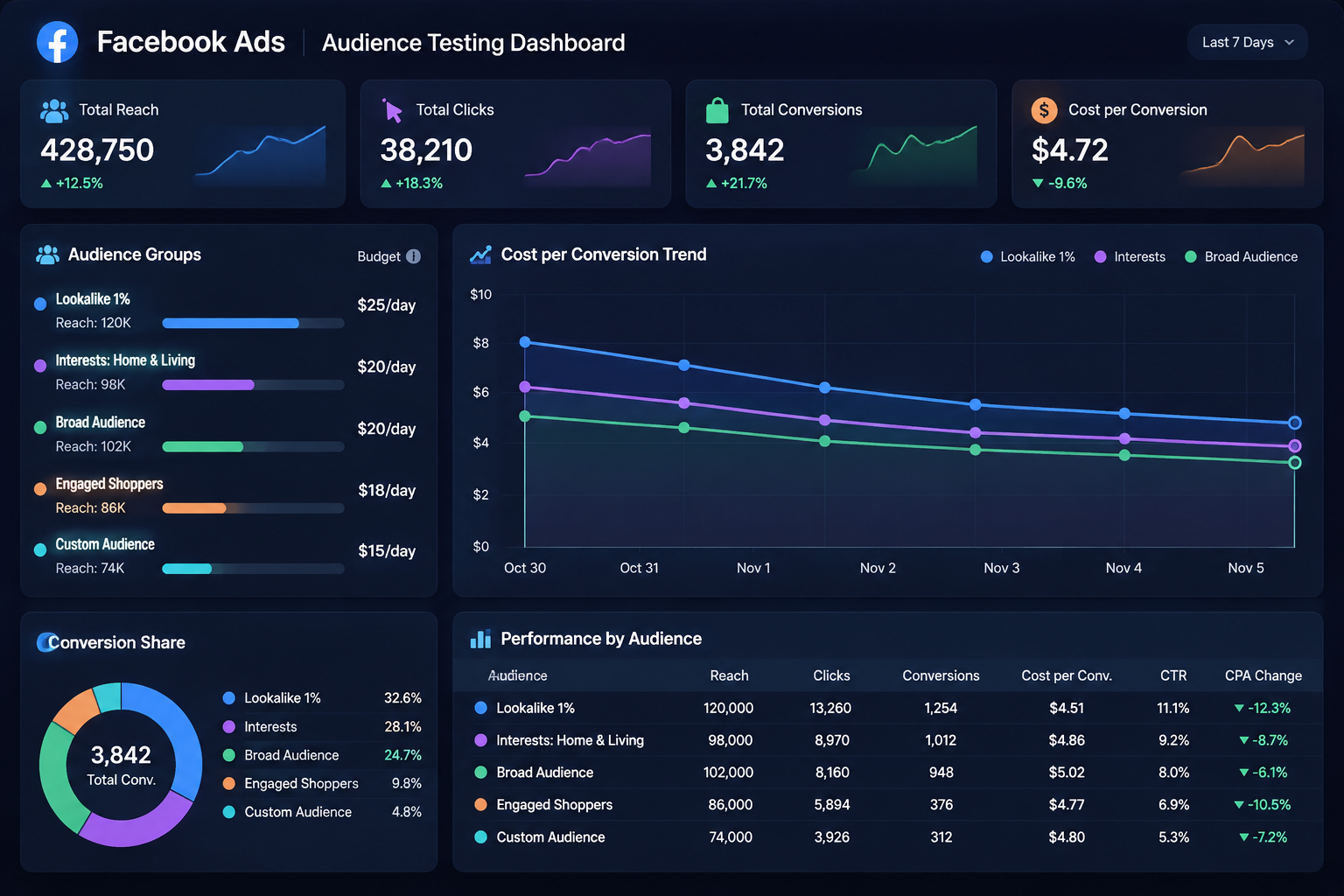
Finally, let's highlight a few key terms again: Pixels are tools for recording visitor behavior; conversion events are the key actions you define on your independent station; landing pages are the first pages visitors see when they click an ad; audience signals are the basis the system uses to find lookalike audiences; and cost per result is the metric used to judge whether an ad is worth scaling. Keep these five terms clear, and your Facebook independent station traffic won't get misled by backend click numbers.
- Pixel: Records behavior after clicks, not just clicks.
- Conversion event: Use Lead for B2B and Purchase for B2C; define them clearly before adding budget.
- Landing page: Clear categories and direct selling points so visitors know what you do the moment they click through.
- Audience signal: Sourced from pixels and conversion events; the more accurate they are, the easier it is for the system to find similar customers.
- Cost per result: Look at this metric, not just cost per click.