
European Independent Sites: Which Products Are Fit to Enter, Which to Avoid, and How to Protect Your Rankings
If you want to tackle the European market, stop treating your independent site like an English site with a few translation plugins. Europe consists of dozens of stacked search ecosystems, and your site must first acknowledge whether it is meant for German, French, or Dutch buyers. This article uses four actionable steps to explain how to target countries, deploy nearby servers, set up hreflang cross-linking, and localize content. It also covers three common reasons why local European rankings fa
目录
- First, determine which products are suited for European independent sites and which to avoid
- Entering Europe with an independent site: Follow this sequence
- Determine the country first, then the language
- Localize domains and hosting
- Get hreflang cross-linking right
- Content localization, not translation
- Why local European rankings always keep you waiting
I've consulted with many clients looking to enter the European market, and their opening sentence is almost always, "Just translate the English site into French and German." As a result, three months after launch, you can hardly find any local European rankings for the site on Google. This misconception is fatal: Europe is not a single language zone, but dozens of search ecosystems stacked together. For an independent site to break into Europe, two things must be separated first: whether your product is suitable to enter, and how to build your rankings.
If you are an export merchant wanting to break into Europe but haven't figured out which country to target first, this article is directly relevant to you. Don't rush to order a four-language website, and don't dump all your budget into Google Ads. Self-check using my sequence below first, and you can save yourself over half a year of waiting in vain.
First, determine which products are suited for European independent sites and which to avoid
In the projects we've handled, the most common roadblock for independent sites entering Europe is that the products lack localization conditions. Let's look at three unsuitable scenarios so you can see where you fit.
- Pure low-price standard products: If your only selling point is being cheap, European buyers can easily compare prices on local marketplaces. Your independent site won't secure repeat purchases, and you'll keep bleeding advertising fees.
- Requires offline installation and after-sales service: Without local service providers, even if your independent site receives inquiries, it won't be able to fulfill them, and your follow-up cost will be much higher than you think.
- Materials only in Chinese: European customers don't understand Chinese, and search engines won't rank Chinese pages above German or French ones.
Conversely, which categories perform best? When building European independent sites for clients, three types of products take off quickly.
- Industrial intermediates and parts: European procurement managers are accustomed to verifying factory credentials from independent sites rather than just looking at marketplace stores.
- Certified consumer goods: Items with CE, RoHS, etc., allow independent sites to feature dedicated sections for certifications, immediately boosting trust.
- Customization and OEM/ODM: Marketplaces struggle to showcase customization capabilities, but independent sites can display prototyping processes and engineering drawings so customers understand you before inquiring.
Conclusion: Figuring out which side your category belongs to is more important than rushing to buy a domain name.
Entering Europe with an independent site: Follow this sequence
Determine the country first, then the language
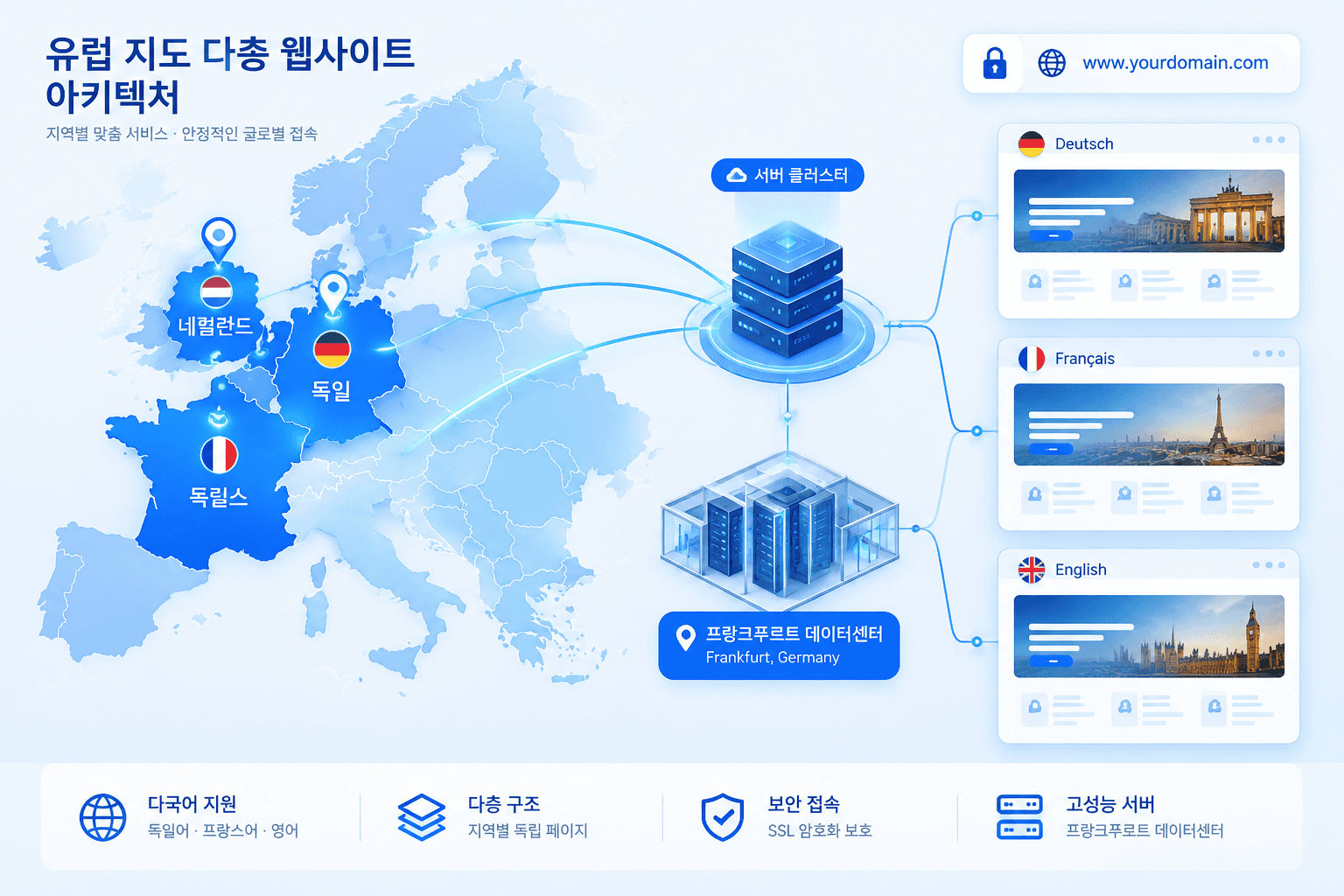
Many bosses treat Europe as a single word, but the search terms used by buyers in Germany, France, the Netherlands, and Spain are completely different. Don't build an eight-language site right away; start by testing two countries. The judging criteria depend on which European country generates the most emails in your inquiry history; if you have no inquiries, look at which country concentrates your product's import data the most. Once selected, launch the site with an English version plus one local language, such as German.
Localize domains and hosting
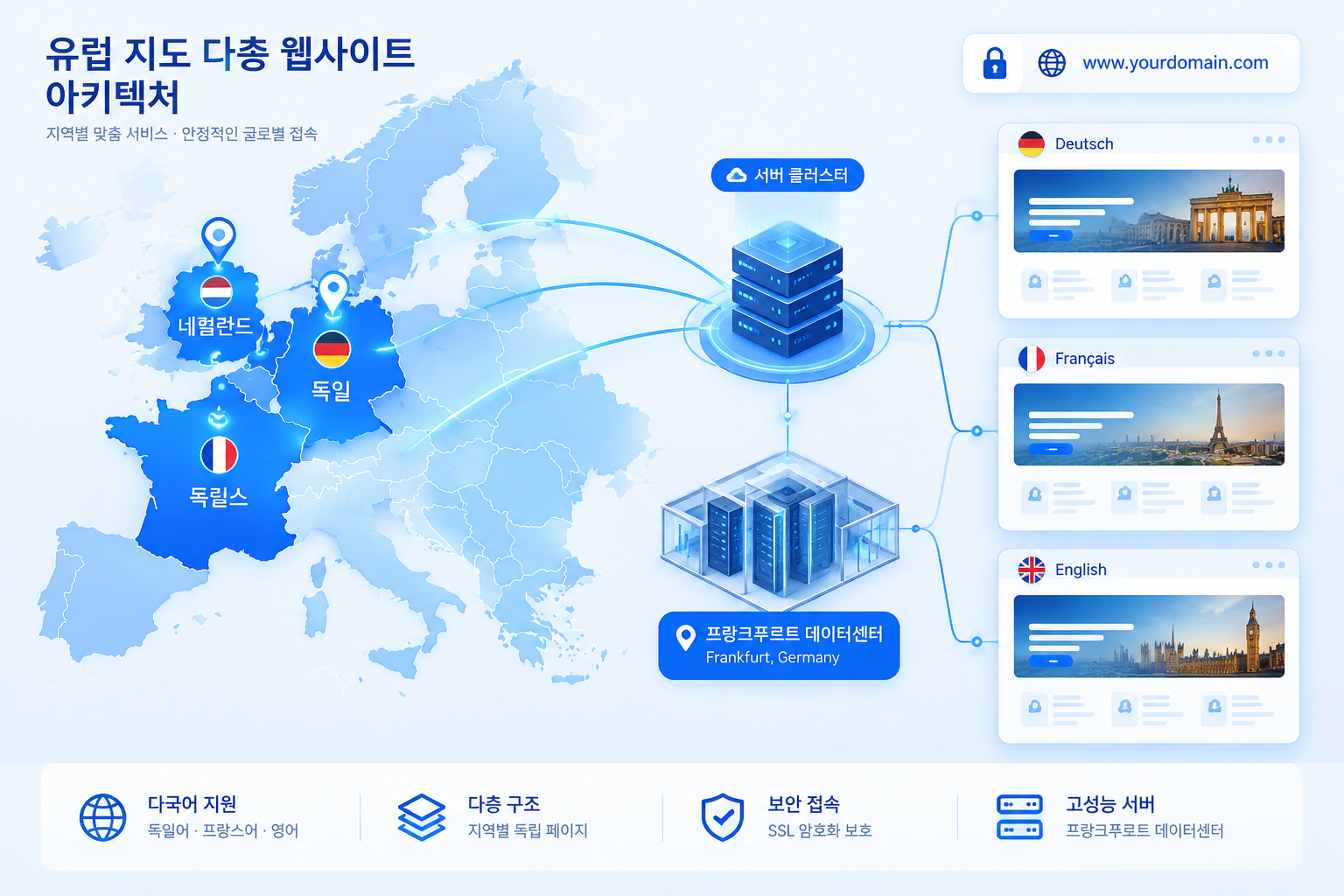
If your main target is Germany, don't run around naked with just a .com independent site. In local European searches, country-code top-level domains still carry relevance signals. If your budget allows, the German version can use a .de domain, or you can use a German subdirectory within the same site. Use European server nodes, with ready-made options available in German or Frankfurt data centers.
Get hreflang cross-linking right
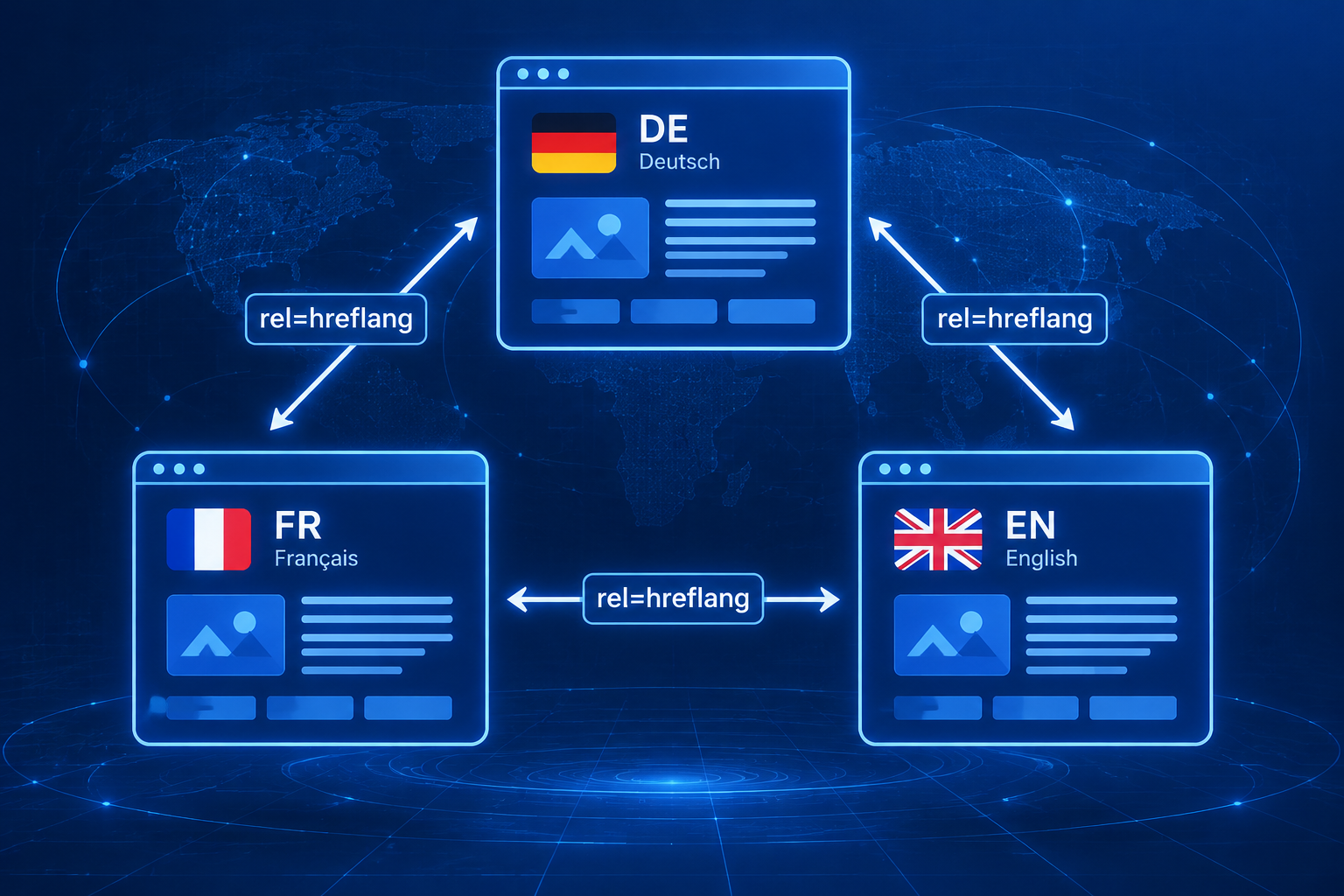
When troubleshooting European rankings for clients, I found that the concentration of problems lay in language versions fighting each other. If English, German, and French pages don't declare their relationship, Google might rank the English page in front of German users while the local language page gets no ranking. The correct approach is to use hreflang to point to each other across all language versions, plus an x-default fallback page. I previously compiled a copy-paste checklist for the details of this step, see hreflang Done Right: A Copy-Paste Checklist for Multilingual Sites.
Content localization, not translation
Directly translating an English site into German means Google can understand it, but users won't buy it. German customers use vastly different terms for VAT, bank accounts, and return policies than what you express in Chinese. Clearly writing out VAT numbers, local payment methods, and arrival ports will elevate page credibility. In this step, the barrier to multilingual content isn't translation—it's local information.
Why local European rankings always keep you waiting
When discussing rankings, I must first state a judgment: local European rankings do not equal global Google rankings. Running an English site from Hangzhou where your homepage ranks for a few terms in the U.S. doesn't mean search results in Germany will behave the same way.
There are three common reasons for lacking rankings.
- Locked in the wrong market: Without hreflang or a country-specific domain, Google cannot determine which country you are targeting, and naturally won't push your site into the German-speaking and French-speaking regions.
- Content lacks local terms: Buyers in every European country search using different terms. Germans search for valves using DIN standards, while the French use their own standards. If you only write English keywords, local terms remain uncovered.
- No local European backlinks and local signals: Not having a single German link makes slow local ranking growth completely normal.
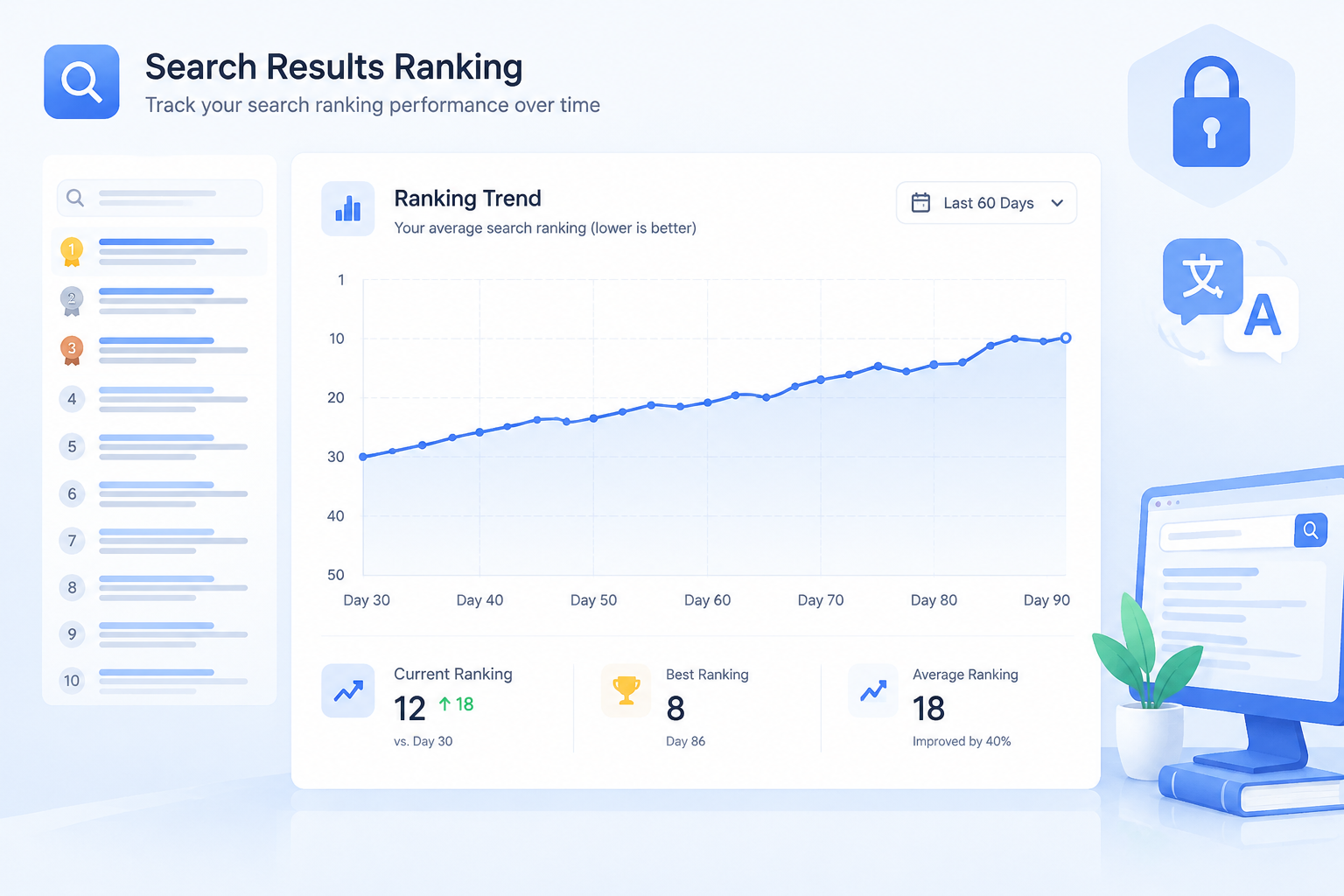
Time-to-results must also be stated clearly. When we handle local European rankings for clients, we never promise indexing within a few days—that's unrealistic. Google's official algorithm relies more heavily on core algorithm updates like PageRank and Core Updates to handle rankings. Typical local rankings show some local long-tail keyword exposure within three months, while main keywords entering the top three or even top ten usually take much longer. Ranking monitoring looks at three metrics: index volume, local search term clicks, and inquiry country distribution.
If you find that Google continuously fails to index your newly created German pages, don't wait—troubleshoot in this order, see Google Still Not Indexing? Follow This Sequence to Pinpoint the Root Cause in 7 Steps.
Conclusion: The reason why European independent site rankings fail to take off is usually not because Google isn't giving you a chance, but because the site hasn't acknowledged whether it is meant for German, French, or Dutch buyers.
Finally, a timeline reminder: If you plan to build an independent site for Europe, don't treat launch day as your milestone. What you should really monitor is the 90th day after launch. By then, your German or French pages should have their first batch of local long-tail keyword impressions, even if it's just a few. If there isn't a single one, go check your hreflang and server locations—that's likely where the issue lies.
Before starting, write down the European countries you can primarily target on a piece of paper, then follow the sequence above. If you're unsure whether your product is suited for Europe, feel free to send me your product category and current inquiry countries, and I will evaluate it for you based on an independent site strategy.