
How much does independent station promotion cost? Judge where you should spend based on 3 criteria first
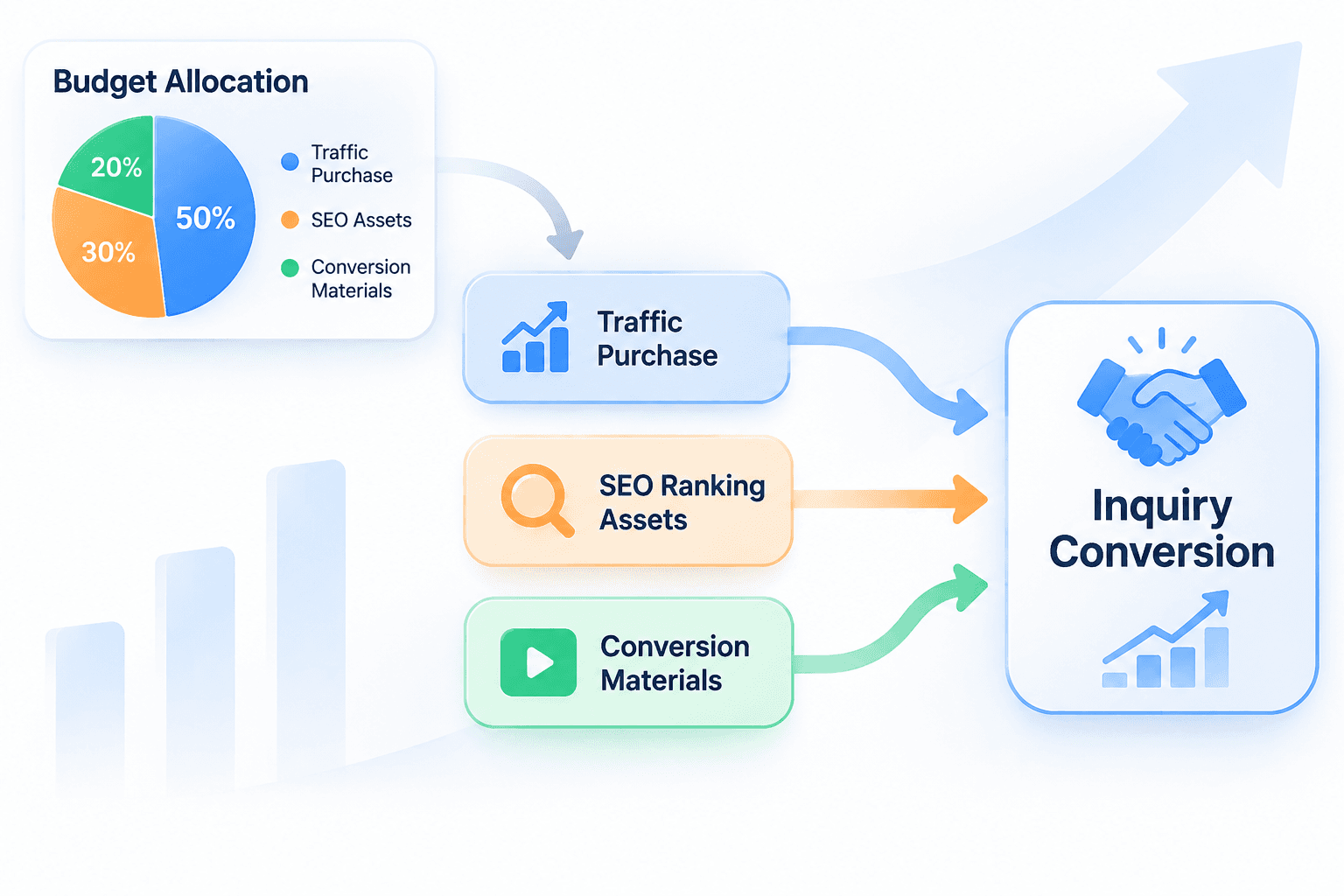
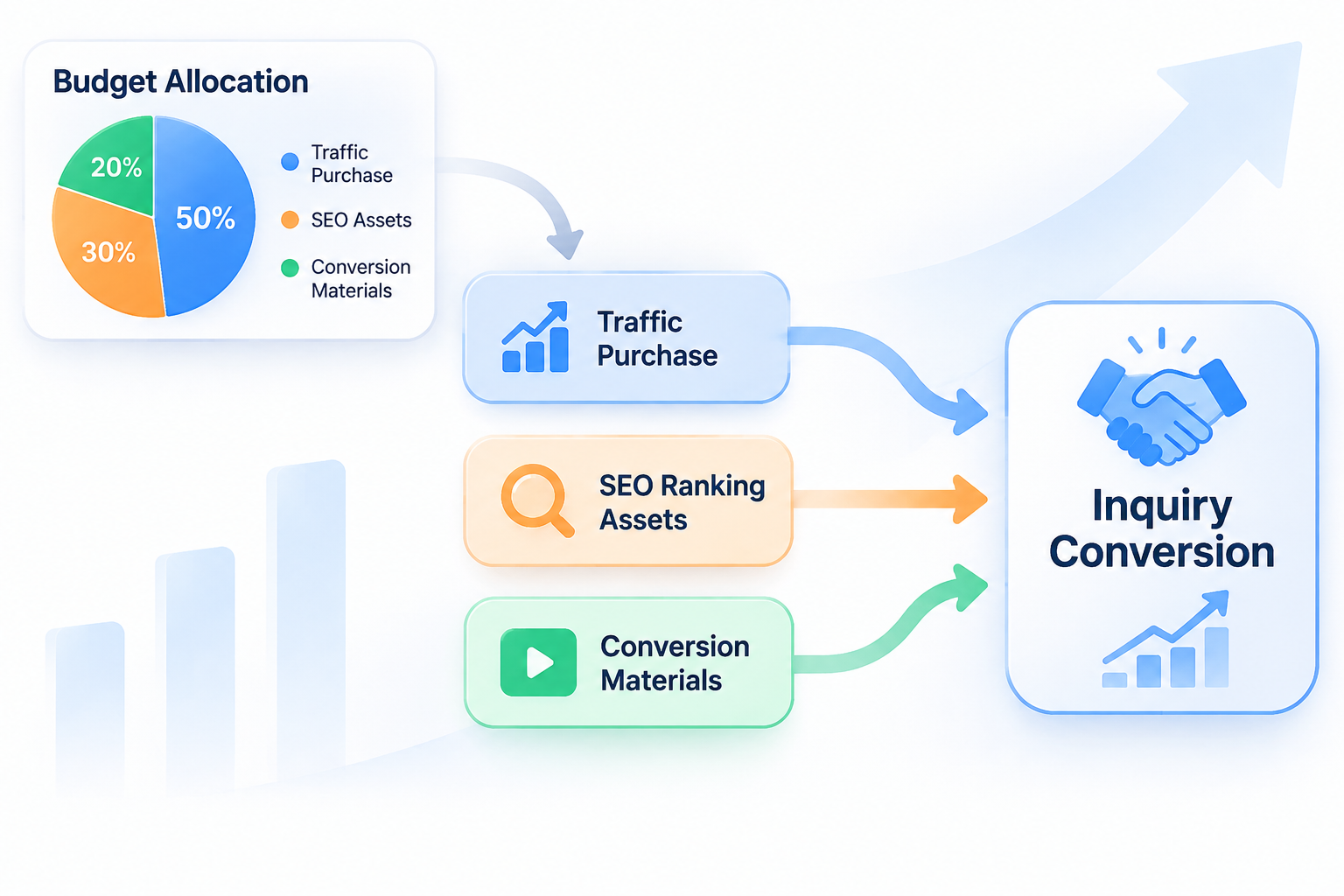
When you are calculating how much budget to leave for independent station promotion, let's state the conclusion first: it is not a single number, but the sum of three expenses—traffic purchasing, SEO content, and conversion materials. Whether it's worth spending depends on whether the product keywords are accurate, whether the average order value can cover the testing period, and whether the data is in your own hands. Broken down by these 3 criteria, you can avoid the pitfall of directly bidding
目录
- Let's sort out the concepts first: Independent station promotion buys three things
- Use these 3 criteria to judge whether this money should be spent
- Split the promotion budget into three parts, and verify keywords across multiple regions first
- Finally, where to check so you aren't led by the nose by quotes
A few years ago, when doing independent station promotion, I was used to opening the Google Ads account first, letting the budget run, and then tweaking it little by little while staring at the backend. Now, encountering the same problem, I turn it around and ask first: Are you buying traffic, or ranking assets that can bring long-term traffic? The way these two things are spent is completely different.
Let's sort out the concepts first: Independent station promotion buys three things
We break down the concept of "independent station promotion" into three parts so that when you look at quotes later, you won't get bogged down by a single total price.
- Traffic purchasing: Mainly Google Ads and social media ads, paid per click or per thousand impressions. Once the budget stops, the traffic basically stops too.
- Ranking assets: Keyword rankings, content pages, and backlinks accumulated through Google SEO. They take effect slowly, but can continuously bring organic traffic.
- Conversion materials: Independent station landing pages, product details, forms, and online customer service, used to catch incoming traffic and directly affecting the degree of waste for every dollar.
To explain in a longer sentence: If the conversion path of the site itself is not completed, the higher the promotion budget, the more it is like pouring water into a leaky bucket. Patch the bucket first, then pour the water.
Use these 3 criteria to judge whether this money should be spent
You may have already received several promotional quotes with widely differing amounts. Don't rush to compare prices; run through three questions first.
- Can your product keywords be searched by overseas buyers? If they can be found, the promotion truly has an entry point; if not, you can only rely on display ads for brand recall, and the cost structure is completely different.
- Can your average order value cover the testing period? B2B inquiries cannot calculate ROI on the same day. Only if you can accept several consecutive rounds without a deal should you consider scaling up the budget.
- Who ultimately owns this data? Invested in an independent station, search terms, clicks, and inquiry paths are under your own control; invested in a marketplace shop, much of the data is filtered by the platform first, and what you get is secondhand information.
- Google Ads test budget: Quickly verify keywords and landing pages, buying feedback data, not immediate transactions.
- SEO content building: Turn verified words into product pages, scenario pages, and blog content to gradually accumulate organic rankings.
- <Backlinks and distribution: Push important pages to industry directories, English social media, and partner blogs to amplify the chances of pages being discovered.
Special reminder: Do not directly translate Chinese product keywords into English to run ads; many words do not match the audience and scenarios abroad at all.
Split the promotion budget into three parts, and verify keywords across multiple regions first
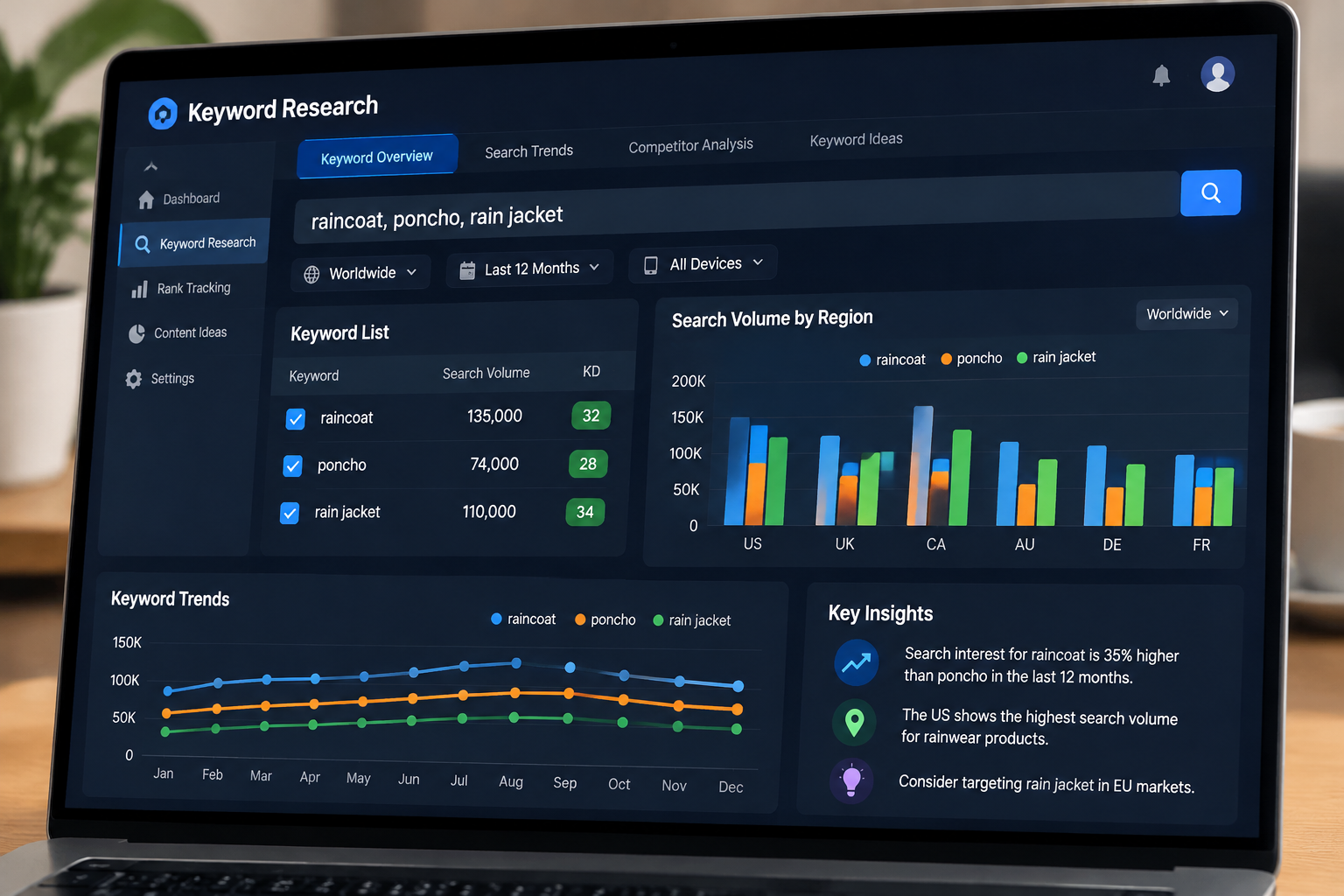
Whether keywords are accurate directly determines whether independent station promotion saves money or burns money. In China, it's commonly called "raincoat", but in English, it needs to be split into raincoat, poncho, and rain jacket, which correspond to completely different audiences and scenarios. If you only bet on one word, the budget will definitely go off track.
My own approach is to use keyword research tools to check three things: search volume, commercial intent, and regional distribution. I commonly use two tools: Ahrefs and Semrush. Look at the US, UK, Australia, and Canada separately; don't just stare at the US market alone.
The promotion budget is similarly split into three parts; the ratio depends on the industry, but the order must not be messed up.
Our judgment order when doing projects is: Treat Foreign Trade SEO & Promotion as the base, and treat Google Ads as the magnifying glass. If the base is not solid, the magnifying glass will only amplify problems faster.
In other words, independent station promotion is not an arithmetic problem of "how much to spend", but a sequential problem of "where to spend first". If the order is wrong, double the budget won't bring in inquiries.
Finally, where to check so you aren't led by the nose by quotes
If you don't want to look for a service provider for the time being, check three official resources first: Google Ads Help Center, Google Search Central's SEO beginner's guide, and the free blogs of Ahrefs and Semrush. Don't memorize quotation scripts; figure out your product's keywords, regions, and average order value first. Much of the money doesn't need to be spent in a rush.
Once these three things are sorted out, it's not too late to bring them to us for a requirements assessment. Specific quotes are calculated based on site morphology, page scale, and touchpoints, and we provide details within 1 working day without just giving a pulled-out-of-the-air total number. This way, you can also use the details we give to make horizontal comparisons with any service provider.