
What is an independent site? 3 steps to determine if what you're building is truly in your hands
Many owners think an independent site is just an English website that doesn't require platform commissions; in reality, it's an asset ownership judgment test. Drawing from my 8 years of foreign trade website-building experience, I break "What is an independent site" down into 3 steps: check domain ownership, check if data can be exported, and check if the inquiry path belongs to you. I then explain the differences between independent sites and platform stores, and finally provide directions for

Whenever an owner asks me "What is an independent site?", I always respond with a counter-question: Are you trying to figure out its definition, or trying to determine whether the site you're planning to build actually counts as one? Because the counter-intuitive thing about an independent site is this: it isn't a technical vocabulary test; it's a judgment test of asset ownership. I've taken on many projects where a company spent tens of thousands to build an English website, but the domain was registered by the service provider on the side, and the backend data could only be viewed, not exported. In my view, that's not an independent site—that's renting a webpage.
In our industry, we are used to understanding an independent site as: a site where you own the domain and data yourself, not a platform store. The focus is on the word "independent", not "site". Once you understand this point, you won't waste money and time down the road.

3 steps to determine if what you're building is truly an independent site
- Check domain ownership. Conclusion—Whoever owns the domain owns the site. Basis—The domain is the root of website ownership; Google indexing, backlinks, and brand term accumulations are all attached to it. How to do it—Register the domain using your own company entity or personal email, and keep renewal control in your hands. In the projects we've done, the common bottleneck isn't technology; it's an owner who's had a site for three years, only to find the domain is still in the hands of a resigned employee, ultimately forcing them to pay and beg the other party to cooperate with the transfer.
- Check if data can be exported unconditionally. Conclusion—A site from which you can completely export data is an asset you can take away at any time. Basis—Inquiries, customer lists, product content, and articles are operational data, not backend permissions bestowed upon you by a service provider. How to do it—Request an export test directly before signing the contract to see if you can get CSV or structured data. When we deliver website building, basic data backups are handed over to the client along with the website files.
- Check if the inquiry path is under your control. Conclusion—Independent site inquiries should go directly into your own email or CRM without passing through a third-party transit. Basis—Platform store buyer messages go through the platform system first, allowing the platform to throttle traffic or ban accounts. How to do it—Configure forms, online customer service, and email notifications before launch to ensure the first inquiry automatically syncs to your own email.
If a site gets stuck on even one of these 3 rules, don't rush to pay the final balance, and don't rush to run ads. Straightening out ownership is more valuable than anything else.
Independent sites vs. platform stores: It's more than just a webpage
A platform is renting a booth; an independent site is buying land. No matter how well you decorate, once the mall closes, the customer path is cut off. No matter how crude an independent site is, the domain and data are yours, and you can slowly modify it later.
Platform traffic goes to the platform first and is then distributed to you; independent site traffic comes directly to your site. This is also why independent sites are slower in the early stages, but once inquiries come in, you can see the complete source, search terms, and behavioral path, giving you leverage for subsequent optimization.
Platform rules change at any time; independent sites are only affected by search engine algorithms and your content quality. Google updates algorithms, but it won't zero out your store's weight just because you didn't sign up for a certain event. Anyone who has been down both roads understands the cost.
Some people ask if an independent site and an official website are the same thing. My view: An official website is a purpose, while an independent site is an ownership status. A landing page made by a foreign consulting company, renewed annually via SaaS, is an official website, but since the data doesn't belong to you, it doesn't count as an independent site. Many foreign trade companies say "We are building an official website", but actually, they are building a corporate showcase site; when they say "building an independent site", it implicitly means it can receive inquiries, get indexed by Google, and allow you to hold your own data. The boundaries of the two terms are often used interchangeably in business, but as long as you grasp the 3 points of domain, data, and inquiry paths, you won't get confused by terminology.
What to look at next after understanding independent sites
After evaluating these 3 steps, you've turned "What is an independent site" from a conceptual question into a checklist. You don't need to build the site immediately next; clarify your direction first. If you want to further understand how independent sites can be broken down by purpose and technical route, you can read How many types of independent sites are there? Broken down into 3 types by purpose, technical route, and operation method.
If you're still torn between SaaS, open-source, and custom routes, you can read Independent site platform comparison: SaaS, open-source, and custom—where do the differences in money and time lie?. Combining these two articles can help you advance your website-building decision-making by at least a week.
One more thing: Don't just write "What is an independent site" as your title
I stick to a habit when writing titles for pages: put the keyword in the first half, but always include an extended judgment. A term like "What is an independent site" is too empty when used directly as a title and lacks a specific reason to click; yet it has search volume and cannot be bypassed. My approach is to bind it to an action, such as "What is an independent site? 3 steps to determine if the domain, data, and inquiries belong to you". This matches the keyword while letting people who see the title know this page can help them make a decision. Google's algorithm looks at semantic guidance in titles; the more a title looks like an action command, the more stable clicks and dwell time will be.
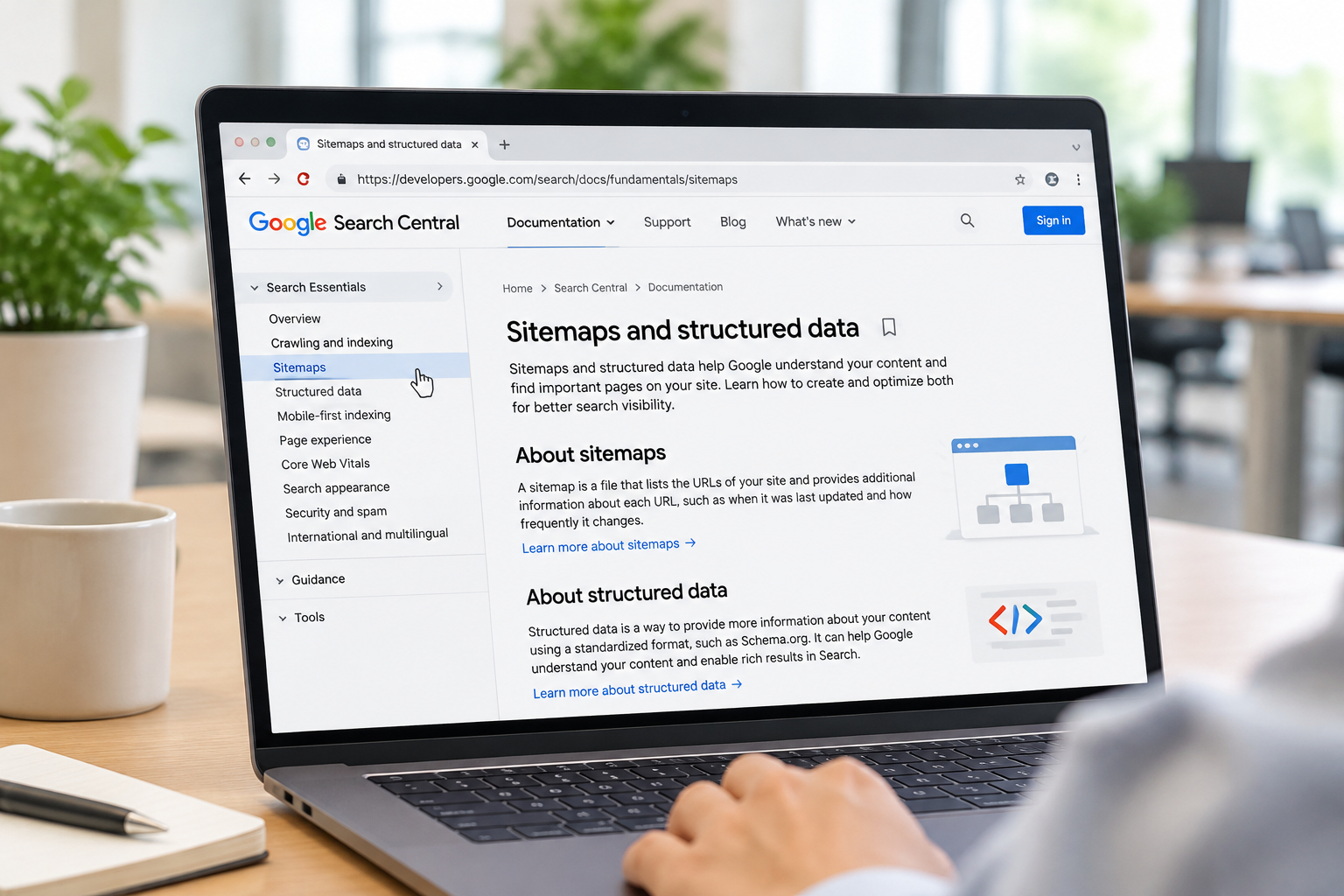
If you want to check official statements, go straight to the Google Search Central getting started guide. Reading the three documentation sections on sitemaps, structured data, and crawling is more accurate than me explaining it ten times. Google's official documentation updates fairly quickly; turn to it first when encountering indexing issues to avoid many detours.
Once you understand "What is an independent site", the next step is to start building it yourself or have someone build it. Whichever it is, confirm ownership first, then confirm the timeline and quote. For us, building a standard official website type takes 5~15 working days, and multi-language plus e-commerce modules take 7~25 working days. Specific quotes are evaluated based on requirements, with details provided within 1 working day. You can do a free requirements evaluation first, running through these 3 steps of current domain ownership and data export permissions, and many pitfalls will become apparent on the spot.