
Clearing the Name of Google SEO Search: Impressions Aren't Traffic, Average Rank Isn't Your Position; Stop These 3 Misconceptions
When you open Google Search Console and see impressions rising but inquiries sitting still, the problem often stems from treating impressions as traffic or average position as your real rank. I break down 3 scenarios: just launched, running for a while, and clicks without conversions, explaining clearly what each number in GSC actually measures and which misconceptions cause wasted effort. After reading, you will be able to judge whether to adjust content or page structure next.
目录
- Scenario 1: Looking at impressions right after launch—you are looking at "whether demand exists", not traffic
- Scenario 2: Staring at average position for two weeks—that number is not your real position
- Scenario 3: Clicks but no inquiries—the end goal of Google SEO search is not ranking first
- You will most likely ask next: how often is it appropriate to check GSC?
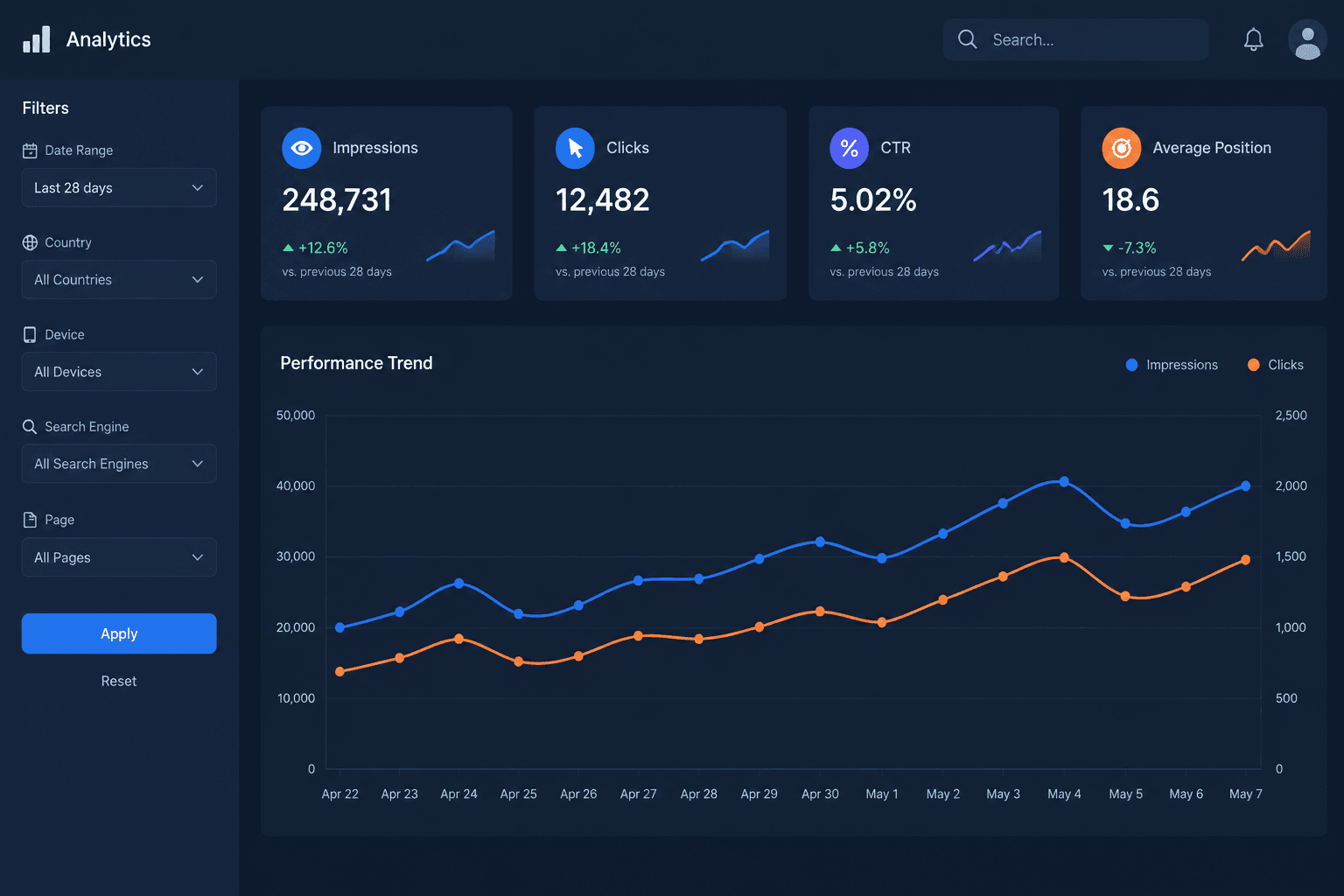
Last month, a hardware export boss sent me a Google Search Console screenshot in a hurry: 'Look, impressions have reached 8,000, why isn't there a single inquiry?' I opened the data and saw 8,000 impressions, 47 clicks, and an average rank of 38.6. He thought impressions meant someone looked at it, but in reality, a rank of 38 means most users don't even flip to that page. This is not an isolated case. In the Google SEO search industry, the most common communication cost is first correcting a few misused terms.
Scenario 1: Looking at impressions right after launch—you are looking at "whether demand exists", not traffic
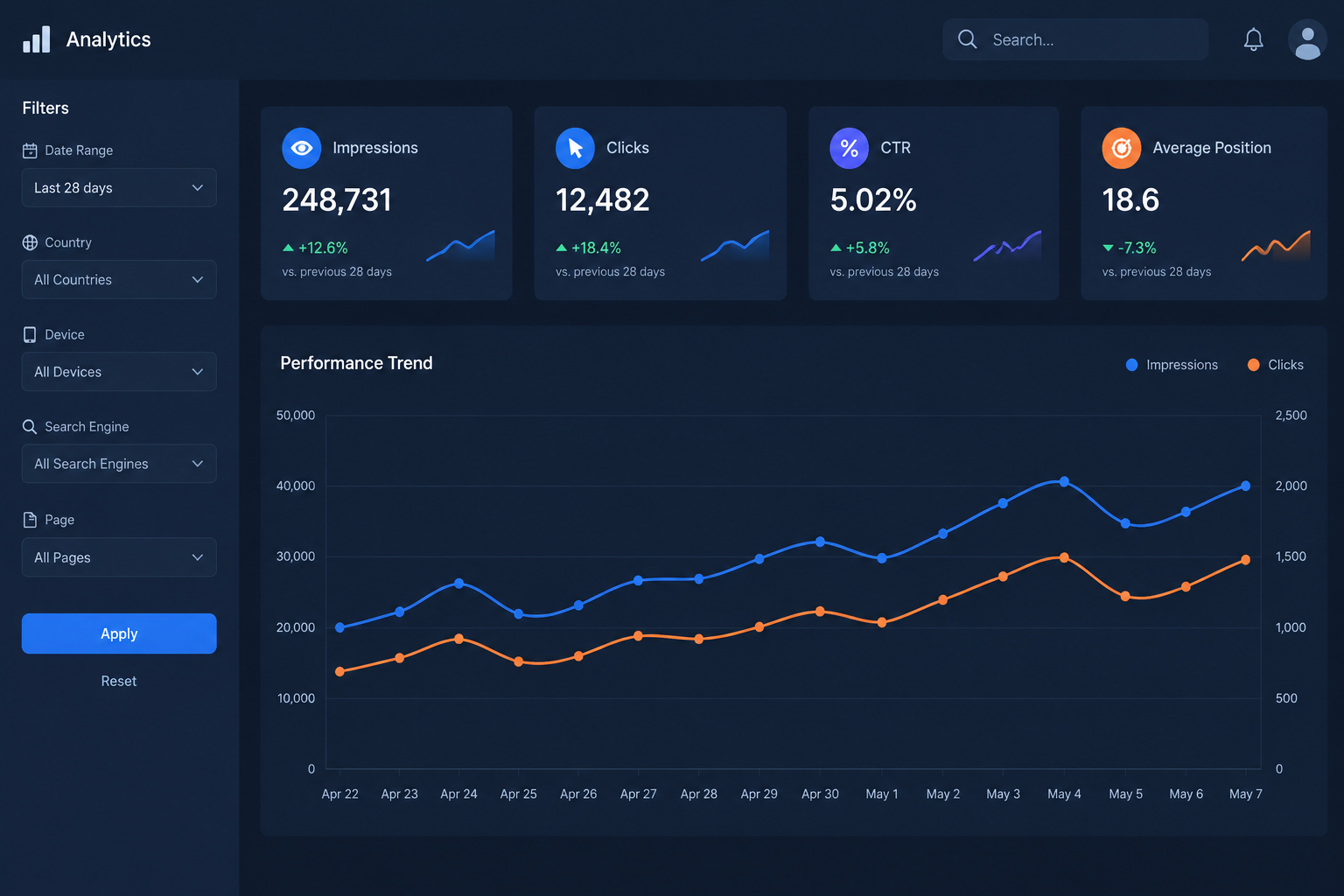
In the first two weeks after a site is submitted for indexing, the first number that jumps out in GSC is impressions. Many people see the numbers rising and think SEO is working. In fact, at this stage, impressions only measure "which search terms Google thinks your page is related to", and have nothing to do with whether users actually clicked on you.
Because impressions only record the number of times your URL appears in search results, counting whether it ranks 1st or 50th, high impressions with zero clicks mean you haven't entered the user's browsing range at all.
What to look at during this stage:
- Coverage report—confirm whether pages are properly indexed and whether any are marked as "Crawl - currently not indexed"
- Crawl stats—see how often Googlebot visits and how many pages it crawls each time, to judge whether server response is lagging
- Keyword list corresponding to impressions—don't look at the volume, look at whether the direction is correct and if keywords you never targeted are appearing
When we do projects, doing the 6 steps of Google SEO in order means the first step is never staring at impression numbers, but first confirming a clean indexing status. If indexing isn't sorted out, high impressions are empty. In short: impressions show demand, not results.
Scenario 2: Staring at average position for two weeks—that number is not your real position
After running for a month or two, stable clicks start appearing. At this point, the easiest mistake to make is checking the "average position" in GSC every day and reporting this number to the team as "where we rank".
Because average position is an average calculated by mixing data from all keywords, all countries, and all devices, ranking 1st for your brand term and 40th for a long-tail term might end up giving you an "average 12th position"—this number does not hold up in any specific scenario.
The correct way to look at it:
- Filter by keyword, and only look at the ranking trends of the 5 to 10 core terms you are actually targeting
- Filter by country; if you are targeting European and American markets, don't mix in impressions from Southeast Asia
- CTR (Click-Through Rate) is more honest than ranking—ranking 6th with rich snippets can yield an 8% CTR, while plain text might only get 2%
Google's Helpful Content System launched in 2023 explicitly includes "whether content genuinely answers search intent" as a ranking signal, which means under the same keyword, page structure, structured data, and title writing can make your actual display position differ from the GSC average by several tiers. Don't make decisions based on averages. Look at specific terms and specific pages.
Scenario 3: Clicks but no inquiries—the end goal of Google SEO search is not ranking first
The third situation is the most concerning: rankings are decent and there are clicks, but form submissions are zero. At this point, the problem is no longer at the SEO level, but an issue with landing page reception.
Because the complete funnel of Google SEO search is "impression → click → read → action", with the first two steps relying on keyword matching and content quality, and the last two steps relying on page conversion design, normal click-through rates with zero inquiries mean you need to check form locations, button copy, and page loading speed, rather than continuing to pile up articles.
When we encounter this situation, we check three things first:
- Whether the dwell time from when a user clicks in to when they leave is under 15 seconds—if so, the above-the-fold section failed to catch them
- Whether the inquiry button is folded on mobile devices or requires scrolling past two screens to see
- Whether the page only has product parameters without scenario descriptions, leaving users clueless about what to do next
Rankings are a means, and inquiries are the goal. If you only stare at rankings without looking at conversions, it's like putting in the effort to guide guests to the door, and then leaving the door closed.
Regarding conversion rates, another benchmark we use is: the reasonable range for B2B independent site clicks to inquiries is between 1.5% and 4%. Anything below 1% can basically conclude that the landing page has hard flaws, which has little to do with SEO.
You will most likely ask next: how often is it appropriate to check GSC?
My advice is to base it on the site's stage:
- First two weeks after launch: check coverage daily to confirm no crawling anomalies
- Week 3 to Month 3: check the performance report weekly, focusing on impression trends and new keywords
- After 3 months: checking every two weeks is enough, and focus energy on content updates and indexing optimization
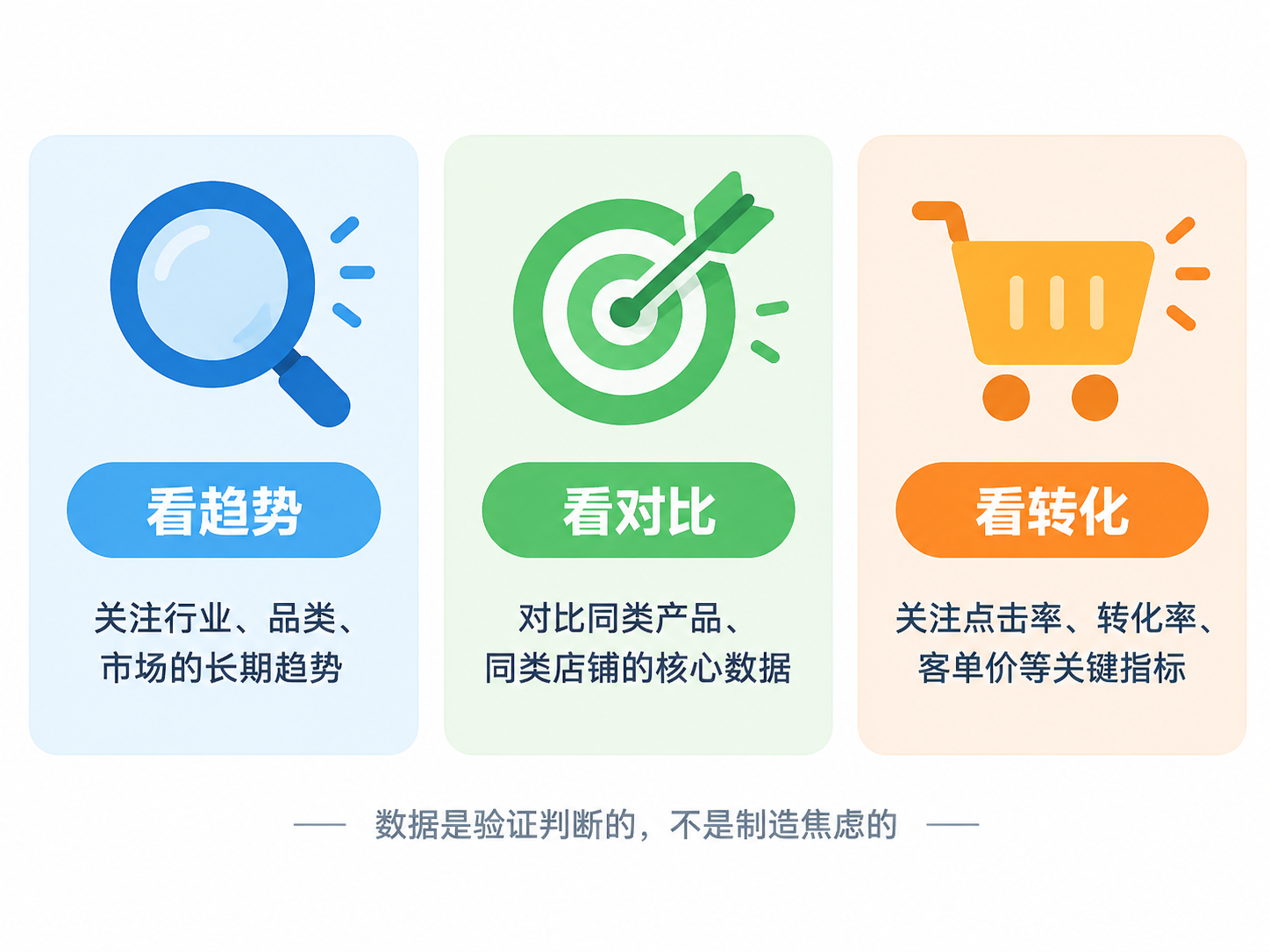
Checking too frequently easily leads to taking unnecessary actions over daily fluctuations. Data is meant to validate judgments, not to manufacture anxiety. If you currently have GSC data on hand but aren't sure which part to tweak first, you can organize screenshots of the coverage, performance, and crawl stats pages, figure out which scenario you are stuck in first, and then decide whether to add content, adjust structure, or modify the conversion path. When the direction is right, subsequent actions won't be in vain.