
What Is a Backlink Article: Correcting 3 Misused Terms, Stop Treating It Like an Onsite Blog Update
Many foreign trade professionals hearing about backlink articles for the first time mistake them for onsite blogs or advertorials. When building websites, we prefer this definition: A backlink article is content published on a third-party website with return links pointing to your independent site, driving relevance and trust transfer rather than acting as a company press release. This article corrects three frequently misused terms and breaks down the true cost structure of backlink articles so
目录
- What Is a Backlink Article: First, Let's Pin Down the Publishing Location
- The Difference Between Backlink Articles and Onsite Articles: Look at Three Aspects
- A Qualified Backlink Article Must First Fulfill Four Trust Signals
- The Cost Structure of Backlink Articles: Don't Just Look at Writing Fees
- Boundary Reminders: Don't Rush to Deploy Backlink Articles in These Three Scenarios
When you ask me what a backlink article is, I first break this question down into three more specific ones: Where is it published? How does it differ from onsite articles? And how do you tell if your efforts weren't wasted after publishing it? If you don't break it down, it's very easy to simply view a backlink article as a piece of advertorial content thrown out into the wild. Over our years of building cross-border e-commerce sites, we've seen too many budgets wasted on this misconception.
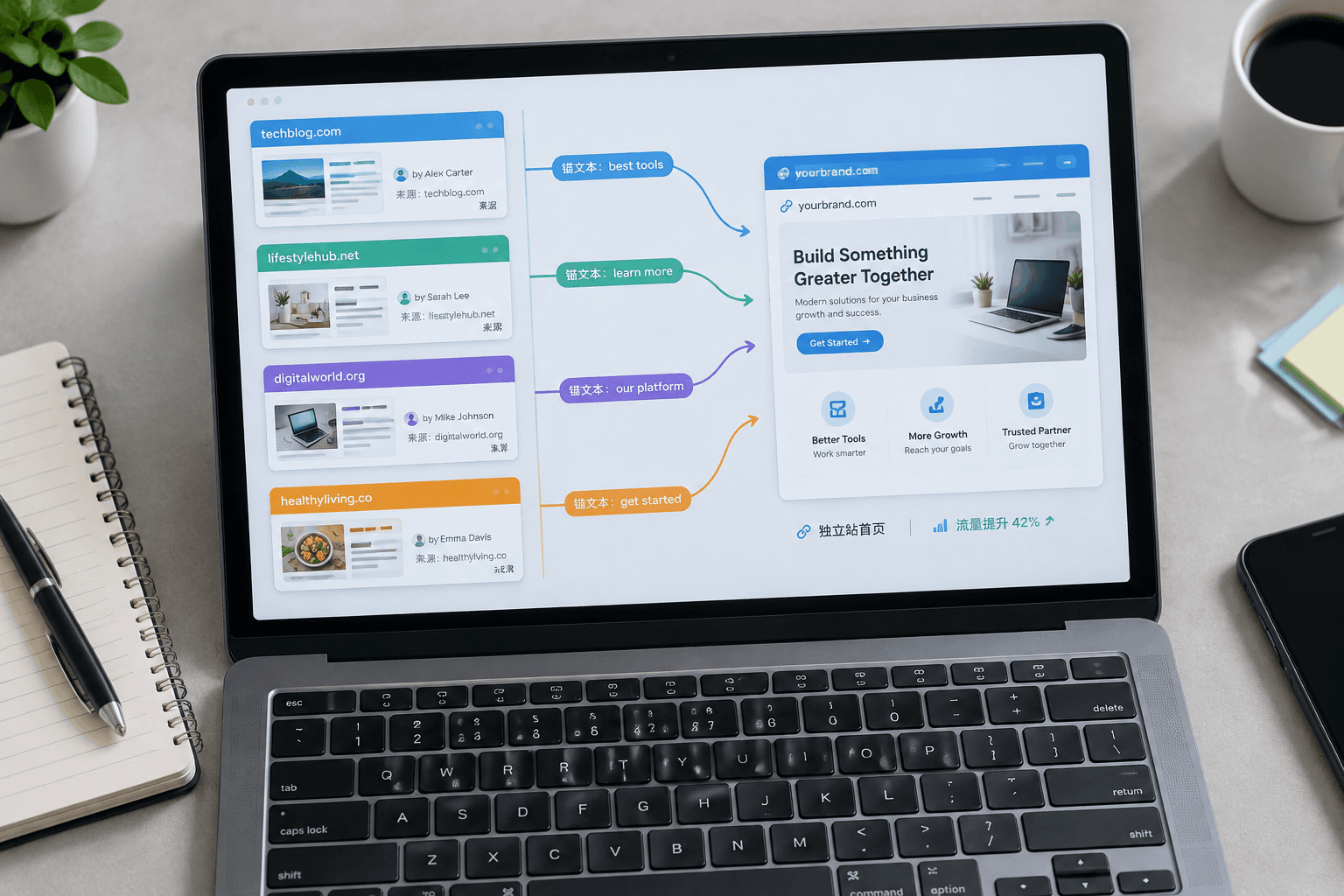
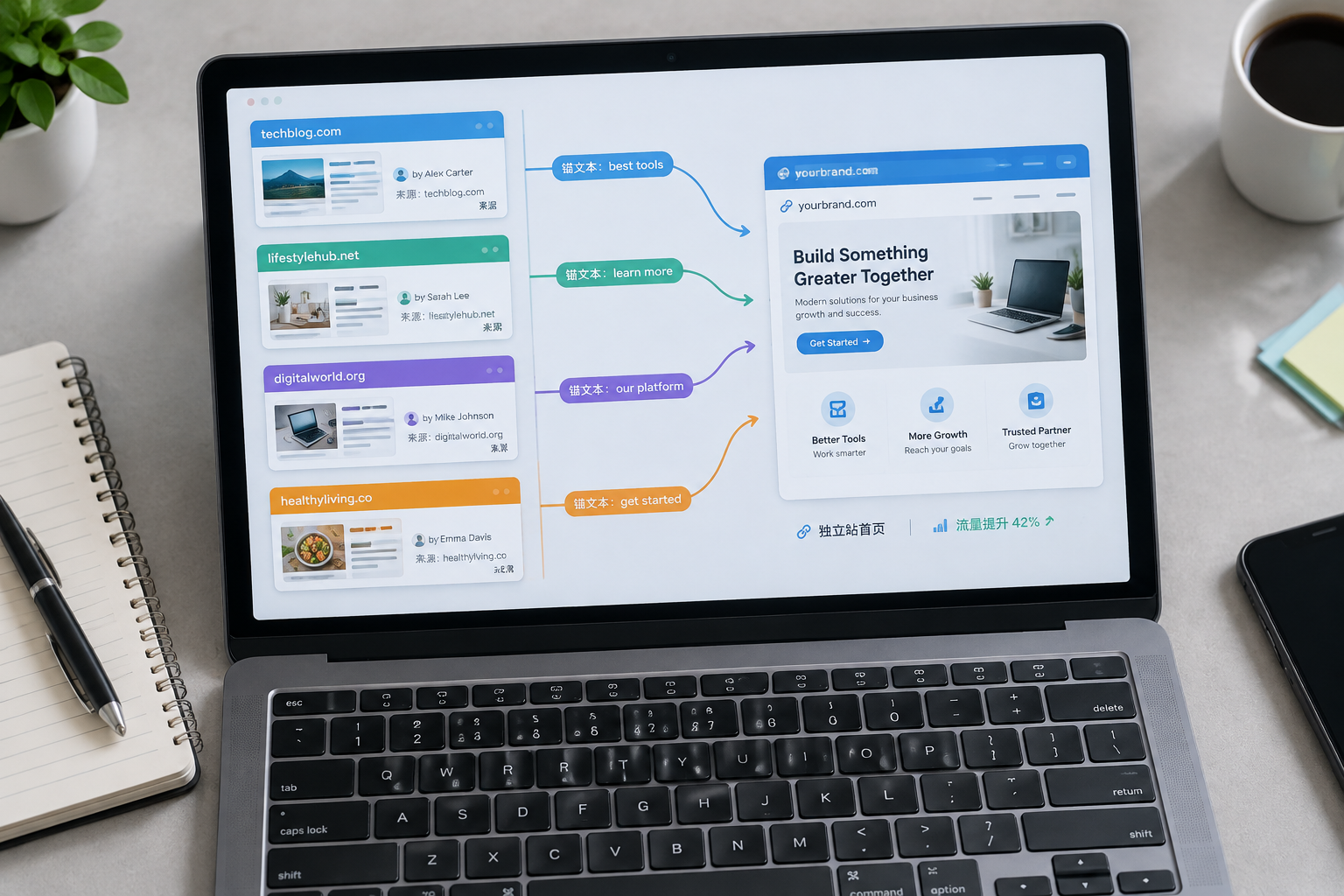
Let's start with the conclusion: A backlink article is content published on someone else's website that uses anchor text to link back to your independent site. It is not a blog post you update inside your own store. When your site links to itself, the technical term is an internal link; linking back across different domains is what makes it a backlink. Once you blur this boundary, any subsequent data calculations will be a mess.
What Is a Backlink Article: First, Let's Pin Down the Publishing Location
In our industry, we're used to viewing backlink articles as external resource pages rather than company press releases. If you publish it on your own official website, backend blog, or marketplace store, it's still on your own turf and cannot be considered a backlink article. Why? Because search engines evaluate backlinks based on referring domains. Only when your page is linked to by another domain will it pass some of that domain's trust signals to you.
A backlink article must meet two conditions: The article must be hosted on a third-party website, and it must contain at least one link pointing back to your target page. Falling short on either condition means it's not a backlink article. No matter how high the authority of the host website is, as long as there is no return link within the text, it is merely brand exposure and does not count as backlink assets.
The most common misnomer is calling it an official website advertorial. Advertorials are promotional actions settled by volume of publications; backlink articles are SEO actions maintained as trust assets. Mixing these up leads teams to evaluate SEO using publication quantity, completely throwing the direction off.
The Difference Between Backlink Articles and Onsite Articles: Look at Three Aspects
If you mix these two together, execution will go wrong. Remember one phrase first: Onsite articles drive indexing and keyword coverage, while backlink articles drive relevance transfer and trust sources. The two are not the same thing.
- Different locations: Onsite articles live under your domain name; backlink articles live on third-party websites, industry media, content sites, or partner blogs.
- Different functions: Onsite articles determine whether a page can be found and push keywords upward; backlink articles determine why other pages should link to you and whether these signals resemble genuine recommendations.
- Different writing styles: Onsite articles can dive deep around product terms; backlink articles require a third-party perspective, written as reviews, tutorials, resource compilations, or industry observations, rather than reading like an ad for our goods from start to finish.
Here lies the cause and effect: The more a backlink article reads like your own official product page, the less likely the host website is to accept it, and the more likely Google is to treat it as a low-quality backlink. This isn't guesswork; it's a natural result of the trust-signal component in E-E-A-T evaluations. Unattributed, unsourced, and stock-heavy content faces a higher probability of being flagged as low quality by systems now that AI content is proliferating.
If you want to flesh out the concept of backlinks first, you can also check out our backlinks tag directory, which breaks down backlink types and onsite differences in greater detail.
A Qualified Backlink Article Must First Fulfill Four Trust Signals
If you want your backlink articles to generate long-term value, don't just stare at the link count. First, fulfill four key elements.
- Author attribution: The article must feature a real author or team byline, with an author page clarifying who wrote it.
- Sources and evidence: Data, case studies, and images should have traceable origins rather than making sweeping claims out of nowhere.
- Real photos or raw materials: Where possible, use actual photographs, process screenshots, or real inquiry workflows instead of making do with generic stock imagery.
- Contextual relevance: The return link must appear in a contextually relevant spot related to the product, rather than being wedged randomly into unrelated life philosophies.
These aren't meant to put on a show for search engines; they are for third-party editors and real readers. Editors check whether your content provides incremental value, while readers judge whether the piece is worth their time. In our consulting practice, we often encounter a situation where clients bring backlink articles lacking bylines and sources, with every piece looking like the same template with swapped-out keywords. No matter how many such articles are published, it's hard to break into high-quality referring domains.
Also, don't make all anchor text point to a single term. Having every return link read "foreign trade independent site" looks far too uniform. Let some use the brand name, some use naked URLs, and some use relevant long-tail variations to better resemble genuine recommendations between real websites.

The Cost Structure of Backlink Articles: Don't Just Look at Writing Fees
Let me break it down for you: The cost of a backlink article falls into at least four categories. I won't give specific price quotes here because variations across channels and languages are massive, but you need to understand the underlying structure.
- Content production costs: Writing, translation, and native editorial polishing—especially for niche languages—cannot be skipped. This is also what I often refer to as the heaviest component in content marketing.
- Channel communication costs: Finding the right editor, confirming sections, making revisions and rework, and waiting for publication schedules take at least a few rounds of back-and-forth.
- Resource exchange costs: Some channels don't charge money; instead, they require exclusive data, product samples, or industry resources, which is also an investment.
- Follow-up verification costs: Monitoring the link after publication to ensure it hasn't been removed, nofollow tags haven't been added, or the anchor text hasn't been mangled.
This is precisely why cheap advertorials are ultimately the most expensive option: The writing fee looks low, but if the channel doesn't keep the link, the article lacks a byline, and the link gets wiped at any moment, it's equivalent to spending a little money on a bunch of ineffective records. If you treat backlink articles as a continuously maintained asset, you won't evaluate them based on the sheer volume of publications.
Boundary Reminders: Don't Rush to Deploy Backlink Articles in These Three Scenarios
Backlink articles aren't suited for every stage. Grade yourself against the following three points first.
- Before your site is properly indexed by Google, focus on onsite pages, sitemaps, and baseline quality first. The signals brought by backlink articles at this stage have no destination to land on. For the proper sequence of steps, you can check our previous guide How to Do Google SEO for a Foreign Trade Independent Site: Do These 6 Things in Order, Don't Start by Publishing Articles—don't start publishing articles right off the bat.
- If your product pages and landing pages fail to clearly explain what you sell or where your manufacturing capabilities lie, visitors attracted by backlink articles won't convert into inquiries. Build your content foundation first.
- If you can only secure channels that refuse bylines, fail to preserve the original text, and will wipe everything out the moment they delete it, it is not recommended to include such backlink articles in your primary strategy.

Conclusion: What a backlink article actually does is far more important than what it is called. It is content published on someone else's website featuring clear return links and trust signals; it is not a replica of your onsite blog. Treat it as an external asset to maintain by regularly checking links, context, and bylines, and it will feed back into your independent site's indexing and inquiry quality. If you merely treat it as a publication quota metric, you might as well save that money.